
·
Last Updated: August 18, 2026
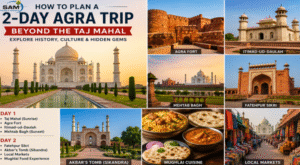
When people think of Agra, the first image that comes to mind is the magnificent Taj Mahal. While this iconic monument is undoubtedly the city’s biggest attraction, Agra offers much more than a single UNESCO World Heritage Site. From grand Mughal forts and beautiful gardens to vibrant local markets and historic tombs, the city is filled with experiences that deserve a place on every travel itinerary.
If you are planning a short getaway, a 2-day Agra trip can be the perfect opportunity to explore the city’s rich heritage beyond the Taj Mahal. This travel guide will help you discover the best attractions, local experiences, food options, and practical travel tips to make the most of your visit.
Whether you are a history enthusiast, a photographer, a family traveler, or a cultural explorer, this comprehensive guide will help you create a memorable Agra tour.
Why Spend Two Days in Agra?
Many travelers visit Agra on a day trip from Delhi and leave immediately after seeing the Taj Mahal. However, spending two days allows you to experience the city’s historical depth and cultural charm.
Benefits of a 2-day Agra tour include:
- More relaxed sightseeing.
- Time to explore lesser-known monuments.
- Better photography opportunities.
- Chance to experience local cuisine.
- Less rushed travel schedule.
- Opportunity to witness both sunrise and sunset views.
Agra’s historical significance extends far beyond the Taj Mahal, making it one of India’s most fascinating heritage destinations.
Day 1: Exploring Agra’s Mughal Legacy
Early Morning: Visit the Taj Mahal
Begin your journey with a sunrise visit to the Taj Mahal. The soft morning light enhances the beauty of the white marble structure and offers excellent photography opportunities.
Built by Mughal Emperor Shah Jahan in memory of his wife Mumtaz Mahal, the monument remains one of the world’s greatest architectural masterpieces.
Travel Tips
- Arrive early to avoid crowds.
- Book tickets in advance.
- Carry valid identification.
- Wear comfortable walking shoes.
- Keep water and sun protection handy.
Spend at least two to three hours exploring the gardens, main mausoleum, and surrounding pathways.
Mid-Morning: Discover Agra Fort
After visiting the Taj Mahal, head to the impressive Agra Fort.
This massive red sandstone fortress served as the primary residence of Mughal emperors before the capital shifted to Delhi. It is often overshadowed by the Taj Mahal but is equally important from a historical perspective.
Highlights of Agra Fort
- Jahangiri Mahal
- Diwan-i-Aam
- Diwan-i-Khas
- Musamman Burj
- Sheesh Mahal
The fort offers breathtaking views of the Taj Mahal from across the Yamuna River.
History lovers should allocate at least two hours for exploring this remarkable site.
Lunch Break: Experience Authentic Mughlai Cuisine
Agra is famous for its rich Mughlai flavors.
Popular dishes include:
- Mughlai Chicken
- Mutton Korma
- Kebabs
- Biryani
- Paneer specialties
- Tandoori breads
Travelers looking for local flavors can also try traditional North Indian thalis.
Afternoon: Visit Itimad-ud-Daulah
Often called the “Baby Taj,” Itimad-ud-Daulah is one of Agra’s hidden gems.
Constructed before the Taj Mahal, this elegant mausoleum introduced many architectural features later perfected in the Taj.
Why Visit?
- Intricate marble inlay work.
- Smaller crowds.
- Beautiful riverfront location.
- Excellent photography opportunities.
Many travelers consider it one of the most underrated attractions in Agra.
Evening: Sunset at Mehtab Bagh
End your first day at Mehtab Bagh.
Located across the Yamuna River, this historic garden offers one of the best sunset views of the Taj Mahal.
The peaceful atmosphere makes it an ideal place to relax after a day of sightseeing.
Photography Tip
Sunset creates dramatic lighting conditions that allow photographers to capture stunning reflections and silhouettes of the monument.
Day 2: Culture, Heritage, and Local Experiences
Morning: Explore Fatehpur Sikri
Start your second day with a trip to Fatehpur Sikri, located approximately 40 kilometers from Agra.
Built by Emperor Akbar in the 16th century, this UNESCO World Heritage Site served as the Mughal capital for a brief period.
Major Attractions
- Buland Darwaza
- Jama Masjid
- Panch Mahal
- Diwan-i-Khas
- Tomb of Salim Chishti
The city showcases a unique blend of Islamic, Persian, and Indian architectural styles.
Plan to spend three to four hours exploring the complex.
Midday: Visit Akbar’s Tomb
On your return to Agra, stop at Akbar’s Tomb.
This magnificent mausoleum is dedicated to one of the greatest Mughal rulers.
Why It Stands Out
- Distinct architectural style.
- Beautiful gardens.
- Rich historical significance.
- Less crowded than major tourist attractions.
Wildlife enthusiasts may also spot deer, peacocks, and monkeys within the surrounding grounds.
Lunch: Taste Agra’s Local Specialties
No Agra travel guide is complete without mentioning the city’s famous sweet delicacy.
Must-Try Foods
- Agra Petha
- Dalmoth
- Bedai with Aloo Sabzi
- Jalebi
- Chaat
Sampling local street food adds an authentic touch to your travel experience.
Afternoon: Explore Agra’s Local Markets
Shopping is an important part of any Agra itinerary.
Popular shopping areas include:
Sadar Bazaar
Known for:
- Handicrafts
- Leather products
- Souvenirs
- Traditional clothing
Kinari Bazaar
Perfect for:
- Jewelry
- Textiles
- Decorative items
- Local crafts
Taj Ganj Market
Ideal for travelers seeking souvenirs near the Taj Mahal area.
Shopping also supports local artisans and traditional craftsmanship.
Visit the Mughal Heritage Walk
Travelers looking for a different perspective of Agra should consider the Mughal Heritage Walk.
This lesser-known route introduces visitors to:
- Rural landscapes
- Traditional communities
- Historic monuments
- Unique views of the Taj Mahal
The walk provides insight into everyday life beyond the city’s major tourist attractions.
Evening: Cultural Exploration and Relaxation
Spend your final evening enjoying Agra’s cultural atmosphere.
Options include:
- Traditional performances.
- Local cafes.
- Riverfront views.
- Photography sessions.
- Exploring illuminated heritage sites.
This relaxed ending allows travelers to absorb the city’s unique character before departure.
Practical Travel Tips for a 2-Day Agra Tour
Transportation
Agra is well-connected through:
- Expressways
- Rail networks
- Tourist buses
- Private taxis
Local transportation options include:
- Auto-rickshaws
- E-rickshaws
- App-based taxis
- Rental cars
Accommodation Options
Agra offers accommodations for every budget.
Budget Travelers
- Hostels
- Guesthouses
- Budget hotels
Mid-Range Travelers
- Boutique hotels
- Comfortable city hotels
Luxury Travelers
Several luxury properties offer views of the Taj Mahal and premium hospitality experiences.
Best Time to Visit Agra
The ideal season is between October and March when temperatures remain pleasant.
Advantages of Winter Travel
- Comfortable sightseeing.
- Better photography conditions.
- Ideal walking weather.
- Pleasant evenings.
Summer visits are possible but require careful planning due to high temperatures.
Suggested Budget for a 2-Day Agra Trip
Budget Travel
- Accommodation: ₹1,000–₹2,500
- Food: ₹600–₹1,200
- Local Transport: ₹500–₹1,000
- Attraction Tickets: Variable
Mid-Range Travel
- Accommodation: ₹3,000–₹6,000
- Food: ₹1,500–₹2,500
- Transportation: ₹1,000–₹2,000
Luxury Travel
- ₹10,000+ per day depending on preferences.
Final Thoughts
A visit to Agra does not have to begin and end with the Taj Mahal. While the monument remains the city’s crown jewel, attractions such as Agra Fort, Itimad-ud-Daulah, Mehtab Bagh, Fatehpur Sikri, and Akbar’s Tomb reveal the broader story of Mughal history and architecture.
A well-planned 2-day Agra trip allows travelers to experience the city’s heritage, culture, cuisine, and local life at a comfortable pace. From sunrise views of the Taj Mahal to exploring ancient forts and bustling markets, every corner of Agra offers a unique story waiting to be discovered.
If you are planning your next India tour, consider spending two full days in Agra. The experience goes far beyond a single monument and provides a deeper understanding of one of the country’s most historic destinations.
For More Information : Read More