
·
Last Updated: August 18, 2026
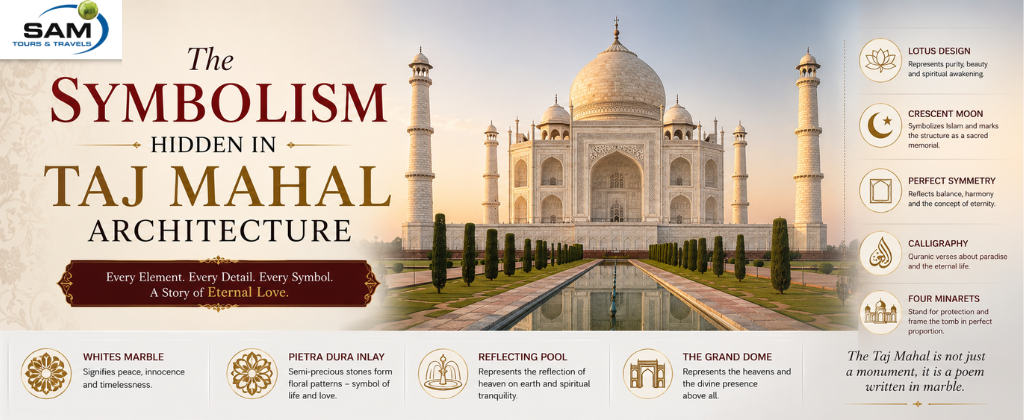
From its symmetrical layout to its intricate carvings, the Taj Mahal reflects spiritual beliefs, cultural values, and advanced design principles. In this article, we explore the hidden symbolism that makes the Taj Mahal not just a visual wonder but a meaningful architectural marvel.
A Monument Designed as Paradise on Earth
One of the most profound symbolic elements of the Taj Mahal is its representation of Jannah (paradise), as described in Islamic tradition.
The entire complex is designed to resemble a heavenly garden. The layout follows the Charbagh garden pattern, which divides the space into four equal parts using water channels. These flowing water streams symbolize the four rivers of paradise mentioned in Islamic texts.
The central reflecting pool enhances this idea by mirroring the monument, creating a sense of infinity and divine perfection. Walking through the gardens feels like a journey toward spiritual peace, reflecting the idea of eternal rest.
Perfect Symmetry: A Symbol of Balance and Harmony
The Taj Mahal is famous for its flawless symmetry. Every element—whether it’s the minarets, domes, or gardens—is carefully balanced.
This symmetry represents:
- Order in the universe
- Harmony between life and death
- Balance between earthly and spiritual realms
Interestingly, the only element that breaks this symmetry is the tomb of Shah Jahan, which was added later beside Mumtaz Mahal’s tomb. This slight imbalance symbolizes human imperfection within divine perfection.
The White Marble: Purity and Eternity
The Taj Mahal is built primarily from white Makrana marble, which holds deep symbolic meaning.
White in many cultures represents:
- Purity
- Peace
- Spirituality
- Eternal truth
The marble also changes color throughout the day—pinkish in the morning, white in the afternoon, and golden under moonlight. This transformation reflects the changing moods of life and the passage of time, while the monument itself remains eternal.
The Dome: A Gateway to Heaven
The grand central dome of the Taj Mahal is not just an architectural highlight—it carries spiritual symbolism.
The dome resembles a celestial vault, representing the heavens. Its upward curve draws the eye toward the sky, symbolizing the soul’s journey toward the divine.
At the top of the dome is a finial combining Islamic and traditional motifs, further emphasizing the blend of spirituality and artistry.
Calligraphy: Words That Guide the Soul
The Taj Mahal is adorned with intricate Arabic calligraphy, mainly verses from the Quran. These inscriptions are not merely decorative—they are deeply symbolic.
They convey messages about:
- Judgment Day
- Divine mercy
- Eternal life
An interesting feature is that the calligraphy appears uniform from the ground, but the letters actually increase in size as they go higher. This clever optical illusion ensures readability and symbolizes the infinite nature of divine words.
Pietra Dura: Beauty in Detail
The decorative technique known as pietra dura involves inlaying semi-precious stones into marble to create floral patterns.
These floral designs are not random—they symbolize:
- Life and growth
- Paradise gardens
- The cycle of nature
Each flower is unique, reflecting the diversity and beauty of creation. The use of precious stones also highlights the Mughal emphasis on luxury combined with meaning.
The Minarets: Protection and Stability
The four minarets surrounding the Taj Mahal are slightly tilted outward. This is not a flaw—it is a deliberate design choice.
Symbolically, the minarets represent:
- Guardianship of the tomb
- Spiritual elevation
Practically, their outward tilt ensures that in case of an earthquake, they would fall away from the main structure, protecting it. This blend of symbolism and engineering showcases the brilliance of Mughal architecture.
Light and Reflection: The Play of Illusion
Light plays a crucial role in the Taj Mahal’s symbolism. The monument’s surfaces reflect sunlight and moonlight in ways that create a magical effect.
This use of light represents:
- Divine presence
- Spiritual enlightenment
- The fleeting nature of life
The reflection in the water doubles the image of the Taj Mahal, symbolizing the connection between the physical and spiritual worlds.
The Central Tomb Chamber: Simplicity Beneath Grandeur
While the upper chamber is richly decorated, the actual tombs lie in a simpler lower chamber.
This contrast symbolizes:
- The difference between worldly beauty and spiritual truth
- Humility in death
- The transient nature of life
It reminds visitors that no matter how grand life may be, simplicity is the ultimate reality.
Geometry and Proportion: The Language of Perfection
The Taj Mahal’s design follows strict geometric principles. Circles, squares, and octagons are used throughout the structure.
These shapes symbolize:
- Unity (circle)
- Stability (square)
- Transition between worlds (octagon)
The use of geometry reflects the belief that mathematics is a universal language of divine order.
The Role of Water: Reflection of Life
Water is a central element in the Taj Mahal complex. The reflecting pools and fountains are not just aesthetic features.
They symbolize:
- Purity and cleansing
- Life and renewal
- The flow of time
Water also enhances the visual beauty by reflecting the monument, creating a sense of endless continuity.
Cultural Fusion: A Blend of Traditions
The Taj Mahal is a fusion of multiple architectural styles, including:
- Persian
- Islamic
- Indian
This blend represents unity in diversity and showcases the cultural richness of the Mughal era. It is a reminder that great creations often emerge from the merging of different ideas and traditions.
Why the Symbolism Still Matters Today
The symbolism of the Taj Mahal continues to resonate even in modern times. It is not just a historical monument—it is a story told through architecture.
Visitors from around the world come not only to admire its beauty but also to experience the emotions and meanings embedded in its design.
Final Thoughts
The Taj Mahal is far more than a symbol of love. It is a carefully crafted expression of spirituality, balance, and artistic brilliance. Every detail—from the gardens to the dome—carries a deeper meaning that reflects the beliefs and values of its time.
Understanding the symbolism hidden in the Taj Mahal’s architecture allows us to appreciate it on a whole new level. It transforms the monument from a beautiful structure into a profound narrative of life, love, and eternity.
In the end, the Taj Mahal reminds us that true beauty lies not just in what we see, but in the meaning behind it.
For More Information : Read More