
·
Last Updated: August 18, 2026
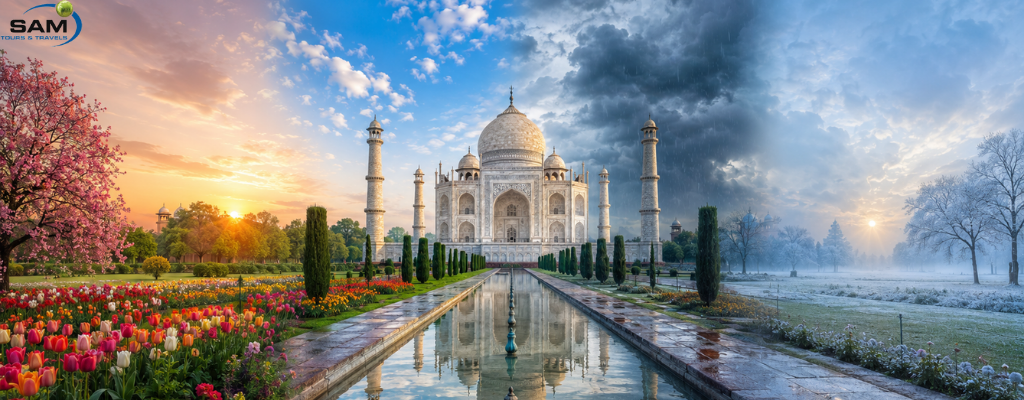
The Taj Mahal is not just a monument—it’s an experience that changes with every season. While its beauty remains constant, the atmosphere, colors, and overall mood shift throughout the year, offering a unique perspective each time you visit.
If you’re planning a trip, understanding how the Taj Mahal transforms across seasons can help you choose the best time for your visit. In this guide, we explore the charm of the Taj Mahal in winter, spring, summer, and monsoon, along with travel tips for each season.
Winter (October to February): The Most Popular Season
Winter is considered the best time to visit the Taj Mahal. The weather is cool and pleasant, making it ideal for sightseeing.
What Makes Winter Special?
During winter mornings, the Taj Mahal is often covered in a soft layer of fog. As the fog slowly clears, the monument appears like a dream emerging from the mist. This creates a magical and almost surreal experience for visitors.
The temperature ranges between 8°C to 20°C, making it comfortable to explore the entire complex without exhaustion.
Experience Highlights
- Misty sunrise views with a dreamy atmosphere
- Comfortable weather for walking and photography
- Clear skies during the day for detailed views
Things to Keep in Mind
Fog can sometimes delay clear views, especially in December and January. Arriving a bit later in the morning can help avoid heavy fog.
Spring (February to March): The Season of Bloom
Spring is one of the most underrated yet beautiful times to visit the Taj Mahal. The gardens surrounding the monument come alive with blooming flowers.
What Makes Spring Special?
The Charbagh gardens are filled with colorful flowers, adding a vibrant contrast to the white marble of the Taj Mahal. The weather remains pleasant, similar to winter but with clearer skies.
Experience Highlights
- Lush gardens with blooming flowers
- Bright and clear views of the monument
- Perfect lighting for photography
Why Choose Spring?
If you want fewer crowds compared to peak winter months and still enjoy good weather, spring is an excellent choice.
Summer (April to June): The Golden Glow
Summer in Agra can be intense, with temperatures rising up to 40°C or higher. While this season is less crowded, it offers a different kind of beauty.
What Makes Summer Unique?
The Taj Mahal glows brightly under the strong sunlight. Early mornings and late evenings offer stunning golden hues, making it a paradise for photographers.
Experience Highlights
- Fewer tourists and less crowd
- Beautiful sunrise and sunset views
- Clear skies with sharp architectural details
Travel Tips for Summer
- Visit early morning or after 4 PM
- Carry water, sunglasses, and sunscreen
- Wear light and breathable clothing
Summer may not be the most comfortable season, but it rewards visitors with peaceful and crowd-free experiences.
Monsoon (July to September): The Romantic Season
Monsoon brings a refreshing change to the Taj Mahal. The rains wash away dust, leaving the monument looking fresh and radiant.
What Makes Monsoon Special?
The cloudy skies create a dramatic backdrop, enhancing the beauty of the Taj Mahal. The surrounding greenery becomes more vibrant, adding to the scenic charm.
Experience Highlights
- Fresh and clean marble appearance
- Dramatic skies perfect for photography
- Romantic and serene environment
Things to Consider
Rain showers can be unpredictable, so carrying an umbrella is recommended. The humidity can also be high during this time.
Best Time of Day to Visit
Regardless of the season, the time of day plays a crucial role in your experience.
- Sunrise: Soft light, fewer crowds, peaceful atmosphere
- Afternoon: Bright light, clear details
- Sunset: Warm golden tones, romantic views
Each time offers a different perspective of the Taj Mahal.
Seasonal Photography Tips
- Winter: Capture foggy and soft light shots
- Spring: Focus on flowers and vibrant colors
- Summer: Use golden hour lighting
- Monsoon: Capture reflections and dramatic skies
Travel Tips for Every Season
- Book tickets in advance during peak seasons
- Wear comfortable footwear
- Stay hydrated and carry essentials
- Respect local rules and guidelines
- Hire a guide to understand historical details
Conclusion
The Taj Mahal is a timeless monument that transforms beautifully with each season. Whether it’s the misty charm of winter, the vibrant bloom of spring, the golden glow of summer, or the romantic vibe of monsoon, every visit offers a unique experience.
Choosing the right season depends on your preferences—comfortable weather, fewer crowds, or dramatic scenery. No matter when you visit, the Taj Mahal never fails to leave a lasting impression.
For More Information : Read More