
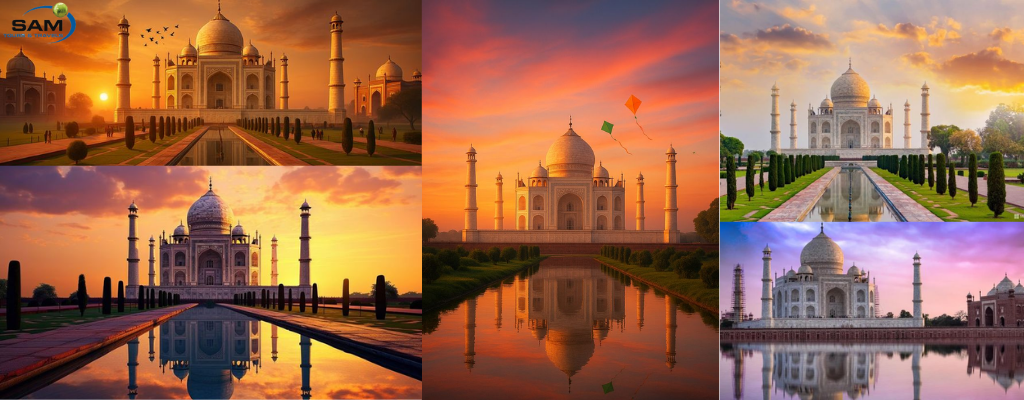
·
Last Updated: August 18, 2026
The Taj Mahal is one of the most breathtaking monuments in the world. While its architectural beauty is widely admired, one of its most fascinating features is how it appears to change color throughout the day.
From a soft pink glow at sunrise to a dazzling white in daylight and a golden hue at sunset, the Taj Mahal offers a different visual experience at every hour. But why does this happen?
In this SEO-friendly guide, we explore the science, design, and symbolism behind the changing colors of the Taj Mahal.
The Magic Begins at Sunrise
Early morning is one of the best times to witness the Taj Mahal’s transformation. As the sun rises, the monument often appears in shades of soft pink or light orange.
Why Does It Look Pink?
At sunrise, sunlight passes through a thicker layer of the Earth’s atmosphere. This filters out shorter wavelengths like blue and allows longer wavelengths such as red and orange to dominate.
When this warm light hits the white marble of the Taj Mahal, it reflects a gentle pinkish tone.
Experience
- Calm and peaceful environment
- Fewer crowds
- Perfect lighting for photography
This soft color gives the Taj Mahal a romantic and delicate appearance, often considered its most magical phase.
Midday Brilliance: Pure White Glow
As the sun rises higher, the Taj Mahal transforms into a bright, shining white structure.
Why Does It Look White?
During midday, the sun is directly overhead, and the light is more intense and balanced. All wavelengths of light combine to produce white light, which reflects off the marble surface.
The high-quality white marble used in the Taj Mahal enhances this effect, making it look almost glowing under the sun.
Experience
- Clear and sharp architectural details
- Bright and vibrant appearance
- Ideal for observing carvings and designs
This phase highlights the monument’s purity and symmetry.
Sunset Glow: Golden Elegance
As the day comes to an end, the Taj Mahal takes on a golden or amber hue.
Why Does It Turn Golden?
Similar to sunrise, the angle of the sun during sunset causes the light to travel through more atmosphere. This results in warmer tones like yellow, orange, and gold dominating the light.
When reflected on the marble surface, these colors create a rich golden glow.
Experience
- Romantic and dramatic atmosphere
- Warm lighting perfect for photography
- Stunning reflections in the water
Sunset is one of the most popular times to visit due to its breathtaking visual appeal.
Moonlight Mystery: A Silver-Blue Glow
On full moon nights, the Taj Mahal appears completely different. It reflects a cool, bluish-white or silver tone, creating a mystical effect.
Why Does It Look Blue at Night?
Moonlight is actually reflected sunlight, but it is much dimmer. The human eye perceives this low light as bluish, especially against white surfaces like marble.
The Taj Mahal’s polished marble enhances this effect, making it glow softly under the moon.
Experience
- Quiet and serene atmosphere
- Unique and rare viewing opportunity
- Dream-like visual effect
Night viewing of the Taj Mahal is limited but highly recommended.
The Science Behind the Color Changes
The changing colors of the Taj Mahal are mainly due to light scattering and reflection.
Key Scientific Factors
- Sunlight Angle
The position of the sun affects how light reaches the monument. - Atmospheric Conditions
Dust, humidity, and pollution can influence color intensity. - Marble Properties
The white marble reflects and absorbs light differently at various times. - Human Perception
Our eyes interpret colors differently depending on lighting conditions.
Together, these factors create the illusion of changing colors.
Architectural Brilliance Behind the Effect
The Taj Mahal was not randomly designed—it was carefully planned to interact with light.
Design Elements That Enhance Color Changes
- Smooth, polished marble surface
- Symmetrical layout for balanced light reflection
- Open surroundings allowing unobstructed sunlight
- Reflecting pools that amplify visual effects
These elements make the monument more dynamic and visually engaging.
Role of the Yamuna River and Surroundings
The Taj Mahal is located along the Yamuna River, which plays an important role in its visual appearance.
- The river reflects light onto the monument
- Surrounding greenery enhances contrast
- Open space allows natural light to flow freely
This natural setting contributes to the monument’s changing colors.
Symbolism Behind the Changing Colors
Beyond science, the color changes also carry symbolic meaning.
What the Colors Represent
- Morning (Pink): Freshness, love, and new beginnings
- Afternoon (White): Purity, peace, and clarity
- Evening (Golden): Warmth, romance, and completion
- Night (Blue/Silver): Mystery, eternity, and calmness
These transitions reflect different emotions and phases of life.
Best Time to See Each Color
- Pink Glow: Sunrise (5:30 AM – 7:00 AM)
- White Shine: Midday (11:00 AM – 2:00 PM)
- Golden Hue: Sunset (5:30 PM – 7:00 PM)
- Blue Glow: Full moon nights
Each time offers a unique perspective of the Taj Mahal.
Travel Tips for Visitors
- Visit early morning for the best experience
- Check weather conditions before planning
- Carry a camera for capturing different hues
- Avoid peak afternoon heat in summer
- Book night viewing tickets in advance
Conclusion
The Taj Mahal is not just a static monument—it is a living canvas that changes with light, time, and atmosphere. Its shifting colors are a result of scientific principles, architectural brilliance, and symbolic meaning.
From the soft pink of sunrise to the golden glow of sunset and the mystical blue of moonlight, the Taj Mahal offers a unique experience at every moment of the day.
Understanding this phenomenon makes your visit even more special, allowing you to appreciate not just its beauty but also the genius behind its design.
For More Information : Read More