
·
Last Updated: August 18, 2026
The Taj Mahal is one of the most famous monuments in the world. It looks beautiful and attracts millions of visitors every year.
However, this beauty needs protection. So, UNESCO helps protect it as a World Heritage Site.
In this guide, you will learn how conservation works. You will also understand why it is important.
What is UNESCO Conservation?
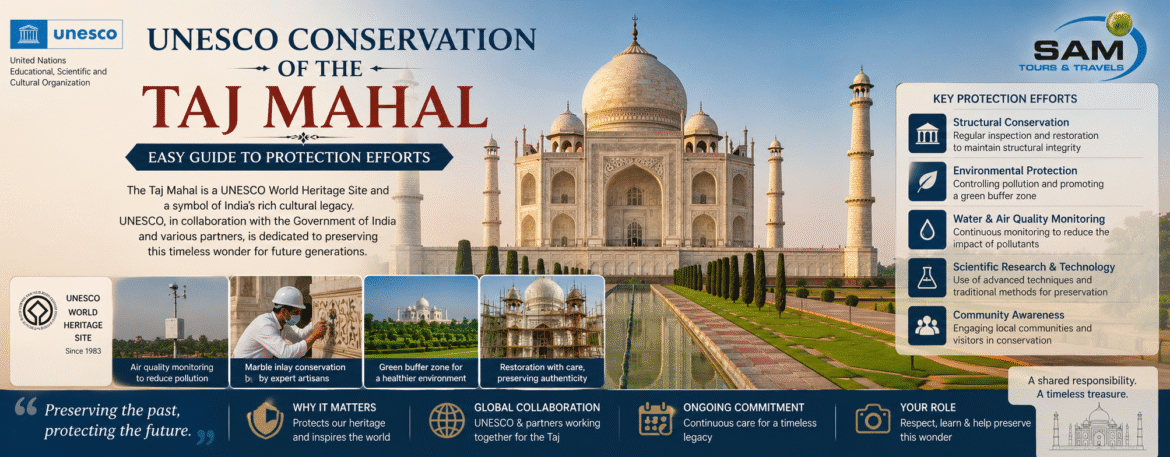
UNESCO conservation means protecting important places. These places have cultural and historical value.
The Taj Mahal is one of them. Therefore, experts work to keep it safe and clean.
They focus on:
- Protecting the structure
- Reducing damage
- Maintaining beauty
- Promoting safe tourism
As a result, the monument stays strong.
Why the Taj Mahal Needs Protection


The Taj Mahal is made of white marble. This material is delicate. So, it gets damaged easily.
Here are the main problems:
Air Pollution
Factories and vehicles release smoke. This smoke makes the marble yellow.
River Pollution
The Yamuna River flows nearby. If the water becomes dirty, it affects the base of the monument.
Too Many Tourists
Millions of people visit every year. Because of this, the surface wears out.
Weather Damage
Heat, dust, and rain slowly harm the structure.
Steps Taken to Protect the Taj Mahal


Experts take many steps to protect the Taj Mahal.
Taj Trapezium Zone
The Taj Trapezium Zone controls pollution. It limits harmful industries near the monument.
Mud Pack Cleaning
Workers apply natural clay on the marble. Then they remove it. This process cleans the surface safely.
Traffic Control
Vehicles are not allowed near the monument. Instead, people use eco-friendly transport.
Regular Maintenance
The Archaeological Survey of India checks the monument often. They repair damage quickly.
Role of Visitors
Visitors also play a key role. Small actions can help a lot.
You should:
- Not touch the walls
- Keep the area clean
- Follow all rules
- Avoid plastic
So, your visit becomes safe for the monument.
Use of Technology
Today, technology helps conservation work.
For example:
- Air quality is checked daily
- Structure is monitored regularly
- Digital tools help in planning
Because of this, experts act quickly.
Challenges Still Remain
However, some problems continue.
- Pollution is still rising
- Tourist numbers are growing
- Climate change affects the structure
- City growth in Agra adds pressure
Therefore, continuous effort is needed.
Why UNESCO Protection is Important
UNESCO gives global support. This helps in many ways.
- It sets high standards
- It spreads awareness
- It brings international attention
As a result, the Taj Mahal gets better protection.
Conclusion
The Taj Mahal is a symbol of history and beauty. So, it needs care and protection.
UNESCO and the Archaeological Survey of India are working hard.
However, visitors must also help. If everyone follows simple rules, the monument will stay safe.
In this way, future generations will also enjoy its beauty.
For More Information : Read More