
·
Last Updated: August 18, 2026
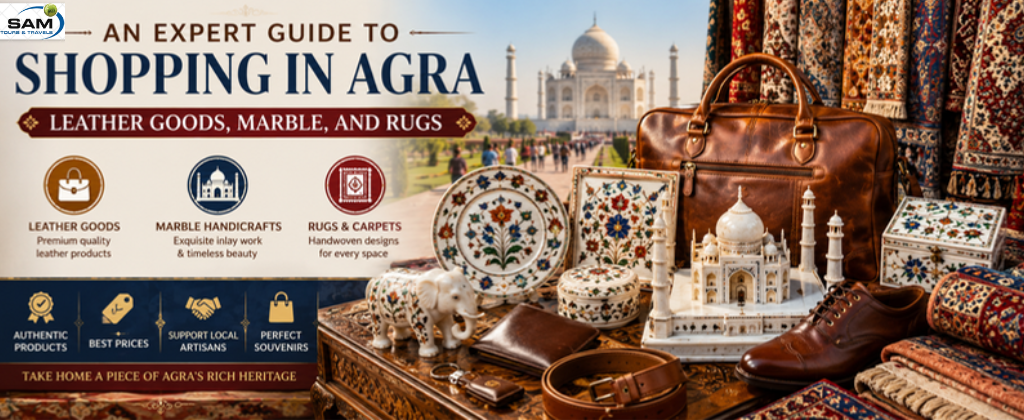
An Expert Guide to Shopping in Agra: Leather Goods, Marble, and Rugs
Shopping in Agra is much more than buying souvenirs—it’s an opportunity to take home a piece of the city’s rich cultural heritage. While the Taj Mahal attracts millions of visitors every year, Agra is equally renowned for its skilled artisans, traditional craftsmanship, and centuries-old handicraft industries. From premium leather products and exquisite marble inlay work to handwoven rugs and carpets, the city offers an impressive variety of authentic handmade goods.
Whether you’re looking for a luxury leather jacket, a marble tabletop inspired by the Taj Mahal, or a beautifully woven carpet to enhance your home, this expert guide will help you shop wisely and avoid common tourist pitfalls.
Why Shop in Agra?
Agra has been a major center for craftsmanship since the Mughal era. The city’s artisans continue to preserve traditional techniques passed down through generations.
Agra is particularly famous for:
- Genuine leather products
- Marble inlay handicrafts
- Handmade rugs and carpets
- Brass artifacts
- Wooden handicrafts
- Decorative home décor
- Traditional jewelry
- Handcrafted souvenirs
Many products are handmade, making them unique keepsakes that reflect Agra’s artistic legacy.
1. Leather Goods in Agra
Agra is India’s largest leather footwear manufacturing hub and one of the country’s leading centers for premium leather products. Many internationally recognized brands source products from factories located here.
What to Buy
- Leather jackets
- Leather handbags
- Wallets
- Belts
- Shoes
- Sandals
- Laptop bags
- Travel bags
- Duffel bags
- Passport holders
How to Identify Genuine Leather
Before making a purchase, keep these tips in mind:
Check the Smell
Real leather has a distinctive natural aroma, unlike synthetic materials.
Feel the Texture
Authentic leather has slight imperfections and a soft, supple texture. Artificial leather usually feels perfectly smooth and plastic-like.
Examine the Edges
Real leather often has rough or fibrous edges, while fake leather typically has sealed or fabric-backed edges.
Ask About the Leather Type
Common leather types include:
- Full-Grain Leather
- Top-Grain Leather
- Genuine Leather
- Suede
- Nubuck
Full-grain leather is the most durable and develops a beautiful patina over time.
2. Marble Handicrafts – Agra’s Signature Art
No shopping trip to Agra is complete without exploring its famous marble handicrafts. Inspired by the intricate pietra dura (marble inlay) work seen in the Taj Mahal, these masterpieces are handcrafted by skilled artisans.
Popular Marble Products
- Taj Mahal replicas
- Marble tabletops
- Decorative plates
- Flower vases
- Jewelry boxes
- Elephant figurines
- Candle holders
- Coasters
- Photo frames
- Religious idols
Many workshops continue to use traditional hand-inlay techniques with semi-precious stones such as lapis lazuli, malachite, turquoise, and mother-of-pearl.
How to Buy Authentic Marble
Choose Makrana Marble
The finest products are crafted using Makrana marble—the same type used to build the Taj Mahal.
Inspect the Inlay Work
Quality marble products have smooth, seamless stone inlays with no visible glue marks.
Weight Matters
Real marble feels significantly heavier than resin or composite alternatives.
Ask About Handmade Production
Handcrafted pieces generally have higher artistic value than machine-made souvenirs.
3. Handmade Rugs and Carpets
Agra has long been famous for its carpet weaving traditions. Skilled artisans create beautiful hand-knotted rugs featuring Persian, Mughal, and contemporary designs.
Popular Types
- Wool Rugs
- Silk Carpets
- Cotton Rugs
- Persian-style Carpets
- Hand-knotted Rugs
- Hand-tufted Carpets
- Modern Designer Rugs
Many rugs require several months to complete depending on their size and knot density.
What to Look For
Knot Density
Higher knot counts usually indicate finer craftsmanship and greater durability.
Material Quality
Choose natural fibers like:
- Wool
- Silk
- Cotton
These materials offer superior longevity and appearance.
Check the Back Side
Hand-knotted rugs display visible knot patterns on the reverse side, while machine-made rugs often have fabric backing.
Natural Dyes
High-quality carpets frequently use natural vegetable dyes that age beautifully over time.
Best Shopping Areas in Agra
Sadar Bazaar
One of Agra’s busiest markets, Sadar Bazaar is ideal for leather goods, footwear, handicrafts, clothing, and street shopping.
Best For:
- Leather shoes
- Bags
- Belts
- Souvenirs
- Local snacks
Kinari Bazaar
Located near Agra Fort, Kinari Bazaar offers a traditional shopping experience filled with narrow lanes and colorful shops.
Here you’ll find:
- Marble handicrafts
- Jewelry
- Textiles
- Decorative items
- Wedding accessories
Taj Ganj Market
Situated near the Taj Mahal, this market caters to tourists looking for handicrafts and souvenirs.
Popular purchases include:
- Marble gifts
- Mini Taj Mahal replicas
- Leather accessories
- Paintings
- Handicrafts
Shah Market
Known for electronics, garments, footwear, and accessories, Shah Market also features several leather shops.
Government Emporiums
If you prefer fixed prices and certified handicrafts, government-approved emporiums are an excellent option. These stores often provide authenticity certificates for premium marble and carpet purchases.
Shopping Tips for Tourists
Compare Prices
Visit multiple stores before making expensive purchases.
Bargain Respectfully
Negotiating prices is common in local markets, but do so politely.
Ask for Bills
Always request a proper invoice, especially for high-value items.
Verify Authenticity
For expensive marble, carpets, and leather products, ask for authenticity certificates whenever available.
Check Shipping Options
Many shops offer domestic and international shipping for large purchases like marble tabletops and carpets.
Inspect Before Buying
Examine products carefully for defects, scratches, loose inlays, or stitching issues.
What to Avoid
Avoid buying from aggressive street vendors without inspecting product quality. Be cautious of extremely low prices, as they may indicate imitation leather, resin instead of marble, or machine-made carpets sold as handmade.
Best Time for Shopping in Agra
The best shopping season is between October and March, when the weather is pleasant for exploring markets. Evening hours are particularly lively, with many bazaars offering a vibrant atmosphere.
Can You Bargain in Agra?
Yes, bargaining is common in traditional markets like Sadar Bazaar and Kinari Bazaar. However, government emporiums and branded stores generally have fixed prices.
As a general guideline:
- Souvenir shops: Moderate bargaining is acceptable.
- Leather markets: Compare prices before negotiating.
- High-end handicraft stores: Prices may already reflect craftsmanship and authenticity.
Tips for International Travelers
If you’re purchasing marble tabletops, large carpets, or valuable handicrafts:
- Confirm export packaging.
- Ask about insurance for shipped items.
- Verify customs documentation if required.
- Keep all invoices for airport customs checks.
Why Agra is a Shopper’s Paradise
Agra offers a unique blend of history, craftsmanship, and affordability. Unlike many tourist destinations, visitors can watch artisans create marble inlay work, weave carpets, or craft leather goods using traditional techniques. Shopping here isn’t just about buying products—it’s about experiencing living heritage and supporting skilled local artisans.
Conclusion
Agra is one of India’s finest destinations for handcrafted shopping. Whether you’re investing in premium leather products, admiring the intricate beauty of marble inlay work, or selecting a handwoven rug, every purchase carries a story of craftsmanship and tradition. By shopping from reputable stores, checking authenticity, and taking time to compare options, you can bring home timeless souvenirs that celebrate Agra’s rich artistic legacy.
Frequently Asked Questions (FAQs)
1. What is Agra most famous for shopping?
Agra is best known for leather goods, marble inlay handicrafts, hand-knotted rugs, carpets, brass artifacts, and traditional souvenirs inspired by the Taj Mahal.
2. Is leather in Agra genuine?
Yes. Agra is one of India’s leading leather manufacturing hubs. Purchasing from reputable stores or government-approved outlets helps ensure authenticity.
3. How can I identify real marble handicrafts?
Look for Makrana marble, seamless stone inlay work, substantial weight, and smooth craftsmanship. Reputable sellers often provide authenticity certificates.
4. Are handmade carpets in Agra expensive?
Prices vary depending on size, material, and knot density. Hand-knotted silk carpets are generally more expensive than wool or cotton options due to the time and skill involved.
5. Is bargaining acceptable in Agra markets?
Yes, bargaining is common in local markets such as Sadar Bazaar and Kinari Bazaar, but it should be done politely and reasonably. Government emporiums and branded stores usually have fixed prices.