
·
Last Updated: August 18, 2026
Introduction
The Black Taj Mahal myths have fascinated travelers, historians, and storytellers for centuries. Many visitors who admire the white marble beauty of the Taj Mahal often hear an intriguing tale—that Emperor Shah Jahan planned to build an identical black marble mausoleum across the Yamuna River for himself. It is a story filled with romance, mystery, and tragedy. But is there any historical evidence to support this claim?
In this article, we separate historical facts from local legends and explore the origins of the famous Black Taj Mahal myth. Whether you’re planning a visit to Agra or simply love Mughal history, understanding this fascinating legend will give you a deeper appreciation of the Taj Mahal and its remarkable past.
What Is the Black Taj Mahal Legend?
According to local folklore, Mughal Emperor Shah Jahan wanted to build two magnificent mausoleums:
- The white Taj Mahal for his beloved wife Mumtaz Mahal.
- A matching black marble mausoleum for himself across the Yamuna River.
The two structures were supposedly meant to be connected by a grand marble bridge, symbolizing eternal love.
However, before construction could begin, Shah Jahan’s son Aurangzeb overthrew him and imprisoned him in Agra Fort. The emperor spent his final years looking at the Taj Mahal from a distance until his death in 1666.
It is undoubtedly one of India’s most romantic stories—but does history agree?
Where Did the Story Begin?
The earliest known reference to the Black Taj Mahal comes from Jean-Baptiste Tavernier, a French jeweler and traveler who visited India in the 17th century.
Tavernier wrote that Shah Jahan intended to construct another grand mausoleum in black stone. His writings became widely popular in Europe, and over time, the story evolved into one of the world’s greatest architectural mysteries.
However, modern historians point out that Tavernier never witnessed such construction himself. His account was likely based on stories circulating in the Mughal court.
The Mehtab Bagh Connection


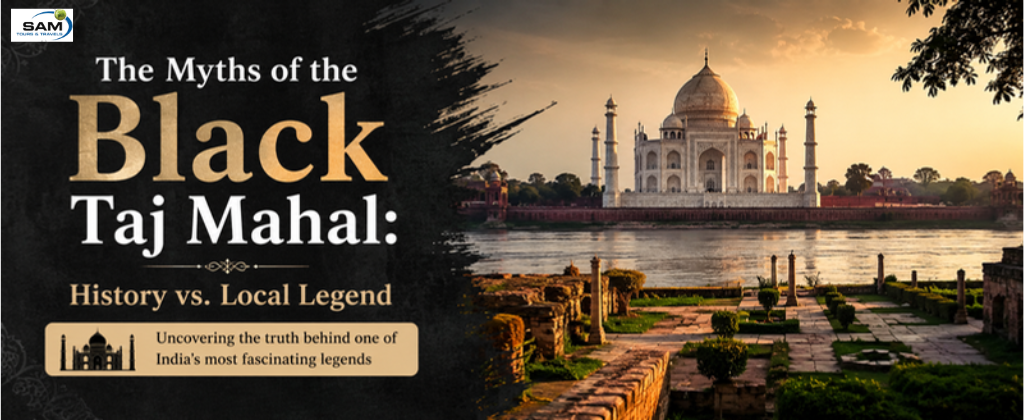
Much of the Black Taj Mahal myth revolves around Mehtab Bagh, a beautiful Mughal garden located directly across the Yamuna River.
For many years, visitors noticed dark-colored ruins in this area and believed they were the unfinished foundations of the Black Taj Mahal.
However, archaeological excavations revealed something quite different.
Researchers discovered that:
- The remains belonged to the original Mehtab Bagh garden complex.
- The “black stones” were actually white marble that had darkened over centuries due to weathering.
- The site was designed to create a perfect reflection of the Taj Mahal in water rather than support another mausoleum.
These findings significantly weakened the theory of a planned Black Taj Mahal.
What Do Historians Say?
Today, most historians agree that there is no solid historical evidence proving Shah Jahan ever intended to build a Black Taj Mahal.
Several reasons support this conclusion:
No Mughal Records
The Mughal Empire maintained detailed records of construction projects.
Surprisingly, no official court documents mention plans for another mausoleum made entirely of black marble.
No Construction Evidence
Despite extensive archaeological investigations, no foundations, architectural plans, or construction materials linked to a second Taj Mahal have been found.
Enormous Financial Cost
The Taj Mahal took approximately 22 years to complete and required thousands of craftsmen, artisans, and laborers.
Building an identical structure entirely from black marble would have demanded an extraordinary amount of resources, making the project highly unlikely.
Shah Jahan’s Burial
Instead of resting in a separate mausoleum, Shah Jahan was buried beside Mumtaz Mahal inside the Taj Mahal itself.
This final resting place suggests that no second tomb was ever completed—or perhaps even planned.
Why Does the Myth Continue?
The Black Taj Mahal legend survives because it combines several irresistible elements:
- A tragic love story
- An ambitious emperor
- A dramatic family betrayal
- Architectural mystery
- Missing historical evidence
These ingredients make the story unforgettable for visitors.
Tour guides have also shared the legend for generations because it adds another layer of fascination to the Taj Mahal experience.
Could the Black Taj Mahal Have Been Symbolic?
Some scholars believe Tavernier may have misunderstood Shah Jahan’s intentions.
Instead of planning another monument, the emperor may simply have admired the Taj Mahal’s reflection in the Yamuna River at night.
During moonlit evenings, the reflection appears darker, creating an illusion of a “black” Taj.
Others suggest that the dark appearance of Mehtab Bagh’s weathered marble may have inspired later storytellers to imagine an unfinished black monument.
Archaeological Discoveries
Excavations at Mehtab Bagh during the late 20th century uncovered:
- Mughal garden layouts
- Water channels
- Reflection pools
- Decorative pathways
- Marble features matching the original garden design
No evidence pointed toward the construction of another mausoleum.
Instead, archaeologists concluded that the garden was intentionally aligned to provide the most spectacular view of the Taj Mahal from across the river.
What Can Visitors See Today?


If you visit Mehtab Bagh today, you’ll find:
- Stunning panoramic views of the Taj Mahal
- Beautiful Mughal garden landscapes
- Peaceful walking paths
- Excellent sunset photography opportunities
- Fewer crowds than the main Taj Mahal complex
Many visitors actually enjoy the Taj Mahal from Mehtab Bagh even more because it offers a unique perspective away from the busy entrance gates.
History vs. Local Legend
| Historical Fact | Local Legend |
|---|---|
| No Mughal documents mention a Black Taj Mahal. | Shah Jahan planned a black marble mausoleum for himself. |
| Mehtab Bagh was a Mughal garden designed for symmetry and reflection. | The ruins are unfinished foundations of the Black Taj Mahal. |
| Archaeologists found no evidence of another mausoleum. | Aurangzeb stopped construction after imprisoning Shah Jahan. |
| Shah Jahan was buried inside the Taj Mahal beside Mumtaz Mahal. | The emperor intended to rest in a separate black monument. |
Why the Story Still Matters
Whether true or not, the Black Taj Mahal myth adds another layer of intrigue to one of the world’s greatest monuments.
Legends like this remind us that history is often shaped not only by documented facts but also by stories passed down through generations. While archaeology and historical records provide a clearer picture of the past, local folklore continues to enrich the visitor experience, inspiring curiosity and imagination.
Conclusion
The Black Taj Mahal myths remain one of India’s most captivating historical legends. Although modern archaeological research and Mughal records offer no convincing evidence that Shah Jahan planned a second black marble mausoleum, the story continues to captivate travelers from around the world. Visiting Mehtab Bagh and learning about the origins of this legend allows visitors to appreciate both the documented history and the rich folklore surrounding the Taj Mahal. Understanding the difference between historical fact and local legend makes the experience even more memorable.
Frequently Asked Questions (FAQs)
1. Was the Black Taj Mahal ever built?
No. There is no archaeological or historical evidence proving that a Black Taj Mahal was ever constructed.
2. Where was the Black Taj Mahal supposed to be built?
According to legend, it would have stood across the Yamuna River at Mehtab Bagh, directly opposite the Taj Mahal.
3. Who started the Black Taj Mahal story?
The legend is commonly traced to the writings of the 17th-century French traveler Jean-Baptiste Tavernier, who mentioned the possibility of such a plan.
4. Why do people believe the myth?
The story combines romance, tragedy, and mystery, making it one of the most enduring legends associated with the Taj Mahal.
5. Is Mehtab Bagh worth visiting?
Yes. Mehtab Bagh offers one of the best panoramic views of the Taj Mahal, especially at sunset, and provides insight into the symmetry of the original Mughal garden design.