
·
Last Updated: August 18, 2026
Introduction
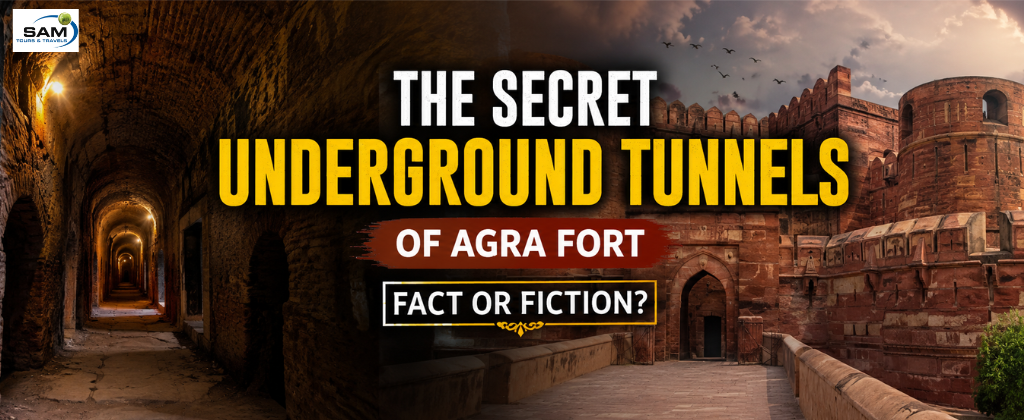
The towering red sandstone walls of Agra Fort have witnessed centuries of royal grandeur, political intrigue, and historic battles. As one of India’s most iconic Mughal monuments, the fort is admired for its magnificent palaces, courtyards, and defensive architecture. Yet beyond its visible beauty lies a mystery that has fascinated visitors for generations—the legend of the secret underground tunnels of Agra Fort.
Did hidden passageways once connect Agra Fort to the Taj Mahal? Were there escape routes for Mughal emperors or secret chambers used to protect royal treasures? While local stories fuel these captivating tales, historians and archaeologists offer a more balanced perspective. In this article, we’ll explore the history, evidence, and folklore surrounding Agra Fort’s underground tunnels to separate fact from fiction.
Why Are There So Many Stories About Agra Fort?
Agra Fort was more than just a palace—it was a military fortress, royal residence, administrative center, and treasury of the Mughal Empire. Built primarily by Emperor Akbar in the 16th century and later expanded by Jahangir and Shah Jahan, the fort covers nearly 94 acres and contains numerous buildings, hidden courtyards, gateways, and underground sections.
Its vast layout naturally sparked speculation about concealed chambers and secret routes, especially because large parts of the fort remain inaccessible to visitors today.
The Legend of the Secret Tunnels
According to local folklore, Agra Fort contains a network of underground tunnels that were used for:
- Emergency escape during enemy attacks
- Secret movement of Mughal royalty
- Transporting royal treasures
- Military communication
- Connecting Agra Fort with the Taj Mahal
- Hidden prisons and storage chambers
Some stories even claim these tunnels stretch several kilometers beneath Agra, linking important Mughal monuments.
While these tales are exciting, historians urge caution before accepting them as historical fact.
Suggested Tour Package : Golden Traingle Tour Package
Did Agra Fort Really Have Underground Passages?
The answer is yes—but not in the way many legends describe.
Most large medieval forts included underground structures such as:
- Storage rooms
- Water reservoirs
- Service corridors
- Ventilation passages
- Defensive chambers
- Escape passages within the fort complex
Archaeological studies suggest Agra Fort also contains underground spaces, but there is no verified evidence of a vast tunnel network connecting the fort to distant monuments like the Taj Mahal.
The Agra Fort–Taj Mahal Tunnel Myth


One of the most popular legends claims that a secret tunnel connected Agra Fort to the Taj Mahal, allowing Emperor Shah Jahan to travel safely between the two sites.
However, historians point out several reasons why this story is unlikely:
- The Taj Mahal was built as a mausoleum, not a military structure.
- No archaeological excavations have revealed such a tunnel.
- No Mughal court records describe its construction.
- Maintaining a tunnel beneath the Yamuna River would have been an enormous engineering challenge for the time.
Although the idea is fascinating, no credible historical evidence supports this claim.
Hidden Chambers Inside the Fort
Visitors often notice sealed doors and restricted sections within Agra Fort, leading to speculation about hidden tunnels.
In reality, many of these closed areas are believed to be:
- Structural foundations
- Underground storage spaces
- Former servant quarters
- Water management systems
- Restoration zones closed for conservation
- Military-controlled sections not open to the public
Restricted access often fuels mystery, even when practical explanations exist.
Why Would the Mughals Build Underground Areas?
Underground spaces served many practical purposes in Mughal architecture.
1. Protection from Heat
Subterranean rooms remained significantly cooler during Agra’s hot summers.
2. Security
Treasures, important documents, and valuable goods could be stored safely below ground.
3. Military Defense
Protected corridors allowed soldiers to move discreetly within the fort during conflicts.
4. Water Management
Some underground structures supported wells, reservoirs, and drainage systems essential for a large fortress.
What Do Historians Say?
Modern historians agree on several key points:
- Agra Fort almost certainly contains underground chambers.
- Some internal passageways likely existed for military and service purposes.
- There is no verified evidence of long-distance secret tunnels connecting Agra Fort to the Taj Mahal or other monuments.
- Most sensational stories originate from folklore rather than historical records.
As with many ancient monuments, myths often grow because inaccessible areas leave room for imagination.
Suggested Tour : Taj Mahal Tours Package
Why the Mystery Continues
The legend persists because Agra Fort is filled with architectural features that inspire curiosity:
- Massive defensive walls
- Hidden staircases
- Sealed gateways
- Underground rooms
- Restricted zones
- Stories passed down by local guides
These elements make it easy to imagine a hidden world beneath the fort.
What Can Visitors Explore Today?


Although underground tunnels are not open to tourists, Agra Fort offers many fascinating attractions, including:
- Jahangiri Mahal
- Khas Mahal
- Diwan-i-Am
- Diwan-i-Khas
- Musamman Burj
- Sheesh Mahal
- Amar Singh Gate
- Beautiful views of the Taj Mahal across the Yamuna River
These historic structures provide valuable insight into Mughal architecture and royal life.
Fact vs. Fiction
| Historical Fact | Popular Fiction |
|---|---|
| Agra Fort contains underground rooms and service areas. | A massive tunnel network connects the fort to the Taj Mahal. |
| Underground spaces were used for storage, defense, and utilities. | Secret passages were regularly used by Mughal emperors to travel unseen. |
| Some sections remain closed for preservation and security. | Hidden treasures and lost royal chambers are waiting to be discovered. |
| Historians have found no evidence of long-distance tunnels. | Underground routes stretch beneath Agra connecting multiple monuments. |
Why These Legends Matter
Legends like the underground tunnels add excitement to visiting historic sites, but they also highlight the importance of separating folklore from documented history.
The real story of Agra Fort is no less impressive. Its engineering, military planning, and architectural innovation demonstrate the remarkable capabilities of Mughal builders without the need for mythical tunnel networks.
Understanding both the legends and the facts allows visitors to appreciate the fort from a richer historical perspective.
Conclusion
The mystery surrounding the Agra Fort underground tunnels continues to intrigue travelers and history enthusiasts alike. While archaeological evidence confirms the existence of underground chambers and service passages within the fort, there is no reliable proof of secret tunnels connecting Agra Fort to the Taj Mahal or other monuments. These captivating stories remain an important part of Agra’s local folklore, adding an extra layer of fascination to one of India’s greatest historical landmarks. Whether fact or fiction, the legends encourage visitors to look beyond the walls and explore the remarkable history of the Mughal Empire.
Frequently Asked Questions (FAQs)
1. Does Agra Fort have underground tunnels?
Yes. Agra Fort contains underground chambers and internal passageways, but there is no verified evidence of extensive secret tunnels linking it to other monuments.
2. Is there a tunnel between Agra Fort and the Taj Mahal?
No historical or archaeological evidence confirms the existence of a tunnel connecting Agra Fort with the Taj Mahal.
3. Why are some areas of Agra Fort closed?
Certain sections are restricted for conservation, structural safety, security, or because they remain under military control.
4. Were underground chambers common in Mughal forts?
Yes. Underground rooms were commonly used for storage, cooling, defense, and water management in large Mughal forts.
5. Can visitors explore the underground sections of Agra Fort?
No. Most underground areas are not accessible to tourists due to preservation and safety reasons.