
·
Last Updated: August 18, 2026
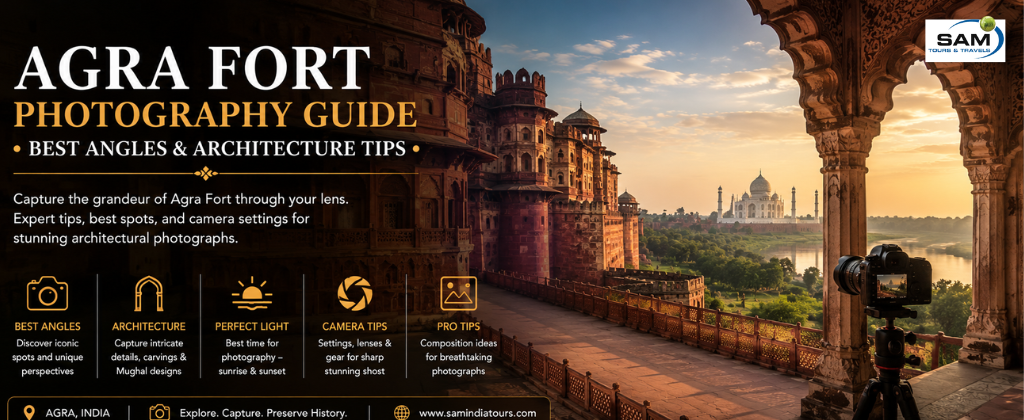
The Agra Fort Photography Guide is perfect for travelers and photography enthusiasts who want to go beyond ordinary snapshots. While the Taj Mahal often steals the spotlight, Agra Fort offers an equally rewarding experience with its magnificent Mughal architecture, grand gateways, intricate carvings, marble palaces, and panoramic views of the Taj Mahal.
Built primarily from red sandstone and later enhanced with elegant white marble structures, Agra Fort is a paradise for photographers. From dramatic arches and symmetrical courtyards to ornate jali screens and finely carved ceilings, every corner tells a story waiting to be captured. This guide will help you photograph Agra Fort’s architectural beauty like a professional.
Why Agra Fort Is a Photographer’s Dream
Agra Fort offers an incredible variety of architectural subjects within one UNESCO World Heritage Site.
Highlights include:
- Massive sandstone walls
- Decorative marble palaces
- Elegant arches
- Intricate floral carvings
- Geometric patterns
- Beautiful courtyards
- Historic balconies
- Views of the Taj Mahal
Unlike many monuments, Agra Fort combines military architecture with luxurious royal residences, creating endless photographic opportunities.
Best Time to Photograph Agra Fort
Early Morning
Morning light creates soft shadows that highlight carvings and textures while avoiding harsh contrasts.
Benefits include:
- Fewer visitors
- Pleasant temperatures
- Softer light
- Better compositions
Late Afternoon
Golden-hour light enhances the warm tones of the red sandstone and creates dramatic architectural images.
Avoid midday when direct sunlight can produce harsh shadows.
Must-Photograph Architectural Highlights
Amar Singh Gate
The impressive entrance gate offers dramatic perspectives with towering sandstone walls and defensive architecture.
Capture:
- Wide-angle shots
- Leading lines
- Symmetrical compositions
Jahangiri Mahal
One of the oldest and most impressive buildings inside the fort.
Photograph:
- Massive arches
- Decorative brackets
- Stone carvings
- Symmetrical courtyards
Khas Mahal
Built from white marble, Khas Mahal contrasts beautifully with the surrounding sandstone.
Look for:
- Marble lattice work
- Elegant columns
- Delicate floral carvings
- Window details
Diwan-i-Khas
The Hall of Private Audience showcases refined Mughal craftsmanship.
Focus on:
- Decorative pillars
- Ceiling details
- Arched openings
- Marble ornamentation
Musamman Burj
This octagonal marble tower is one of the most photogenic locations inside Agra Fort.
It offers:
- Panoramic views
- Beautiful marble details
- Framed views of the Taj Mahal
- Excellent portrait backgrounds
Focus on Small Details
Great architectural photography isn’t just about grand buildings.
Capture:
- Floral motifs
- Jali (lattice) screens
- Calligraphy
- Door handles
- Stone textures
- Marble inlay work
- Ceiling patterns
- Window frames
These close-up images help tell the complete story of Agra Fort.
Best Camera Settings
DSLR / Mirrorless
- Aperture: f/8–f/11
- ISO: 100–200
- White Balance: Daylight
- Shoot in RAW
- Use Aperture Priority mode for changing light
Smartphone
Enable:
- HDR Mode
- Grid lines
- Manual focus if available
- 2x optical zoom instead of digital zoom
Best Lenses
Wide-Angle Lens (16–35mm)
Ideal for:
- Courtyards
- Gates
- Grand halls
- Interior architecture
Standard Zoom (24–70mm)
Perfect for:
- General travel photography
- Portraits
- Architectural details
Telephoto Lens (70–200mm)
Excellent for:
- Intricate carvings
- Taj Mahal views
- Isolated architectural elements
Composition Tips
Use Leading Lines
Corridors, pathways, and staircases naturally draw attention toward the main subject.
Frame Through Arches
Photograph rooms and courtyards through Mughal arches for depth and storytelling.
Capture Symmetry
Agra Fort features many perfectly balanced architectural elements.
Position yourself in the center whenever possible.
Include Human Scale
A person standing in a courtyard helps demonstrate the immense size of the fort.
Photographing the Taj Mahal from Agra Fort
One of Agra Fort’s most famous viewpoints is the distant view of the Taj Mahal from Musamman Burj.Want to know the fascinating history, architecture, and timeless beauty of the Taj Mahal?
For the best results:
- Use a telephoto lens.
- Visit during clear weather.
- Shoot during the golden hour.
- Include architectural framing in the foreground.
Editing Tips
After your visit:
- Slightly increase contrast.
- Recover highlights.
- Enhance texture.
- Warm the sandstone tones gently.
- Avoid excessive saturation.
Natural editing preserves the monument’s authentic appearance.
Photography Etiquette
While photographing Agra Fort:
- Respect restricted areas.
- Avoid blocking walkways.
- Do not climb on structures.
- Follow ASI guidelines.
- Be mindful of other visitors.
Responsible photography helps preserve this historic site.
Suggested Photography Route
8:00 AM – Amar Singh Gate
8:30 AM – Jahangiri Mahal
9:15 AM – Khas Mahal
10:00 AM – Diwan-i-Khas
10:45 AM – Musamman Burj
This route follows the changing morning light for optimal photography.
Conclusion
Agra Fort is much more than a historic fortress—it’s a masterpiece of Mughal architecture filled with remarkable photographic opportunities. From towering sandstone walls and elegant marble palaces to intricate carvings and panoramic views of the Taj Mahal, every section of the fort offers unique perspectives for photographers of all skill levels.
Whether you’re carrying a professional camera or simply using your smartphone, taking the time to explore the fort’s architectural details will reward you with images that beautifully capture the grandeur and craftsmanship of one of India’s greatest heritage monuments.
Recommended Tour: Continue your journey through India’s rich history with our Golden Triangle Tour covering Delhi, Agra, and Jaipur. Enjoy expert-guided sightseeing and unforgettable heritage experiences.
👉 https://www.samindiatours.com/golden-triangle-tours/
Frequently Asked Questions (FAQs)
1. Is Agra Fort good for photography?
Yes. Agra Fort offers stunning Mughal architecture, marble palaces, sandstone gateways, and panoramic views, making it an excellent destination for photographers.
2. What is the best time to photograph Agra Fort?
Early morning and late afternoon provide the best natural light and fewer crowds.
3. Which camera lens is best?
A 24–70mm lens is versatile, while a wide-angle lens is ideal for architecture and a telephoto lens works well for detailed carvings and distant views.
4. Can I photograph the Taj Mahal from Agra Fort?
Yes. Musamman Burj offers one of the most famous viewpoints of the Taj Mahal from inside Agra Fort.
5. Are smartphones suitable for Agra Fort photography?
Absolutely. Modern smartphones with HDR mode and good lighting can capture excellent architectural photographs.
One thought on “Capturing the Details: A Guide to Photographing Agra Fort’s Architecture”