·
Last Updated: August 18, 2026
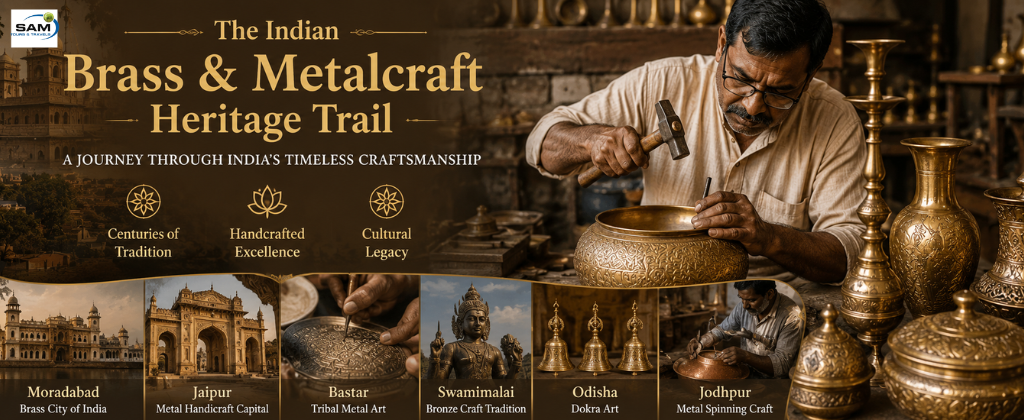
The Indian Brass & Metalcraft Heritage Trail: A 7-Day Custom Itinerary
Introduction: Discover India’s Timeless Metalcraft Legacy
India has a rich tradition of craftsmanship that has developed over thousands of years. Among these artistic traditions, brass and metalcraft hold a special place. From royal palaces and ancient temples to everyday household objects, metal artistry has been an important part of Indian culture.
The Indian Brass & Metalcraft Heritage Trail offers travelers a unique opportunity to explore the stories, techniques, and communities behind these beautiful crafts. This journey goes beyond sightseeing. It introduces visitors to skilled artisans who continue age-old traditions using their hands, creativity, and knowledge passed down through generations.
Across India, different regions have developed their own metalcraft styles. Some specialize in brass utensils, while others are known for silver work, copper designs, or unique alloy techniques. Each craft reflects the history, lifestyle, and cultural identity of its region.
This 7-day custom itinerary takes you through some of India’s most important metalcraft destinations. Along the way, you will visit artisan workshops, explore traditional markets, discover ancient techniques, and experience the human stories behind handcrafted treasures.
Why Explore India’s Brass and Metalcraft Heritage?
Many travelers explore India through its monuments, food, and festivals. However, traditional crafts offer another way to understand the country’s history.
Metalcraft has been part of Indian life for centuries. Ancient communities used metals to create tools, religious objects, decorative items, and royal accessories.
Brass and copper were especially valued because they were durable, beautiful, and culturally significant.
Exploring metalcraft destinations allows visitors to:
- Meet skilled local artisans
- Understand traditional production methods
- Discover regional craft styles
- Support handmade industries
- Experience authentic local culture
Moreover, buying handmade metal products directly from artisans helps preserve traditional skills for future generations.
Day 1: Moradabad – The Brass City of India
Discovering the Heart of Brass Craftsmanship
Your Indian Brass & Metalcraft Heritage Trail begins in Moradabad, Uttar Pradesh. Known as the “Brass City of India,” Moradabad is one of the country’s most important centers for brass production.
For generations, local artisans have created beautiful brass items using traditional techniques. The city is famous for decorative pieces, utensils, lamps, sculptures, and home accessories.
Walking through Moradabad’s craft areas gives visitors a chance to see artisans working with metal in real time. You can observe the process of shaping, polishing, engraving, and finishing brass products.
Exploring Moradabad Artisan Workshops
A visit to local workshops reveals the incredible skill required to create handmade brass products.
The process usually involves several steps:
Designing
Artisans first prepare patterns and designs. Many designs are inspired by nature, Islamic art, floral patterns, and traditional Indian motifs.
Casting and Shaping
Metal is heated and shaped according to the required form. This stage requires experience because artisans must control temperature and pressure carefully.
Engraving and Finishing
After shaping, craftsmen add detailed designs through engraving and polishing. This final stage gives each product its unique appearance.
Things to Buy in Moradabad
Visitors can explore local markets for:
- Brass lamps
- Decorative bowls
- Handcrafted trays
- Traditional utensils
- Brass sculptures
- Home décor items
These products make meaningful souvenirs because they represent the skills of local craftspeople.
Day 2: Jaipur – Royal Metalwork of Rajasthan
Exploring the Pink City’s Craft Traditions
The second stop on the Indian Brass & Metalcraft Heritage Trail is Jaipur, Rajasthan.
Known for its royal heritage, Jaipur has a long history of craftsmanship. The city’s artisans create beautiful metal objects influenced by Rajput traditions and palace aesthetics.
During the royal era, metalworkers produced decorative items for palaces, temples, and royal households.
Today, Jaipur continues to be an important destination for handmade metal crafts.
Traditional Metal Crafts of Jaipur
Jaipur is known for several forms of metal artistry:
Brass Decorative Work
Artisans create lamps, statues, boxes, and artistic home accessories using brass.
Silver Craftsmanship
Rajasthan has a strong tradition of silver work, including jewelry, utensils, and decorative items.
Engraved Metal Designs
Craftsmen create detailed patterns using traditional engraving techniques.
These designs often include flowers, animals, geometric patterns, and cultural symbols.
Visiting Jaipur’s Craft Markets
Exploring Jaipur’s markets provides an excellent introduction to local craftsmanship.
Visitors can discover handmade products while interacting with shopkeepers and artisans.
Popular craft areas offer:
- Metal décor items
- Traditional jewelry
- Handcrafted accessories
- Decorative pieces inspired by royal designs
Shopping directly from local sellers also helps support traditional craft communities.
Day 3: Jodhpur – Traditional Copper and Metal Art
Discovering Blue City’s Artisan Heritage
The third destination on this heritage trail is Jodhpur, the famous Blue City of Rajasthan.
Beyond its forts and palaces, Jodhpur has a strong tradition of handmade crafts. Local artisans have practiced metalwork for generations, creating functional and decorative items.
The city’s craft traditions reflect Rajasthan’s royal lifestyle and desert culture.
Metalcraft Experiences in Jodhpur
Visitors can explore workshops where artisans create:
- Copper vessels
- Brass decorations
- Traditional household items
- Decorative metal pieces
Many craftsmen continue using methods that have remained unchanged for gene
Watching artisans transform simple metal sheets into beautiful objects is a memorable cultural experience.
The Human Stories Behind Metalcraft
The beauty of India’s metalcraft heritage comes from the people who preserve it.
Most artisan families learn their skills through generations of practice. Children often begin by observing elders before gradually learning advanced techniques.
This knowledge is not written in books. Instead, it is transferred through hands-on learning.
Every handmade object represents:
- Years of experience
- Family traditions
- Creative imagination
- Cultural history
The artisans are not only producing products; they are protecting India’s living heritage.
Day 4: Udaipur – Royal Decorative Metal Arts
Exploring the Craft Heritage of the City of Lakes
The fourth destination on the Indian Brass & Metalcraft Heritage Trail takes you to Udaipur, Rajasthan. Famous for its lakes, palaces, and royal history, Udaipur also has a rich tradition of decorative metal craftsmanship.
For centuries, artisans in this region created objects for royal households, temples, and traditional homes. Metalwork was not only functional but also represented beauty, status, and cultural expression.
Today, Udaipur’s craftsmen continue producing artistic metal items that reflect the elegance of Rajasthan’s heritage.
Traditional Metal Crafts of Udaipur
Udaipur’s metalcraft tradition includes several unique styles:
Brass Decorative Items
Local artisans create beautiful brass lamps, statues, trays, and home décor pieces. Many designs feature traditional Rajasthani patterns and motifs.
Copper Work
Copper has been used in Rajasthan for making vessels, decorative objects, and religious items. Artisans carefully shape and polish copper products using traditional methods.
Metal Embellishments
Many craftsmen create decorative metal panels, accessories, and artistic pieces inspired by palace architecture.
Visiting Artisan Areas in Udaipur
Exploring local markets and craft workshops gives visitors a closer look at the creative process.
Travelers can watch artisans:
- Shape raw metal
- Add traditional designs
- Polish finished products
- Create customized pieces
These experiences help visitors understand the patience and skill required behind every handmade object.
Day 5: Varanasi – Sacred Metalcraft Traditions
Discovering Spiritual Craftsmanship Along the Ganges
The fifth stop on the Indian Brass & Metalcraft Heritage Trail is Varanasi, one of India’s oldest living cities.
Known for its temples, spiritual traditions, and ancient ghats, Varanasi also has a strong connection with metal craftsmanship.
For centuries, local artisans have created brass and copper items used in religious ceremonies, homes, and cultural events.
Metal objects in Varanasi are not only decorative. Many have deep spiritual meaning.
Brass Craft and Religious Objects
Varanasi is especially known for beautifully crafted brass items such as:
- Oil lamps
- Prayer bells
- Ritual vessels
- Temple accessories
- Decorative statues
Many of these objects are still used during traditional ceremonies.
The sound of brass bells, the glow of oil lamps, and the craftsmanship of these objects are closely connected with the spiritual atmosphere of the city.
Experiencing Artisan Workshops in Varanasi
A visit to local workshops allows travelers to understand how craftsmen create sacred metal objects.
Artisans carefully mold, shape, and polish each item by hand.
Many workshops are family-run businesses where skills have been passed from one generation to another.
Meeting these craftsmen provides insight into how tradition continues despite changes in modern lifestyles.
Day 6: Bidar – The Legacy of Bidri Metalwork
Discovering One of India’s Most Unique Metal Arts
The sixth day of the Indian Brass & Metalcraft Heritage Trail takes you to Bidar, Karnataka, home of the famous Bidri craft.
Bidri is one of India’s most distinctive metalcraft traditions. Unlike ordinary brass or copper work, Bidri uses a special alloy of zinc and copper decorated with silver inlay.
This craft developed during the medieval period and became closely associated with the Deccan region.
The Art of Bidri Craftsmanship
Creating Bidri artwork involves several detailed steps.
Preparing the Base
Artisans first create objects using a special dark metal alloy.
Engraving Designs
Traditional patterns are carefully carved onto the surface.
Adding Silver Inlay
Fine silver wire or sheets are inserted into the engraved designs.
Final Treatment
The surface receives a special finishing process that creates the famous dark black appearance with shining silver patterns.
The result is a beautiful contrast between black metal and silver decoration.
Famous Bidri Products
Visitors can find:
- Decorative bowls
- Plates
- Vases
- Jewelry boxes
- Traditional accessories
- Artistic souvenirs
Each piece represents hours of careful craftsmanship.
Day 7: Eastern India – Traditional Metalcraft Expressions
Exploring Diverse Regional Skills
The final stage of the Indian Brass & Metalcraft Heritage Trail explores eastern India’s traditional metal arts.
Regions such as Odisha, West Bengal, and Chhattisgarh have developed unique metalworking traditions that reflect local culture and beliefs.
These crafts often combine artistic expression with religious and everyday uses.
Odisha’s Dhokra Metal Craft
One of the most famous metal traditions of eastern India is Dhokra art.
This ancient technique uses the lost-wax casting method, which has been practiced for thousands of years.
Artisans create beautiful figures and objects inspired by:
- Tribal life
- Nature
- Animals
- Religious themes
The handmade process makes every Dhokra piece unique.
Chhattisgarh’s Bell Metal Craft
Chhattisgarh is known for bell metal craftsmanship, traditionally practiced by tribal artisan communities.
Craftsmen create:
- Decorative figures
- Musical objects
- Traditional items
- Artistic sculptures
The designs often represent local stories, traditions, and community life.
Preserving India’s Metalcraft Heritage
The journey through India’s metalcraft destinations shows that these traditions are living examples of creativity and dedication.
However, artisans face modern challenges, including:
- Competition from factory-made products
- Rising material costs
- Limited market access
- Fewer young people entering traditional crafts
Supporting handmade crafts helps ensure that these skills continue for future generations.
How Travelers Can Support Artisan Communities
A heritage trail is not complete without responsible travel.
Visitors can support artisans by:
- Buying directly from craftsmen
- Choosing authentic handmade products
- Learning about traditional techniques
- Respecting artisan communities
- Sharing their stories with others
Small actions can create a meaningful impact on craft preservation.
Final Thoughts
The Indian Brass & Metalcraft Heritage Trail is more than a journey through different cities. It is a journey through India’s artistic memory.
From Moradabad’s brass workshops to Bidar’s intricate Bidri designs, every destination reveals the dedication of artisans who protect centuries-old traditions.
These craftsmen are the guardians of India’s creative heritage. Their work connects the past with the present and ensures that traditional metal arts remain alive.
By exploring these craft communities, travelers discover a side of India that exists beyond monuments and tourist attractions. They experience the passion, patience, and creativity behind every handmade creation.
Supporting these artisans means supporting a living heritage that deserves to be celebrated for generations.