
·
Last Updated: August 18, 2026
The Taj Mahal architecture symbolism is one of the most fascinating aspects of India’s most famous monument. While millions admire its white marble beauty each year, few realize that almost every design element has a deeper meaning. From the perfectly symmetrical layout to the Quranic inscriptions and paradise-inspired gardens, the Taj Mahal was designed to represent eternal love, spiritual purity, and the promise of paradise.
Built by Mughal Emperor Shah Jahan in memory of his beloved wife Mumtaz Mahal, the Taj Mahal is not just an architectural masterpiece—it’s a monument filled with symbolism that continues to captivate historians, architects, and travelers alike.
The Taj Mahal Was Designed as a Symbol of Paradise
One of the strongest symbolic themes of the Taj Mahal is its representation of Jannat (Paradise) in Islamic tradition.
The Mughal architects carefully planned every feature to reflect descriptions of paradise found in the Quran.
The monument’s layout includes:
- Flowing water channels
- Lush gardens
- Symmetrical pathways
- Fruit-bearing trees
- Reflecting pools
Together, these elements create an earthly vision of heaven, symbolizing eternal peace and the afterlife.
The Perfect Symmetry Represents Balance and Eternity
The Taj Mahal is famous for its remarkable symmetry.
Almost every feature has an identical counterpart:
- Four minarets
- Four garden sections
- Matching red sandstone buildings
- Equal arches
- Balanced domes
This perfect balance symbolizes:
- Harmony
- Divine order
- Eternal love
- Perfection
Interestingly, the only break in symmetry is Shah Jahan’s cenotaph, which was added beside Mumtaz Mahal’s after his death.
The White Marble Symbolizes Purity
Unlike many Mughal monuments built primarily from red sandstone, the Taj Mahal is constructed almost entirely from white Makrana marble.
White represents:
- Purity
- Peace
- Spiritual enlightenment
- Eternal love
The marble’s ability to change color throughout the day further reinforces the monument’s symbolic connection with life’s changing moments.
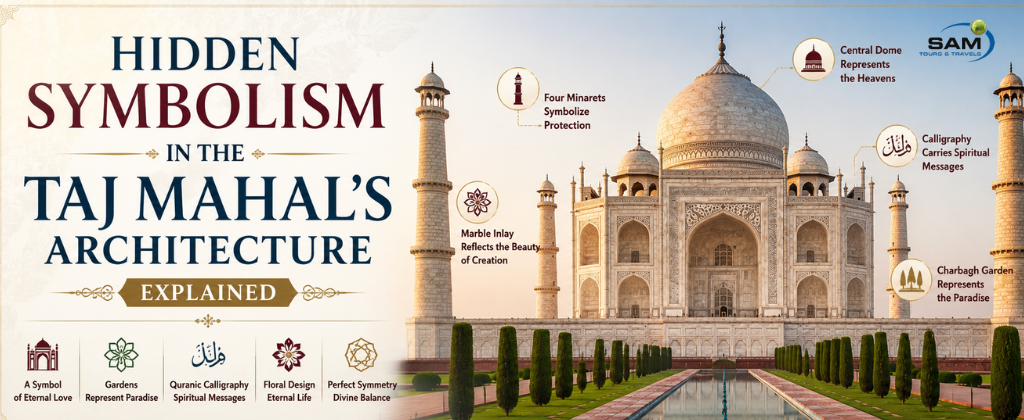
The Central Dome Represents the Heavens
The massive onion-shaped dome is more than an architectural marvel.
Its soaring height symbolizes:
- The heavens
- Divine protection
- Spiritual elevation
- The soul’s journey toward eternity
The dome naturally draws visitors’ eyes upward, creating a feeling of awe and reverence.
The Four Minarets Symbolize Protection
Standing at each corner of the platform, the four elegant minarets create a protective boundary around the mausoleum.
Symbolically they represent:
- Guardianship
- Stability
- Strength
- Sacred space
From an engineering perspective, they also lean slightly outward to protect the main structure in case of an earthquake.
The Charbagh Garden Represents the Garden of Paradise
The Taj Mahal’s garden follows the Persian Charbagh design.
The garden is divided into four equal sections by water channels.
These symbolize the four rivers of Paradise:
- Water
- Milk
- Honey
- Wine (as described symbolically in Islamic tradition)
Walking through the gardens was intended to feel like entering heaven itself.
Water Reflects Both Beauty and Spiritual Meaning
Water is one of the monument’s most important symbolic elements.
The long reflecting pool:
- Mirrors the mausoleum
- Represents purity
- Symbolizes life
- Creates a visual connection between Earth and Heaven
The reflection also reminds visitors of life’s temporary nature.
Quranic Calligraphy Carries Spiritual Messages
The beautiful black marble calligraphy surrounding the entrance contains verses from the Quran focusing on:
- Mercy
- Resurrection
- Paradise
- Divine Judgment
- Eternal peace
These inscriptions prepare visitors spiritually before entering the mausoleum.
A remarkable optical illusion ensures the letters appear the same size from ground level, although they gradually increase in size higher up.
Floral Carvings Represent Eternal Life
Unlike many monuments featuring human or animal sculptures, the Taj Mahal uses intricate floral carvings.
The flowers symbolize:
- Paradise
- Renewal
- Beauty
- Eternal life
- Nature’s perfection
Every carved flower was carefully crafted by skilled artisans using delicate marble techniques.
Precious Stone Inlay Reflects the Beauty of Creation
The Taj Mahal features the famous Pietra Dura technique.
Semi-precious stones including:
- Jasper
- Jade
- Turquoise
- Lapis Lazuli
- Carnelian
- Onyx
were inlaid into marble to create colorful flowers and vines.
These vibrant designs symbolize the richness and beauty of God’s creation.
Light Plays an Important Symbolic Role
The Taj Mahal appears different throughout the day.
- Sunrise brings soft pink hues.
- Daylight creates brilliant white reflections.
- Sunset adds warm golden tones.
- Moonlight produces a silvery glow.
Many historians believe this changing appearance symbolizes the different stages of life and the enduring nature of love.
The Elevated Platform Represents Separation from the Ordinary World
The mausoleum stands on a large marble platform above the surrounding landscape.
This elevation symbolizes:
- Spiritual superiority
- Sacredness
- Separation from earthly concerns
- Reverence for the departed
Visitors naturally ascend toward the monument, reinforcing its spiritual significance.
The Main Gateway Represents the Journey to Paradise
Before reaching the Taj Mahal, visitors pass through a magnificent red sandstone gateway.
The gateway symbolizes:
- Leaving the earthly world behind
- Entering sacred space
- Beginning a spiritual journey
The first view of the Taj Mahal through the arch creates one of the most memorable moments of any visit.
The Absence of Human Figures Is Intentional
Islamic artistic traditions generally avoid depicting human figures in sacred architecture.
Instead, the Taj Mahal uses:
- Floral patterns
- Geometric designs
- Calligraphy
- Symmetrical decoration
These elements direct attention toward spirituality rather than individual personalities.
Even the Number Four Has Symbolic Meaning
The number four appears repeatedly throughout the complex:
- Four minarets
- Four garden sections
- Four water channels
- Four corner pavilions
In Islamic symbolism, four often represents completeness and balance.
Why the Taj Mahal Still Inspires Millions
The Taj Mahal’s beauty goes far beyond its white marble walls.
Its architecture combines:
- Persian influences
- Indian craftsmanship
- Islamic symbolism
- Mathematical precision
- Engineering brilliance
Every arch, carving, garden, and reflection contributes to a larger story about love, faith, eternity, and paradise.
Tips for Visitors
To appreciate the symbolism during your visit:
- Hire a licensed local guide.
- Spend time observing the marble carvings.
- Walk through the Charbagh garden slowly.
- Read the Quranic inscriptions with translations.
- Visit during sunrise or sunset to witness the changing colors.
- Don’t rush through the entrance gate—the first framed view of the Taj Mahal is intentionally designed to inspire wonder.
Conclusion
The Taj Mahal is far more than a magnificent marble mausoleum. Every element of its design carries symbolic meaning, from the paradise-inspired gardens and elegant minarets to the Quranic calligraphy and precious stone inlay. These thoughtful architectural details transform the monument into a timeless expression of eternal love, spiritual devotion, and artistic excellence.
Understanding the hidden symbolism behind the Taj Mahal allows visitors to appreciate not only its beauty but also the profound ideas and craftsmanship that have made it one of the world’s greatest architectural masterpieces.
Frequently Asked Questions (FAQs)
1. What does the Taj Mahal symbolize?
The Taj Mahal symbolizes eternal love, paradise, purity, and the spiritual journey to the afterlife.
2. Why is the Taj Mahal perfectly symmetrical?
Its symmetry represents balance, harmony, perfection, and divine order, reflecting Mughal architectural principles.
3. What do the gardens of the Taj Mahal represent?
The Charbagh gardens symbolize the Islamic concept of Paradise, with four sections representing the rivers of heaven.
4. Why are there floral carvings instead of statues?
Islamic artistic traditions favor floral, geometric, and calligraphic designs over human figures in sacred architecture.
5. Why do the minarets lean outward?
The minarets were intentionally designed to lean slightly outward so they would fall away from the mausoleum during an earthquake, protecting the main structure.