
·
Last Updated: August 18, 2026
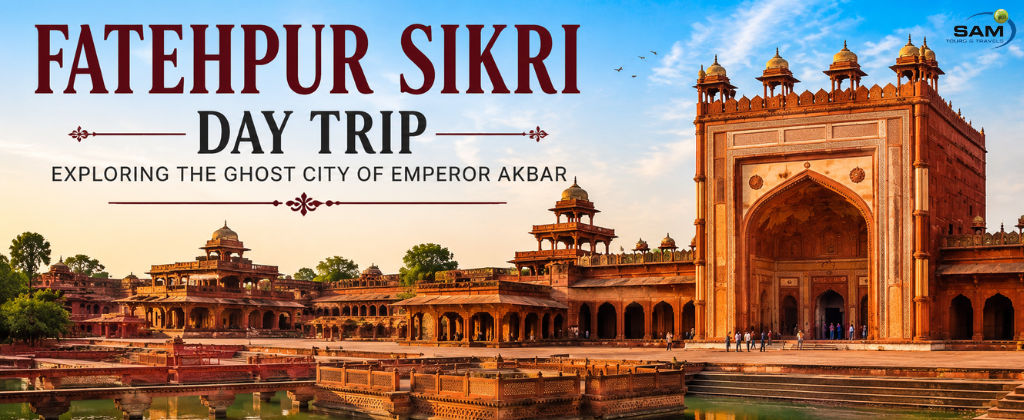
Just 40 kilometers west of Agra lies one of India’s most fascinating historical destinations—Fatehpur Sikri. Often referred to as the “Ghost City of Emperor Akbar,” this magnificent UNESCO World Heritage Site tells the story of a grand imperial dream that flourished briefly before being mysteriously abandoned. With its majestic palaces, sprawling courtyards, intricate Mughal architecture, and captivating legends, Fatehpur Sikri offers visitors an unforgettable glimpse into the glory of the Mughal Empire.
Whether you’re planning a day trip from Agra or adding it to your Golden Triangle itinerary, Fatehpur Sikri deserves a place on your travel list. This guide covers everything you need to know, from its fascinating history to the top attractions and practical travel tips.
The Fascinating History of Fatehpur Sikri
Fatehpur Sikri was founded in 1571 by the Mughal Emperor Akbar after his victory over Gujarat. However, its origins are deeply connected to the revered Sufi saint Sheikh Salim Chishti, who had predicted the birth of Akbar’s heir. When Prince Salim (later Emperor Jahangir) was born, Akbar decided to build a magnificent capital near the saint’s residence as a tribute.
For nearly 15 years, Fatehpur Sikri served as the political, cultural, and administrative heart of the Mughal Empire. It became a thriving center where scholars, artists, philosophers, and diplomats gathered from across Asia.
Despite its grandeur, the city was abandoned around 1585. Historians generally believe that inadequate water supply, military priorities, and Akbar’s campaigns in northwestern India contributed to its relocation. Although many myths surround its abandonment, no single explanation has been universally accepted.
Today, the remarkably well-preserved red sandstone city allows visitors to walk through royal courtyards and palaces almost exactly as they appeared over four centuries ago.
Why Is It Called the Ghost City?
The nickname “Ghost City” comes from the fact that Fatehpur Sikri was once a bustling imperial capital but was deserted within a relatively short period. Unlike many abandoned cities that fell into ruins, Fatehpur Sikri remains astonishingly intact.
Walking through its empty courtyards and silent halls creates an almost surreal atmosphere. Visitors often imagine the echoes of royal ceremonies, debates, and celebrations that once filled these magnificent spaces.
Rather than being haunted, the city is celebrated as a beautifully preserved monument frozen in time.
Top Attractions to Explore During Your Day Trip
Buland Darwaza
Your journey usually begins with the iconic Buland Darwaza, one of the tallest gateways in the world. Standing approximately 54 meters high, this magnificent entrance was built to commemorate Akbar’s conquest of Gujarat.
Its massive staircase, intricate carvings, Quranic inscriptions, and panoramic views make it one of the most photographed landmarks in India.
Jama Masjid
Adjacent to Buland Darwaza is the grand Jama Masjid, among India’s oldest Mughal mosques. Built using elegant red sandstone with beautiful marble details, the mosque continues to serve as an active place of worship.
The vast courtyard offers a peaceful atmosphere where visitors can appreciate Mughal religious architecture.
Tomb of Sheikh Salim Chishti
One of the spiritual highlights of Fatehpur Sikri is the white marble tomb of Sheikh Salim Chishti. The shrine attracts pilgrims from across the world who come to seek blessings, especially for children and family prosperity.
Many visitors tie sacred threads to the marble lattice screens while offering prayers, continuing a tradition that has existed for centuries.
Diwan-i-Khas
The Diwan-i-Khas, or Hall of Private Audience, is famous for its extraordinary central pillar featuring intricate carvings that support an elaborate stone platform.
Historians believe this unique structure symbolized Akbar’s vision of religious harmony and intellectual discussion among scholars representing different faiths.
Panch Mahal
The elegant five-story Panch Mahal resembles a stepped pyramid with numerous intricately carved columns.
Designed to provide natural ventilation and panoramic views, it served as a leisure palace where royal women could enjoy cool evening breezes while remaining secluded.
Jodha Bai’s Palace
Often considered one of the largest residential complexes within Fatehpur Sikri, Jodha Bai’s Palace combines Rajput and Mughal architectural styles.
Its spacious courtyards, beautifully decorated gateways, and ornamental balconies showcase Akbar’s respect for cultural diversity.
Anup Talao
This beautiful square water tank once served as the setting for musical performances, intellectual debates, and royal gatherings.
Legend suggests that the famous musician Tansen performed here before Emperor Akbar.
Diwan-i-Aam
The Hall of Public Audience was where Emperor Akbar met his subjects, heard petitions, and administered justice.
Its open design reflects Akbar’s reputation as an accessible ruler who encouraged public interaction.
Architectural Marvel of the Mughal Era
Fatehpur Sikri is considered one of the finest examples of Indo-Islamic architecture. The city’s builders skillfully blended Persian, Central Asian, Rajput, and Gujarati influences into a harmonious architectural masterpiece.
The extensive use of red sandstone, geometric carvings, floral motifs, ornamental pillars, lattice windows, and spacious courtyards demonstrates the artistic excellence achieved during Akbar’s reign.
Unlike many medieval cities, Fatehpur Sikri was carefully planned with separate administrative, residential, religious, and ceremonial zones.
How to Reach Fatehpur Sikri
From Agra
Fatehpur Sikri is approximately 40 km from Agra and can easily be reached in about one hour by:
- Private taxi
- Tourist cab
- State transport bus
- Guided day tour
Many travelers combine Fatehpur Sikri with a Taj Mahal and Agra Fort sightseeing itinerary.
From Delhi
The city is around 230 km from Delhi and is commonly included in Golden Triangle tours covering Delhi, Agra, and Jaipur.
Best Time to Visit
The ideal time to explore Fatehpur Sikri is between October and March, when temperatures remain pleasant for sightseeing.
Early morning visits provide cooler weather, softer lighting for photography, and fewer crowds.
If visiting during summer, carry water, sunscreen, sunglasses, and a hat, as much of the site is open to the sun.
Suggested Day Trip Itinerary
8:00 AM – Depart from Agra
9:00 AM – Arrive at Fatehpur Sikri
9:15 AM – Visit Buland Darwaza and Jama Masjid
10:30 AM – Explore Sheikh Salim Chishti’s Tomb
11:00 AM – Tour Diwan-i-Khas and Diwan-i-Aam
12:00 PM – Visit Panch Mahal and Jodha Bai’s Palace
1:00 PM – Lunch at a nearby restaurant
2:00 PM – Explore Anup Talao and remaining palace complex
3:30 PM – Return to Agra
This itinerary allows ample time to appreciate the city’s historical significance without feeling rushed.
Photography Tips
Fatehpur Sikri offers countless opportunities for photographers.
Some of the best locations include:
- The grand staircase of Buland Darwaza
- Symmetrical arches of Jama Masjid
- Marble lattice work at Sheikh Salim Chishti’s Tomb
- The unique central pillar inside Diwan-i-Khas
- Sunset views from Panch Mahal
- Courtyards of Jodha Bai’s Palace
Morning and late afternoon provide the most flattering natural light.
Sugessted Photography Tips : Taj Mahal Photography Tips
Useful Travel Tips
- Wear comfortable walking shoes.
- Dress modestly, especially when visiting religious sites.
- Carry water and sun protection.
- Hire a licensed local guide for deeper historical insights.
- Respect photography restrictions where applicable.
- Keep cash for small purchases from local artisans.
- Allocate at least 4–5 hours to explore the complex thoroughly.
Why Fatehpur Sikri Should Be on Your Bucket List
While the Taj Mahal often steals the spotlight, Fatehpur Sikri offers an entirely different experience. It allows visitors to step inside an entire Mughal capital rather than a single monument. Every palace, courtyard, gateway, and mosque reflects Emperor Akbar’s remarkable vision of governance, architecture, spirituality, and cultural unity.
The city’s blend of history, mystery, architectural brilliance, and peaceful atmosphere makes it one of India’s most rewarding heritage destinations. Whether you’re a history enthusiast, photographer, architecture lover, or first-time traveler to Agra, a day trip to Fatehpur Sikri is an experience you’ll remember long after your journey ends.
Conclusion
A visit to Fatehpur Sikri is much more than a sightseeing excursion—it’s a journey into the heart of the Mughal Empire. Known as the Ghost City of Emperor Akbar, this extraordinary destination combines royal history, stunning architecture, and enduring legends within its beautifully preserved walls. From the towering Buland Darwaza and the sacred Tomb of Sheikh Salim Chishti to the elegant Panch Mahal and magnificent royal palaces, every corner reveals a new chapter of India’s rich heritage.
If you’re planning an Agra vacation or a Golden Triangle tour, don’t miss the opportunity to explore this timeless UNESCO World Heritage Site. A single day at Fatehpur Sikri will leave you with a deeper appreciation of India’s architectural legacy and one of history’s greatest emperors.
Book Your Golden Traingle Tour : Samindiatours.com