
·
Last Updated: August 18, 2026
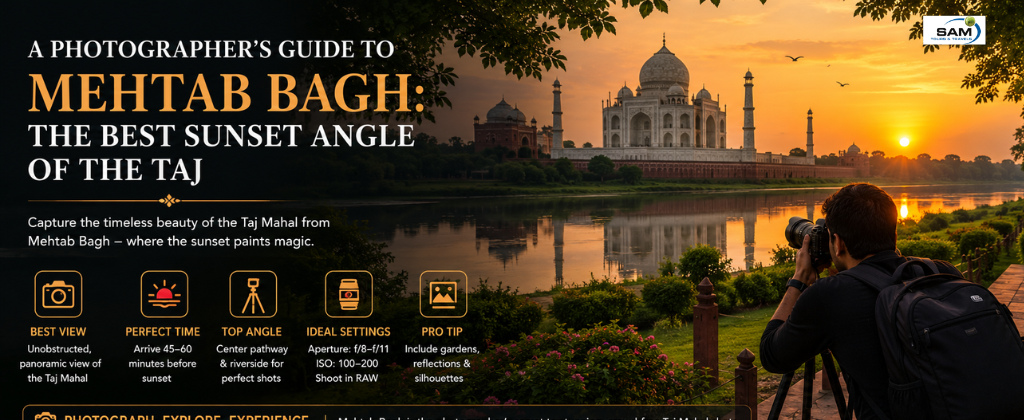
The Mehtab Bagh Photography Guide is essential for anyone looking to capture one of the most breathtaking views of the Taj Mahal. While most visitors head inside the monument for iconic photos, experienced photographers often choose Mehtab Bagh for its peaceful atmosphere, panoramic riverfront setting, and spectacular sunset light.
Located on the opposite bank of the Yamuna River, Mehtab Bagh offers a perfectly aligned view of the Taj Mahal. During the golden hour, the white marble monument glows with warm orange and pink tones, creating one of the most photogenic scenes in India.
Whether you’re a professional photographer, content creator, or smartphone user, this guide will help you find the best sunset angle, ideal camera settings, and practical tips for unforgettable photographs.
Why Mehtab Bagh Is a Photographer’s Paradise
Unlike the busy pathways inside the Taj Mahal complex, Mehtab Bagh provides:
- Wide open landscapes
- Minimal crowds
- Uninterrupted river views
- Beautiful foreground gardens
- Peaceful atmosphere
- Incredible golden-hour lighting
The combination of Mughal gardens and the Taj Mahal creates a naturally balanced composition.
Why Sunset Is the Best Time
As the sun begins to set behind western Agra, warm golden light gently illuminates the marble façade.
During sunset you’ll notice:
- Golden reflections
- Soft shadows
- Rich sky colors
- Better contrast
- Fewer harsh highlights
This lighting creates images with remarkable depth and atmosphere.
Arrive Early
Professional photographers rarely arrive at sunset.
Instead, plan to reach Mehtab Bagh 45–60 minutes before sunset.
This gives enough time to:
- Explore viewpoints
- Test compositions
- Adjust camera settings
- Observe changing light
The Best Sunset Angle
One of the biggest advantages of Mehtab Bagh is its central alignment with the Taj Mahal.
Position Yourself Near
- Central garden pathway
- Riverside fence
- Elevated lawn sections
These locations allow you to capture:
- Symmetrical compositions
- Wide landscape shots
- Natural framing
- Reflections during suitable river conditions
Best Camera Settings
DSLR or Mirrorless
- Aperture: f/8–f/11
- ISO: 100–200
- Shutter Speed: 1/125 sec (adjust as light changes)
- White Balance: Cloudy or Daylight
- Shoot in RAW format
Smartphone
Enable:
- HDR Mode
- Grid Lines
- Manual Focus
- 2x Zoom instead of digital zoom
Avoid excessive filters—the natural sunset colors are beautiful on their own.
Best Lenses
Wide Angle (16–35mm)
Perfect for:
- Landscape photography
- Garden foregrounds
- Symmetry
Standard Zoom (24–70mm)
Ideal for:
- Portraits
- Travel photography
- Balanced compositions
Telephoto (70–200mm)
Excellent for:
- Architectural details
- Dome close-ups
- Compression effects
Creative Composition Ideas
Frame with Trees
Use the surrounding trees to naturally frame the monument.
Include the Garden
The symmetrical Mughal gardens add depth and leading lines.
Golden Silhouettes
Photograph people walking along the pathway as silhouettes.
Reflection Shots
During certain seasons, water along the river creates beautiful reflections.
Portrait Photography
Ask your subject to face the Taj Mahal rather than the camera.
This creates:
- Emotional storytelling
- Travel-inspired portraits
- Natural compositions
Best Sunset Colors
The Taj Mahal changes dramatically during sunset.
You may capture:
- Golden white marble
- Soft pink sky
- Orange clouds
- Blue hour immediately afterward
Stay even after sunset for richer colors.
Photography Gear Checklist
Bring:
- Camera body
- Wide-angle lens
- Telephoto lens
- Tripod (where permitted)
- Extra battery
- Memory cards
- Lens cloth
- Polarizing filter
- Power bank
Drone Photography
Drone photography is not permitted around the Taj Mahal due to security regulations.
Instead, use elevated viewpoints within Mehtab Bagh for dramatic compositions.
Best Season
October – March
Offers:
- Pleasant weather
- Clear skies
- Better visibility
- Comfortable photography sessions
Monsoon
Cloudy skies create dramatic backgrounds.
Winter
Morning mist often creates dreamy images.
Photography Etiquette
Respect the location by:
- Staying on designated paths
- Not climbing walls
- Avoiding damage to plants
- Giving space to other visitors
- Following ASI guidelines
Editing Tips
Enhance your sunset photos by:
- Slightly increasing warmth
- Recovering highlights
- Boosting contrast carefully
- Enhancing clarity
- Avoiding over-saturation
Natural edits often produce the best results.
Why Every Photographer Should Visit
Mehtab Bagh offers something the Taj Mahal complex cannot—space, tranquility, and a unique riverside perspective.
Instead of competing with crowds for the classic front view, photographers can create artistic compositions that showcase both the monument and its natural surroundings.
Suggested Photography Itinerary
4:30 PM
Arrive at Mehtab Bagh.
5:00 PM
Scout compositions.
5:30 PM
Golden Hour photography.
6:00 PM
Sunset photography.
6:20 PM
Blue Hour shots.
6:30 PM
Pack equipment and review images.
Conclusion
For photographers seeking a unique perspective of the Taj Mahal, Mehtab Bagh is one of Agra’s finest hidden gems. Its peaceful gardens, panoramic riverfront views, and exceptional sunset lighting make it an ideal destination for capturing unforgettable images. Whether you’re using a professional camera or a smartphone, careful planning and the right timing can help you create stunning photographs that stand out from the usual tourist snapshots.
Recommended Tour: Want to experience the Taj Mahal and other iconic destinations with expert local guides? Book our Golden Triangle Tour and explore Delhi, Agra, and Jaipur in comfort.
Frequently Asked Questions
1. Is Mehtab Bagh the best place to photograph the Taj Mahal?
Yes. It offers one of the best panoramic views of the Taj Mahal, especially during sunset.
2. What time should photographers arrive?
Arrive 45–60 minutes before sunset to scout locations and capture the changing light.
3. Can I use a tripod?
Small tripods may be permitted in some areas, but always follow the latest ASI guidelines.
4. Which lens is best?
A 24–70mm lens is the most versatile, while a wide-angle lens is ideal for landscapes and a telephoto lens works well for architectural details.
5. Is Mehtab Bagh suitable for smartphone photography?
Absolutely. Modern smartphones with HDR mode and manual controls can capture excellent sunset images from Mehtab Bagh.