
·
Last Updated: September 22, 2026
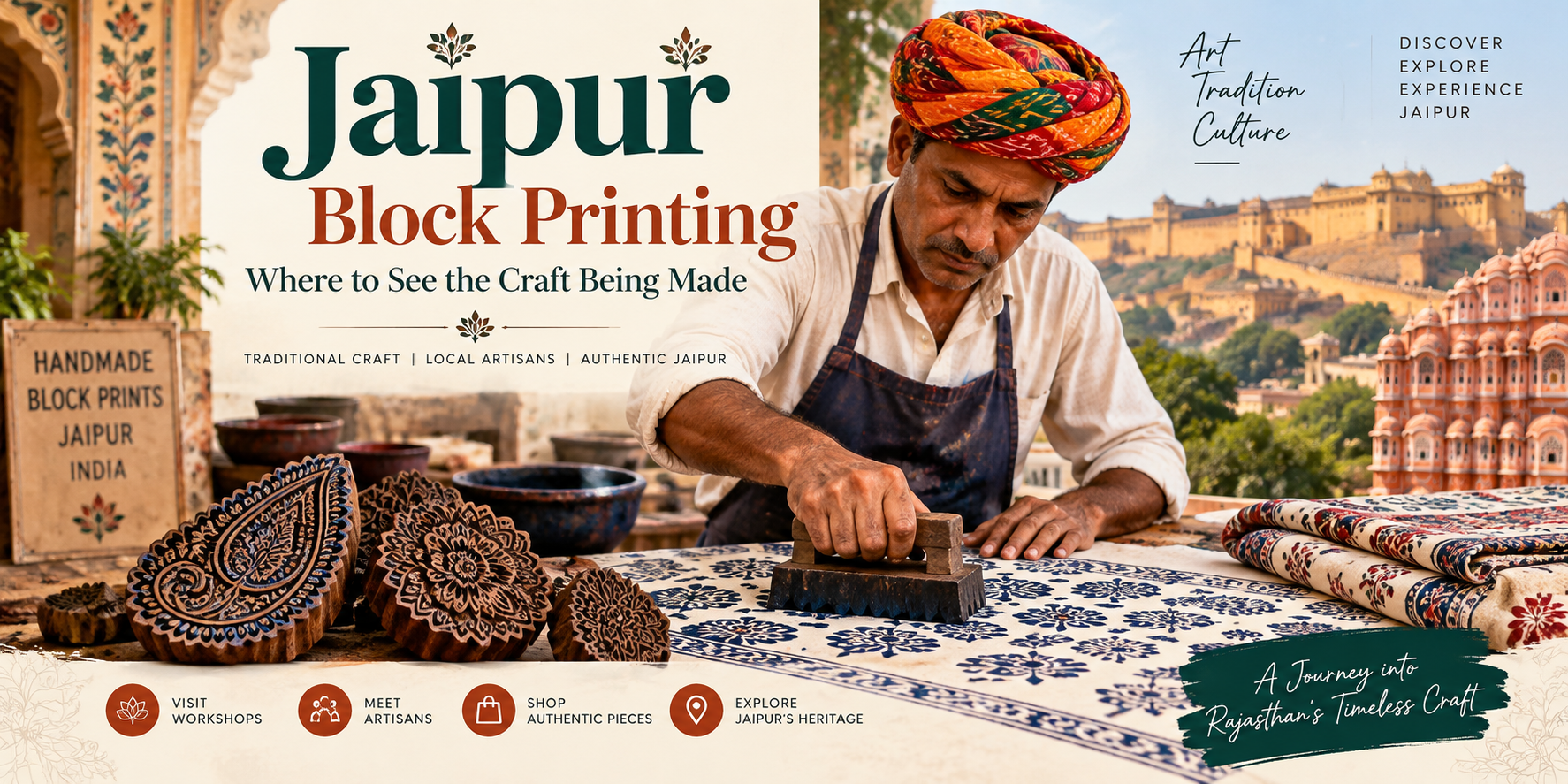
Jaipur is famous for its grand forts, colorful bazaars, royal palaces, and traditional handicrafts. Among its most distinctive artistic traditions is Jaipur block printing, a centuries-old textile craft that continues to connect local artisans with visitors from around the world.
Unlike factory-printed fabric, traditional block printing involves carefully carved wooden blocks, dyes, fabric, and the skilled hands of an artisan. Each impression is placed by hand, often creating subtle variations that make every piece feel personal and handcrafted.
For travelers interested in experiencing Rajasthan beyond its famous monuments, watching block printing being made can be one of the most memorable cultural activities in Jaipur.
The areas around Sanganer and Bagru are particularly important for understanding Rajasthan’s textile-printing traditions. Sanganer is known for fine hand block printing, especially floral designs on lighter backgrounds, while Bagru is associated with traditional wooden-block printing and distinctive natural-dye techniques.
This guide explains where to see Jaipur block printing being made, how the traditional process works, what makes Sanganeri and Bagru printing different, what you can buy, and how to experience the craft respectfully.
What Is Jaipur Block Printing?
Block printing is a traditional textile-printing technique in which artisans create patterns on fabric using carved wooden blocks.
The basic concept is simple, but producing a high-quality hand-block-printed textile requires considerable skill and patience.
A design is first carved into a wooden block. The artisan applies dye or pigment to the carved surface and carefully presses the block onto the fabric. The process is repeated again and again to create borders, flowers, geometric patterns, vines, or larger repeating designs.
According to Rajasthan’s official handicrafts information, block printing is an ancient craft practiced across the state, with natural colors traditionally playing an important role. Sanganer near Jaipur is particularly associated with fine hand block printing.
The beauty of the craft comes partly from the fact that it is handmade. Tiny differences in alignment, color application, and pressure can occur from one impression to another.
Rather than being considered a flaw, these small variations can be part of the character of hand printing.
Why Jaipur Block Printing Is Special
Jaipur’s textile traditions developed through generations of skilled craftsmanship and royal patronage.
The region became an important center for textile printing, and different communities developed specialized roles in the production process.
Traditional block printing can involve several stages, including:
- Designing the pattern
- Carving wooden blocks
- Preparing the fabric
- Preparing dyes
- Printing individual impressions
- Drying the fabric
- Washing or finishing the textile
- Checking the final product
The wooden block itself is an important part of the craft.
Rajasthan’s handicraft department notes that Jaipur’s traditional printing blocks are known for detailed carving, while specific construction features help artisans create cleaner impressions during printing.
This means that when you watch an artisan working, you are not simply watching someone stamp a piece of cloth. You are seeing one part of a larger traditional production system.
Where to See Jaipur Block Printing Being Made
If you want to experience Jaipur block printing rather than simply purchase finished textiles, there are several places worth considering.
The most important areas are Sanganer, Bagru, and Amber, where you can explore different aspects of Rajasthan’s textile heritage.
1. Sanganer: The Heart of Fine Block Printing
Sanganer is one of the most important places to visit if you want to understand Jaipur’s block-printing tradition.
Located near Jaipur, Sanganer is well known for its textile printing and handmade paper traditions. Rajasthan Tourism and Incredible India both identify Sanganer as an important center for hand block printing.
Sanganeri printing is particularly famous for detailed floral designs and fine patterns.
Traditional motifs can include:
- Roses
- Sunflowers
- Lotus flowers
- Leaves
- Creepers
- Birds
- Floral networks
- Small decorative motifs
The designs are often delicate and detailed.
Sanganeri prints are traditionally associated with white or off-white backgrounds, although modern production includes many different colors and fabric styles.
What can you see in Sanganer?
Depending on the workshop, visitors may be able to observe:
- Wooden block carving
- Fabric preparation
- Dye preparation
- Block printing
- Drying
- Finishing
- Finished textile products
The experience is especially interesting if you have never seen handmade textile printing before.
Instead of looking at a finished bedsheet or scarf in a shop, you can understand how the pattern was actually created.
2. Bagru: Traditional Printing and Natural Dyes
Another important destination near Jaipur is Bagru, a village known for its traditional block-printing heritage.
Bagru is located on the Ajmer Road side of Jaipur and is known for its distinctive wooden block printing traditions. Incredible India describes Bagru as a traditional printing center where visitors can see printing activity and explore the local craft.
Bagru printing is particularly interesting because of its traditional approach to dyes and fabric preparation.
The process can involve preparing the fabric with materials such as fuller’s earth and using natural sources for different colors.
Traditional dye sources can include:
- Indigo for blue
- Madder root for red
- Turmeric for yellow
- Other plant-based materials for additional shades
The exact methods can vary between artisans and workshops.
One of the best parts of visiting a traditional printing area is seeing how many individual steps are required before the final textile is ready.
3. Anokhi Museum of Hand Printing
For travelers who want a structured introduction to traditional textile printing, the Anokhi Museum of Hand Printing near Amber is an excellent cultural stop.
Rajasthan Tourism describes the museum as being housed in a restored haveli and displaying block-printed textiles, images, tools, and related objects that explain the complexity of the craft.
The museum is particularly useful for visitors who may not have enough time to visit a working textile village.
Here you can learn about:
- Traditional printing techniques
- Wooden blocks
- Textile patterns
- Printing tools
- Historical designs
- The relationship between craft and everyday clothing
Because the museum focuses specifically on hand printing, it can help you understand what you are seeing later when shopping for textiles in Jaipur.
Why visit before shopping?
If you visit the museum before buying block-printed products, you may have a better understanding of:
- How patterns are created
- What wooden blocks look like
- Why alignment matters
- How traditional designs differ
- Why handmade textiles require skilled labor
That knowledge can make your shopping experience much more meaningful.
How Jaipur Block Printing Is Made
One of the most fascinating aspects of the craft is its process.
Although techniques vary, the basic stages can be understood relatively easily.
Step 1: Designing the Pattern
The process begins with a design.
The artisan or designer decides what pattern should appear on the fabric.
Traditional designs may include floral, geometric, botanical, animal, and decorative motifs.
For repeating patterns, the design must be carefully planned so that one block connects naturally with the next impression.
Step 2: Carving the Wooden Block
The design is transferred to a wooden block.
A skilled block maker carefully carves away the areas that should not receive the dye.
This is delicate work because the final print depends heavily on the accuracy of the carving.
Rajasthan’s handicraft department highlights the detailed carving of Jaipur blocks and explains that traditional blocks can contain specific features designed to improve printing performance.
Some designs require multiple blocks.
For example, one block may create an outline while another adds a background or additional color.
Step 3: Preparing the Fabric
The fabric must be prepared before printing.
Depending on the technique, the cloth may be washed, treated, dried, and prepared to receive the colors.
Proper preparation is important because the quality of the final print depends not only on the block but also on the fabric and dye.
Step 4: Preparing the Dye
The dye is prepared according to the desired color and printing method.
Traditional Rajasthan printing has historically used natural and vegetable-based colors, although modern production also uses synthetic dyes.
This is one reason why two textiles that look similar at first glance can have different production methods.
If you visit a workshop, ask the artisan which dyes are being used.
Step 5: Applying the Block
This is the moment when the craft becomes visually fascinating.
The artisan places the carved block onto the fabric and presses it firmly.
The block is then lifted.
A single impression appears.
The process is repeated across the fabric.
The artisan must maintain consistent pressure and placement while working across a large piece of cloth.
This requires practice.
Step 6: Building Multiple Colors
Some textiles use only one color, while others contain several.
When multiple colors are involved, separate blocks may be required.
The artisan must align each block carefully with the previous impression.
This alignment is known as registration.
Even a small mistake can affect the overall pattern.
That is why watching an experienced printer work can be so impressive.
Step 7: Drying and Finishing
Once printing is completed, the fabric goes through additional drying and finishing processes.
Depending on the textile and printing method, this may include washing, drying, fixing the color, or other finishing steps.
The finished material can then become:
- Sarees
- Dupattas
- Shirts
- Kurtas
- Scarves
- Bedspreads
- Quilts
- Cushion covers
- Tablecloths
- Curtains
- Yardage
Sanganeri printing is used across a particularly wide range of textile products.
Sanganeri vs Bagru Printing
If you are interested in Jaipur block printing, you will often hear the names Sanganeri and Bagru.
Although both are associated with traditional block printing, they have distinctive characteristics.
Sanganeri Printing
Sanganeri printing is commonly associated with:
- Fine detailing
- Floral motifs
- Light or white backgrounds
- Delicate patterns
- Intricate designs
Incredible India notes that Sanganeri printing is especially known for fine printing on white and off-white fabrics and nature-inspired motifs.
Bagru Printing
Bagru is associated with:
- Traditional wooden blocks
- Earthier color palettes
- Natural dye traditions
- Distinctive motifs
- Traditional fabric preparation techniques
The two traditions should not be treated as identical.
If you have time, experiencing both can give you a better understanding of the variety within Rajasthan’s textile heritage.
What to Look for When Visiting a Block Printing Workshop
Not every visitor wants to spend hours watching the entire production process.
Even a short workshop visit can be worthwhile.
Look for places where you can actually observe artisans working rather than simply viewing finished products.
Ask these questions:
Are the textiles hand block printed?
This helps distinguish hand printing from other printing techniques.
Can I watch the printing process?
Some businesses may sell hand-printed products without allowing visitors to see production.
Are the blocks carved by hand?
This can help you understand how the designs are created.
What type of dye is being used?
Ask whether the colors are natural, synthetic, or a combination.
Where is the fabric produced?
This can help you understand whether the product is locally made or simply sold in Jaipur.
What to Buy in Jaipur
A block-printing experience naturally leads to shopping.
Some popular products include:
Block-Printed Scarves
Scarves are lightweight and easy to pack, making them practical souvenirs.
Dupattas
A colorful hand-block-printed dupatta can be a useful and attractive reminder of Rajasthan.
Sarees
Travelers interested in Indian clothing can explore Sanganeri printed sarees in a variety of fabrics and patterns.
Kurtas
Block-printed kurtas are popular for everyday wear and are available in many designs.
Bedspreads
Large printed textiles can bring a traditional Indian aesthetic into a home.
Cushion Covers
These are easier to transport than large textiles and can work well as souvenirs.
Table Linen
Napkins, tablecloths, and runners can offer a practical way to bring block-print designs into your home.
How to Identify Hand Block Printing
If you are shopping for Jaipur block printing, understanding the characteristics of handmade printing can help.
Look closely at the design.
You may notice:
- Slight variations
- Tiny alignment differences
- Minor imperfections
- Individual character in repeated motifs
- Texture from the printing process
Perfect uniformity is more typical of industrial printing.
However, do not assume that every imperfect textile is automatically handmade.
Ask the seller about the production method and compare products carefully.
How Much Time Should You Spend?
If block printing is a major interest, consider giving it at least half a day.
A possible plan could be:
Morning
Start with the Anokhi Museum of Hand Printing near Amber.
Learn about the history, tools, blocks, and techniques.
Late Morning
Travel toward a printing area or workshop around Sanganer or Bagru.
Observe artisans working.
Afternoon
Explore finished textiles and compare different products.
Evening
Return to Jaipur and enjoy the city’s markets or other attractions.
This approach combines education, cultural experience, and shopping.
Best Time to Experience Block Printing
Block printing can be experienced throughout the year, but your comfort will depend on Jaipur’s weather.
The cooler months are generally more comfortable for exploring outdoor areas and moving between workshops.
During the hotter months, plan outdoor visits earlier in the day and carry:
- Water
- Sunscreen
- A hat
- Comfortable clothing
- Comfortable walking shoes
If you are visiting a small workshop, remember that working areas may not have the same facilities as major tourist attractions.
Respect the Artisans
A workshop is a workplace, not simply a tourist attraction.
If you visit an artisan’s workspace, remember to behave respectfully.
Avoid:
- Touching tools without permission
- Stepping on fabric
- Interrupting an artisan while working
- Moving blocks without asking
- Taking close-up photographs without permission
- Demanding that an artisan repeat a process unnecessarily
If you want to photograph the printing process, ask first.
A polite request can make the experience more comfortable for everyone.
Why Buying Directly Can Be Meaningful
Buying a textile from a local artisan or responsible craft business can make your souvenir more meaningful.
You are not simply purchasing a piece of fabric.
You are taking home an example of a craft tradition involving:
- Designers
- Block carvers
- Printers
- Dyers
- Textile workers
- Finishers
- Sellers
The craft therefore represents a network of skills rather than one simple production step.
Rajasthan’s official handicraft information also documents individual artisans and mastercraftspeople working in Sanganer, demonstrating that hand block printing remains an active craft tradition in the area.
Jaipur Block Printing as a Cultural Experience
Many travelers visit Jaipur to photograph palaces and forts.
Those experiences are important, but traditional crafts offer another way to understand the city.
A block-printed textile can tell you about:
- Local design
- Traditional materials
- Artisan skills
- Regional history
- Fashion
- Trade
- Everyday life
When you watch an artisan repeatedly stamp a wooden block onto fabric, you can see how much patience is hidden behind something that may look simple in a shop.
That is what makes a craft experience different from ordinary souvenir shopping.
Tips for a Responsible Block Printing Experience
Here are some simple ways to make your visit more meaningful.
1. Research the craft before visiting
Learn the difference between Sanganeri and Bagru printing.
2. Visit a genuine craft environment
Try to see artisans working rather than only visiting retail stores.
3. Ask questions
Most visitors will learn more by speaking respectfully with artisans or guides.
4. Don’t rush
Printing is a slow process. Give yourself time to observe.
5. Ask before photographing
Respect the people behind the craft.
6. Compare products
Look at fabric quality, printing detail, and finishing before buying.
7. Don’t focus only on the cheapest price
Traditional craftsmanship requires time and skill.
8. Take care of what you buy
Ask about washing and maintenance instructions.
Caring for Your Jaipur Block-Printed Textiles
After returning home, proper care can help your textile last longer.
Always follow the seller’s specific care instructions because fabrics and dyes differ.
General precautions may include:
- Wash new textiles separately
- Avoid harsh detergents
- Follow recommended water temperatures
- Avoid excessive direct sunlight
- Iron according to the fabric’s requirements
- Store dry and clean
Some naturally dyed textiles may change subtly over time.
This can be part of the character of natural-dye textiles, but proper care helps preserve the fabric.
A One-Day Jaipur Block Printing Experience
If you have only one day available, you can still include block printing in your Jaipur itinerary.
Morning – Amber
Begin around Amber and visit the Anokhi Museum of Hand Printing.
Spend time understanding traditional blocks and textiles.
Late Morning – Workshop Experience
Travel toward a suitable craft area and observe artisans at work.
Ask questions about blocks, dyes, patterns, and fabric.
Afternoon – Sanganer or Bagru
If your schedule allows, explore one of the traditional printing areas.
Focus on observing rather than rushing through several shops.
Evening – Jaipur
Return toward the city and explore a market for finished textiles.
By this point, you will have a much better understanding of what you are looking at.
Why You Should Add Block Printing to Your Jaipur Trip
Jaipur is famous for its architecture, but its artistic identity extends far beyond forts and palaces.
Block printing gives travelers the opportunity to see a living craft tradition.
You can learn how wooden blocks are carved, how colors are prepared, how patterns are built, and how a simple piece of cloth becomes a detailed textile.
Sanganer provides an important connection to fine hand block printing, while Bagru offers another distinctive tradition associated with wooden blocks and traditional dyeing practices.
The Anokhi Museum of Hand Printing provides another valuable perspective through its collection of textiles, tools, and craft-related displays.
Together, these experiences can turn textile shopping into a genuine cultural journey.
Frequently Asked Questions About Jaipur Block Printing
Where can I see block printing near Jaipur?
Sanganer and Bagru are two important areas associated with traditional textile printing near Jaipur. The Anokhi Museum of Hand Printing near Amber also provides an educational introduction to the craft.
Is Sanganeri printing handmade?
Traditional Sanganeri hand block printing is produced using carved wooden blocks and manual printing techniques. Sanganeri textiles are particularly known for fine designs and floral motifs.
What is Jaipur block printing used for?
Block printing is used for many textile products, including sarees, dupattas, scarves, clothing, bedspreads, quilts, cushion covers, curtains, and other furnishings.
What is the difference between Sanganeri and Bagru printing?
Sanganeri printing is particularly associated with fine floral designs and lighter backgrounds, while Bagru has its own distinctive traditional patterns and is strongly associated with natural-dye printing traditions.
Can tourists visit printing workshops?
Visitors can explore craft areas and workshops, but access varies by individual business or artisan. It is best to confirm that visitors are welcome and ask permission before entering working areas or taking photographs.
Is block printing still practiced today?
Yes. Rajasthan’s official handicraft resources continue to document active hand block printing artisans and craft units in Sanganer.
Final Thoughts
Jaipur block printing is much more than a colorful pattern on fabric. It is a traditional craft built from design, carving, dyeing, printing, patience, and generations of knowledge.
For travelers, the most rewarding experience is not simply buying a printed scarf or bedsheet. It is seeing how that textile comes to life.
Visit the Anokhi Museum of Hand Printing to understand the craft, explore Sanganer to discover its fine printing traditions, and consider visiting Bagru to experience another important style of Rajasthan’s block-printing heritage.
Take time to watch the artisans work. Look closely at the wooden blocks. Ask about the dyes and designs. Compare finished textiles. And when you buy something, remember the skill behind every repeated impression.
By experiencing the craft where it is made, you return from Jaipur with more than a souvenir. You take home a small piece of Rajasthan’s living artistic heritage.