
·
Last Updated: August 29, 2026
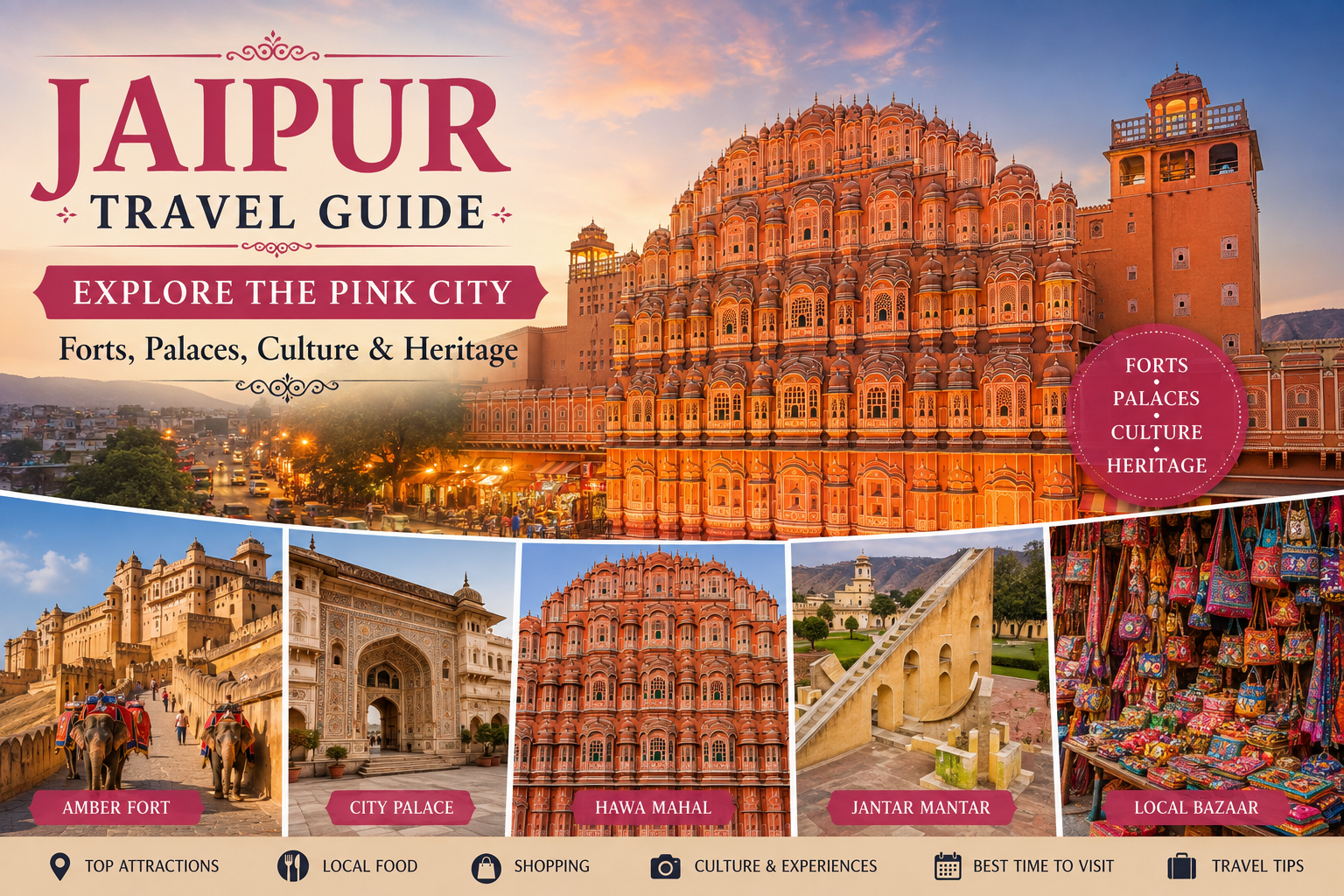
Jaipur, popularly known as the Pink City of India, is one of the most fascinating destinations in Rajasthan. Famous for its grand forts, royal palaces, colorful markets, historic temples, traditional handicrafts, and vibrant culture, Jaipur offers travelers an unforgettable journey into India’s royal past. From the magnificent Amber Fort to the iconic Hawa Mahal, every corner of Jaipur reflects centuries of history, architecture, art, and Rajput heritage.
The city is also an important part of the famous Golden Triangle Tour, connecting Delhi, Agra, and Jaipur. Whether you are visiting Rajasthan for the first time, planning a family holiday, looking for a romantic getaway, or interested in India’s history and architecture, Jaipur has something for everyone.
This comprehensive Jaipur travel guide covers the best places to visit, things to do, local food, shopping, culture, travel tips, and everything you need to know for planning a memorable Jaipur trip.
Jaipur at a Glance
Location: Rajasthan, India
Popular Name: The Pink City
Famous For: Forts, palaces, royal heritage, handicrafts, jewelry, textiles, and Rajasthani cuisine
Best Known Attractions: Amber Fort, Hawa Mahal, City Palace, Jantar Mantar, Jal Mahal, Nahargarh Fort, Jaigarh Fort
Ideal Trip Duration: 2–3 days
Best Time to Visit: October to March
Main Airport: Jaipur International Airport
Why Visit Jaipur?
Jaipur is much more than a city filled with historical monuments. It is a destination where the past and present exist side by side. Ancient forts stand above modern streets, traditional bazaars remain busy with local shoppers, and magnificent palaces tell stories of Rajasthan’s royal families.
One of the biggest reasons to visit Jaipur is its extraordinary architecture. The city showcases Rajput, Mughal, and European influences through its forts, gates, courtyards, gardens, temples, and palaces.
Jaipur is also ideal for travelers who enjoy photography. The pink-colored buildings of the old city, intricate palace designs, colorful markets, ornate doors, and dramatic hilltop forts provide countless opportunities for memorable photographs.
For culture lovers, Jaipur offers traditional music, dance, festivals, handicrafts, jewelry, block printing, blue pottery, and authentic Rajasthani food.
Best Places to Visit in Jaipur
1. Amber Fort
Amber Fort, also called Amer Fort, is one of the most impressive attractions near Jaipur. Located on a hill approximately 11 kilometers from the city center, the fort is famous for its magnificent architecture, massive walls, grand courtyards, decorative halls, and beautiful views of the surrounding landscape.
The fort combines Rajput and Mughal architectural influences. Visitors can explore the Diwan-i-Aam, Ganesh Pol, Sheesh Mahal, courtyards, gardens, and royal chambers.
The Sheesh Mahal, or Mirror Palace, is particularly famous for its intricate mirror decoration. The fort becomes especially beautiful in the early morning when the soft sunlight illuminates its sandstone and marble structures.
A visit to Amber Fort is essential for anyone interested in Jaipur’s royal history and architecture.
2. Hawa Mahal
Hawa Mahal is perhaps the most recognizable symbol of Jaipur. Built in 1799, this five-story structure is famous for its distinctive honeycomb-like façade containing numerous small windows known as jharokhas.
The design allowed royal women to observe street celebrations and everyday life without being seen from outside. The numerous openings also allowed air to circulate through the building, giving the monument its famous name, “Palace of Winds.”
The best-known view of Hawa Mahal is from the street opposite its façade. However, visitors can also explore the interior and enjoy views of Jaipur’s old city.
Early morning is an excellent time to photograph Hawa Mahal because the façade is beautifully illuminated by natural light.
3. City Palace
Located in the heart of Jaipur’s old city, City Palace is another major attraction. The complex includes courtyards, gardens, royal buildings, museums, gateways, and beautifully decorated halls.
The palace reflects a combination of Rajput and Mughal architectural traditions. Visitors can see royal costumes, weapons, manuscripts, artwork, decorative objects, and other items associated with Jaipur’s royal history.
The palace is especially appealing to travelers interested in architecture and Rajasthan’s royal lifestyle.
4. Jantar Mantar
Jantar Mantar is one of Jaipur’s most remarkable historical sites. This astronomical observatory contains a collection of large stone and masonry instruments designed to measure time, observe celestial objects, and calculate astronomical positions.
The site demonstrates the scientific knowledge and architectural skill of the period in which it was constructed.
The most famous instrument is the Samrat Yantra, a massive sundial that can be used to determine local solar time.
Jantar Mantar is located close to City Palace, making it convenient to visit both attractions during the same sightseeing session.
5. Jal Mahal
Jal Mahal is one of Jaipur’s most photographed landmarks. The palace appears to float in the middle of Man Sagar Lake, surrounded by the Aravalli hills.
Although visitors generally admire the palace from viewpoints along the road rather than exploring its interior, the sight is particularly beautiful around sunrise and sunset.
The combination of water, hills, architecture, and changing sky creates an impressive setting for photography.
6. Nahargarh Fort
Situated on the Aravalli hills, Nahargarh Fort offers some of the best panoramic views of Jaipur.
The fort was built as part of Jaipur’s defensive system and later became associated with royal retreats. Today, visitors come here to explore its historic structures and enjoy spectacular views over the city.
Sunset is a particularly popular time to visit because Jaipur gradually lights up as daylight fades.
For photographers and travelers looking for a different perspective of the Pink City, Nahargarh Fort is an excellent choice.
7. Jaigarh Fort
Jaigarh Fort is another important historical attraction located in the hills above Jaipur. Known for its strong defensive architecture, the fort provides an interesting contrast to the decorative appearance of Jaipur’s palaces.
One of its most famous attractions is Jaivana, traditionally described as one of the world’s largest wheeled cannons.
The fort also offers impressive views toward Amber Fort and the surrounding hills.
8. Albert Hall Museum
Albert Hall Museum is one of Jaipur’s most important museums and an excellent destination for travelers interested in art and history.
Its Indo-Saracenic architectural design makes the building itself an attraction. Inside, visitors can discover collections featuring sculptures, textiles, paintings, decorative arts, and historical objects.
The museum becomes particularly striking after sunset when the illuminated building creates a beautiful backdrop.
9. Birla Mandir
Birla Mandir is a modern marble temple located at the foot of Moti Dungari Hill. Dedicated to Lord Vishnu and Goddess Lakshmi, the temple is known for its white marble architecture and peaceful atmosphere.
The temple is especially attractive in the evening when it is illuminated.
Visitors interested in Jaipur’s religious and cultural heritage can include Birla Mandir in their itinerary.
10. Galtaji Temple
Galtaji, often called the Monkey Temple, is a historic pilgrimage site situated among the hills outside Jaipur.
The complex includes temples, natural water tanks, and beautiful surroundings. Several sacred pools are associated with the site, and the surrounding landscape offers a peaceful break from the busy city.
Its combination of spirituality, architecture, natural scenery, and local traditions makes Galtaji an interesting addition to a Jaipur sightseeing itinerary.
Jaipur’s Historic Old City
The Old City is the heart of Jaipur’s famous Pink City experience. Its planned streets, historic gates, colorful buildings, markets, temples, and traditional shops provide a glimpse into the city’s past.
Walking through the old streets can feel very different from visiting individual monuments. Instead of simply looking at a building, you experience Jaipur as a living heritage city.
Some of the historic gates and streets are especially attractive for photography. Visitors can also explore local markets selling textiles, jewelry, handicrafts, souvenirs, and traditional Rajasthani products.
A guided walking tour can be a great way to understand the stories behind the city’s architecture and neighborhoods.
Things to Do in Jaipur
Explore Traditional Markets
Jaipur’s bazaars are an essential part of the city’s experience. Markets such as Johari Bazaar, Tripolia Bazaar, Bapu Bazaar, and Chandpole Bazaar are popular places to shop for traditional products.
Depending on the market, you may find jewelry, gemstones, textiles, footwear, handicrafts, pottery, souvenirs, decorative items, and traditional clothing.
Shopping in Jaipur is not only about purchasing souvenirs. It also provides an opportunity to see traditional crafts and interact with local artisans and shopkeepers.
Try Authentic Rajasthani Food
Food is another major attraction in Jaipur.
Visitors should try traditional dishes such as:
- Dal Baati Churma
- Gatte Ki Sabzi
- Ker Sangri
- Bajre Ki Roti
- Laal Maas
- Pyaaz Kachori
- Mirchi Bada
- Ghewar
- Mawa Kachori
- Lassi
Dal Baati Churma is one of Rajasthan’s most famous dishes. It combines baked wheat balls with dal and a sweet preparation called churma.
Street food lovers should also try Jaipur’s famous kachoris and other snacks.
Watch a Cultural Performance
Rajasthan is famous for its traditional music and dance. In Jaipur, travelers can experience folk performances featuring colorful costumes, instruments, singing, and traditional dance forms.
A cultural evening can add another dimension to your Jaipur trip, particularly if you want to experience more than monuments and sightseeing.
Enjoy a Jaipur Sunset
Jaipur’s surrounding hills provide several excellent viewpoints for watching the sunset.
Nahargarh Fort is one of the most popular places for panoramic sunset views. From the elevated position, travelers can watch the city change as the sky becomes golden and the lights begin to appear.
Sunset photography is especially popular here.
Experience Local Handicrafts
Jaipur is internationally known for traditional crafts. Blue pottery, block printing, textiles, jewelry, carpets, leather products, and decorative handicrafts are among the city’s famous products.
Visitors interested in crafts can look for workshops or artisan areas where they can learn about traditional production methods.
Jaipur’s Architecture and Heritage
Jaipur was founded in the 18th century by Maharaja Sawai Jai Singh II. Unlike many older Indian cities that developed organically over centuries, Jaipur was carefully planned.
Its urban design reflects principles of traditional Indian architecture and city planning. Broad streets, organized markets, residential areas, temples, and public buildings formed part of the city’s original structure.
The distinctive pink color of the Old City is another defining feature of Jaipur. The color became closely associated with the city and remains one of its most recognizable visual characteristics.
From ornate palace windows to massive fort walls, Jaipur demonstrates the extraordinary range of Rajasthan’s architectural traditions.
Jaipur for Photography Lovers
Jaipur is one of India’s best destinations for travel photography.
Some of the best photography locations include:
- Hawa Mahal
- Amber Fort
- Jal Mahal
- City Palace
- Nahargarh Fort
- Albert Hall Museum
- Patrika Gate
- Jaipur’s colorful bazaars
- Historic city gates
- Traditional streets of the Old City
For Hawa Mahal, early morning can provide attractive light and relatively calmer surroundings.
Nahargarh Fort is ideal for panoramic city views, while Jal Mahal provides a completely different composition featuring architecture and water.
Best Time to Visit Jaipur
The best time to visit Jaipur is generally during the cooler months from October to March.
October to November
The weather starts becoming more comfortable after the summer heat. This is a good period for sightseeing and outdoor exploration.
December to February
These are among the coolest months in Jaipur and are particularly suitable for visiting forts, palaces, markets, and outdoor attractions.
Mornings and evenings can be chilly, so travelers should carry light warm clothing.
March
Temperatures begin to rise, but March can still be a good time to explore Jaipur, especially earlier in the month.
April to June
Summer can be extremely hot in Rajasthan. Outdoor sightseeing during the middle of the day may be uncomfortable, so travelers visiting during this period should plan activities around cooler hours.
July to September
The monsoon season can bring occasional rain and somewhat more pleasant conditions, although weather patterns can vary. The surrounding landscape may become greener, offering a different visual experience.
How Many Days Are Enough for Jaipur?
A 2-day Jaipur itinerary can cover the city’s major attractions, while three days allow for a more relaxed experience.
Jaipur Itinerary – Day 1
Start with the historic Old City and visit:
- Hawa Mahal
- City Palace
- Jantar Mantar
- Local markets
- Albert Hall Museum
End the day with an evening cultural experience or local Rajasthani dinner.
Jaipur Itinerary – Day 2
Begin early and explore:
- Amber Fort
- Jaigarh Fort
- Jal Mahal
- Galtaji Temple
- Birla Mandir
Finish the day at Nahargarh Fort for panoramic views of Jaipur.
Jaipur Itinerary – Day 3
If you have another day, explore Jaipur at a slower pace. Visit local craft markets, discover lesser-known heritage sites, enjoy traditional food, or take a cultural experience.
A third day also gives photographers more time to explore the Old City without rushing between attractions.
Jaipur Shopping Guide
Shopping is one of the most enjoyable things to do in Jaipur.
Jewelry
Johari Bazaar is famous for jewelry and traditional ornaments. Jaipur is particularly associated with gemstone cutting and jewelry craftsmanship.
Textiles
Travelers can shop for block-printed fabrics, colorful scarves, traditional clothing, quilts, and home textiles.
Blue Pottery
Blue pottery is one of Jaipur’s best-known crafts. Its distinctive designs and colors make it a popular souvenir.
Traditional Footwear
Handcrafted juttis and mojaris are popular choices for travelers looking for traditional Rajasthani footwear.
Handicrafts
Wooden products, decorative items, miniature paintings, puppets, metal crafts, and other handmade products are available throughout Jaipur’s markets.
When shopping, compare prices between different stores and check the quality carefully, especially when purchasing gemstones or expensive jewelry.
Jaipur Travel Tips
A little preparation can make your Jaipur trip much more comfortable.
Start Sightseeing Early
Many attractions become busy later in the day. Starting early allows you to explore important monuments before peak crowds and can also provide better photography conditions.
Carry Sun Protection
Even during the cooler months, the sun can be strong. Carry sunglasses, sunscreen, and a hat when exploring outdoor attractions.
Wear Comfortable Shoes
Forts and historical complexes often involve walking, stairs, uneven surfaces, and large courtyards. Comfortable footwear is essential.
Carry Water
Stay hydrated, particularly during warmer months.
Respect Local Customs
When visiting temples and religious sites, dress respectfully and follow local rules regarding photography and footwear.
Keep Small Cash
Although digital payments are widely used, keeping some smaller denominations can be useful for local shops, markets, transportation, and small purchases.
Use a Local Guide
A knowledgeable local guide can add considerable value to a Jaipur sightseeing experience. Many monuments have fascinating stories that are easy to miss when exploring independently.
Jaipur with Family
Jaipur is a good destination for family holidays because it offers a mixture of history, culture, architecture, shopping, food, and entertainment.
Children may enjoy exploring the large forts, seeing palace courtyards, learning about historical weapons, and visiting museums.
Families should avoid trying to visit too many attractions in one day. Jaipur’s major monuments can be large, so allowing sufficient time at each location makes the experience more enjoyable.
Jaipur for Couples
Jaipur also offers plenty of experiences for couples.
A sunset at Nahargarh Fort, an evening walk through beautifully illuminated heritage areas, a traditional Rajasthani dinner, and a visit to Jaipur’s magnificent palaces can create memorable moments.
The city’s combination of royal architecture and colorful surroundings makes it particularly attractive for romantic photography.
Jaipur for History Lovers
History enthusiasts can spend several days exploring Jaipur’s forts, palaces, temples, gates, museums, and old neighborhoods.
Amber Fort and Jaigarh Fort provide insight into military architecture and royal power, while City Palace reveals aspects of court life.
Jantar Mantar demonstrates the scientific achievements of the era, making Jaipur interesting not only from a political and cultural perspective but also from a scientific one.
Jaipur and the Golden Triangle
Jaipur is one of the three major destinations on India’s Golden Triangle route, along with Delhi and Agra.
A typical Golden Triangle journey connects:
Delhi → Agra → Jaipur
Delhi introduces travelers to India’s political and historical heritage. Agra is famous for the Taj Mahal and Mughal architecture. Jaipur completes the journey with Rajasthan’s royal heritage, forts, palaces, and colorful culture.
Travelers can also reverse the route:
Delhi → Jaipur → Agra → Delhi
The ideal route depends on transportation, hotel arrangements, and the rest of your Rajasthan travel plans.
How to Reach Jaipur
By Air
Jaipur International Airport connects the city with several major Indian destinations and selected international locations.
The airport is convenient for travelers arriving from distant parts of India.
By Train
Jaipur is well connected by rail with Delhi, Agra, Mumbai, Kolkata, and several other major cities.
Train travel can be a comfortable and practical option for many visitors.
By Road
Jaipur is connected to major cities through a network of highways and roads. Travelers can reach the city by bus, taxi, private car, or organized tour.
Road travel can also be useful for combining Jaipur with destinations elsewhere in Rajasthan.
Getting Around Jaipur
Travelers can use taxis, app-based transportation where available, auto-rickshaws, local buses, and private cars to move around the city.
For sightseeing, hiring a private car with a driver can be convenient because Jaipur’s attractions are spread across different parts of the city.
For exploring markets and historic streets, walking or using short local rides can provide a more immersive experience.
Where to Stay in Jaipur
Jaipur offers accommodation for different budgets and travel styles.
Travelers can choose from luxury heritage properties, boutique hotels, budget accommodations, guesthouses, and modern hotels.
Staying around the Old City is convenient for travelers who want quick access to markets and major heritage attractions.
Other areas can provide quieter surroundings and easier access to modern restaurants, shopping centers, and transportation.
When selecting accommodation, consider its location, transportation access, reviews, facilities, and distance from the attractions you plan to visit.
Festivals and Cultural Experiences
Jaipur becomes particularly lively during festivals and cultural events.
Traditional celebrations can feature colorful decorations, music, dance, processions, local food, and cultural performances.
Travelers interested in Rajasthan’s traditions should consider timing their visit around a major cultural event, but should also expect larger crowds and increased demand for accommodation.
Hidden Experiences in Jaipur
While the famous monuments are essential, travelers who have more time can explore quieter parts of the city.
Walk through lesser-known streets of the Old City, visit traditional artisan workshops, explore historic neighborhoods, discover old temples, or spend time photographing architectural details.
Sometimes the most memorable moments come from simple experiences: watching artisans work, drinking a traditional beverage at a local café, wandering through a colorful bazaar, or observing everyday life in Jaipur’s historic streets.
Responsible Tourism in Jaipur
Travelers can help protect Jaipur’s heritage by practicing responsible tourism.
Avoid touching fragile architectural details, do not litter at historical sites, and follow photography restrictions.
When purchasing handicrafts, supporting genuine local artisans can help preserve traditional skills.
Respect local communities, religious traditions, and cultural practices. Small responsible choices can contribute to the long-term preservation of Jaipur’s heritage.
Frequently Asked Questions About Jaipur
What is Jaipur famous for?
Jaipur is famous for its forts, palaces, Hawa Mahal, colorful markets, traditional handicrafts, jewelry, Rajasthani food, and royal heritage.
How many days are enough for Jaipur?
Two days are enough to see the major attractions, while three days provide a more relaxed experience and allow time for shopping and cultural activities.
What are the most famous places to visit in Jaipur?
Some of the most famous attractions include Amber Fort, Hawa Mahal, City Palace, Jantar Mantar, Jal Mahal, Nahargarh Fort, Jaigarh Fort, and Albert Hall Museum.
Is Jaipur good for a family trip?
Yes. Jaipur offers historical attractions, museums, cultural experiences, food, shopping, and sightseeing opportunities suitable for families.
Which month is best for visiting Jaipur?
The period from October to March is generally considered the most comfortable for sightseeing because temperatures are more suitable for outdoor exploration.
What should I buy in Jaipur?
Popular purchases include jewelry, gemstones, blue pottery, block-printed textiles, traditional footwear, handicrafts, miniature paintings, and Rajasthani souvenirs.
Is Jaipur part of the Golden Triangle?
Yes. Jaipur is one of the three destinations traditionally included in India’s Golden Triangle, along with Delhi and Agra.
Final Thoughts
Jaipur is a destination where India’s royal history comes alive through architecture, culture, food, markets, and everyday traditions. From the dramatic walls of Amber Fort and the delicate façade of Hawa Mahal to the grand courtyards of City Palace and the panoramic views from Nahargarh Fort, the city offers experiences for almost every type of traveler.
A Jaipur trip should not be limited to checking monuments off a list. Take time to explore the Old City’s streets, taste authentic Rajasthani cuisine, discover traditional handicrafts, watch the sunset over the hills, and learn the stories behind the city’s remarkable heritage.
Whether Jaipur is your main destination or part of a larger Rajasthan or Golden Triangle journey, the Pink City has the ability to turn a simple sightseeing trip into a memorable cultural experience.
Plan your Jaipur journey, explore its royal heritage, and discover why the Pink City remains one of India’s most captivating travel destinations.
SEO Title: Jaipur Travel Guide 2026: Places to Visit, Things to Do & Travel Tips
Meta Description: Explore Jaipur with this complete travel guide covering the best places to visit, forts, palaces, food, shopping, things to do, itinerary and travel tips.