
·
Last Updated: August 27, 2026
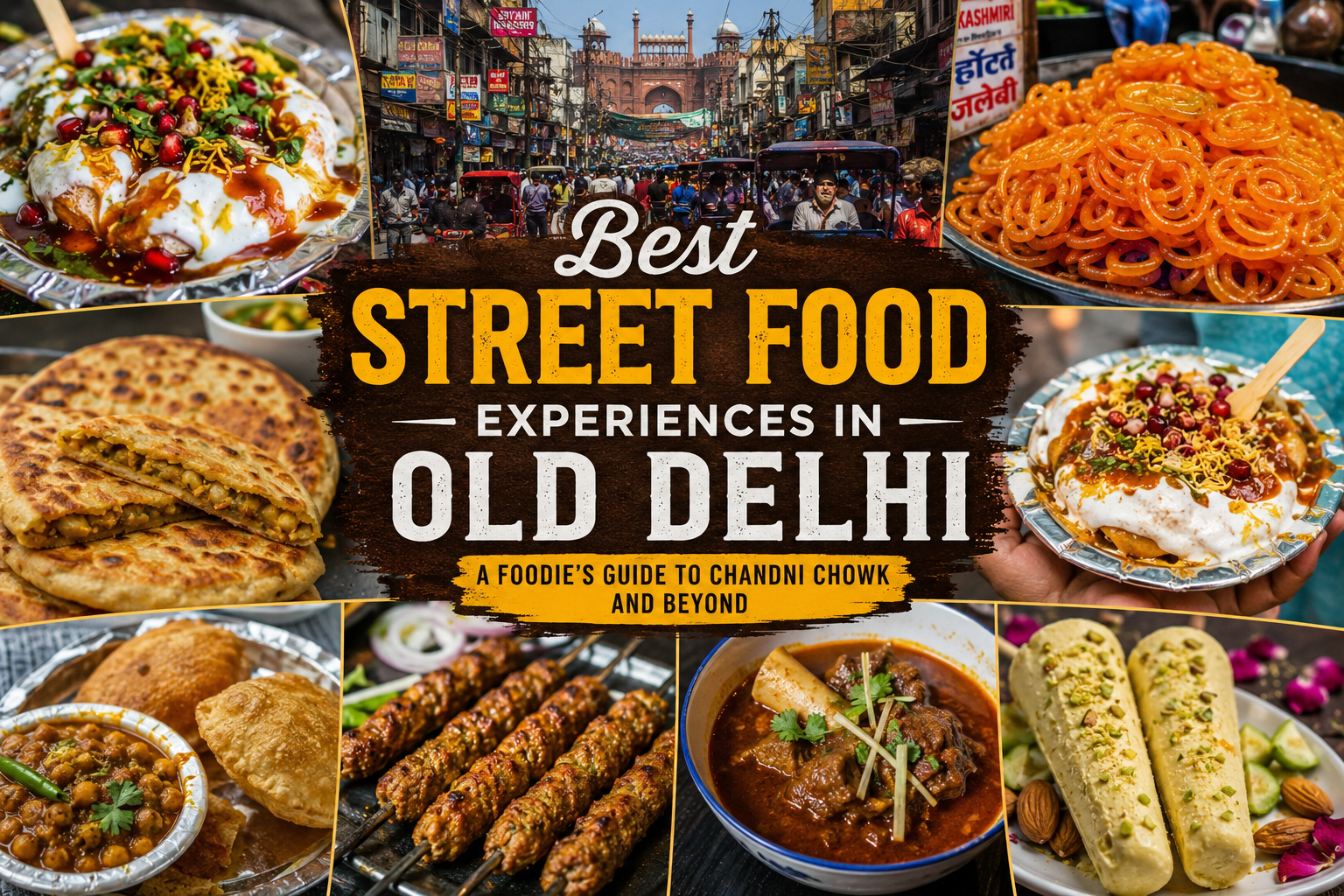
Best Street Food Experiences in Old Delhi
Old Delhi is not simply a place to visit—it is a place to taste, smell, explore, and experience. Among all the experiences the historic capital offers, Old Delhi street food stands out as one of the most memorable. The narrow lanes around Chandni Chowk, Jama Masjid, Matia Mahal, Dariba Kalan, and Paranthe Wali Gali are filled with the aromas of freshly fried snacks, slow-cooked curries, sizzling kebabs, sweet jalebis, creamy kulfi, and tangy chaat.
For travelers who want to discover Delhi beyond its famous monuments, a food walk through Old Delhi provides a fascinating introduction to the city’s culture. Chandni Chowk itself dates back to the Mughal era and remains one of Delhi’s best-known historic markets and food destinations. Delhi Tourism describes the area as a street-food haven where traditional North Indian and Mughlai dishes are served alongside generations-old specialties.
Whether you are visiting Delhi for the first time, traveling with family, exploring with friends, or looking for an authentic local experience with a private guide, Old Delhi offers something for almost every food lover.
Why Old Delhi Is Famous for Street Food
Old Delhi’s food culture developed alongside its markets, neighborhoods, religious sites, and trading communities. The result is an extraordinary mixture of culinary traditions in a relatively compact area.
Chandni Chowk is particularly famous for its concentration of food stalls, halwais, chaat sellers, parantha shops, sweet shops, and traditional restaurants. Delhi Tourism highlights the area’s paranthas, chaat, kachoris, jalebis, kulfi, and the Mughlai food around Jama Masjid as some of its characteristic food experiences.
What makes the experience different from eating at a conventional restaurant is the atmosphere. You are surrounded by busy markets, old buildings, shopkeepers, cycle rickshaws, pedestrians, religious landmarks, and the sounds of everyday Delhi life.
The food is therefore only one part of the experience.
A plate of hot chaat eaten while walking through a crowded historic lane can feel completely different from ordering the same type of dish in a modern restaurant.
1. Start Your Food Adventure with a Traditional Delhi Breakfast
If your schedule allows, begin your Old Delhi food experience in the morning.
Early hours are especially interesting because the neighborhood is beginning its daily routine. Shops open, vendors prepare ingredients, and traditional breakfast foods begin appearing on the streets.
One popular choice is bedmi puri with aloo sabzi. Bedmi puri is a crisp, spiced fried bread generally served with a flavorful potato curry. It is filling, warming, and particularly suitable for travelers who want to experience a traditional North Indian breakfast.
Another option is kachori with aloo sabzi. Kachoris have a crisp exterior and a flavorful filling, while the accompanying potato curry adds spice and texture.
For visitors who enjoy savory breakfasts, these dishes can be a better introduction to Old Delhi than immediately beginning with sweets.
2. Explore the Famous Paranthe Wali Gali
No Old Delhi street food experience is complete without exploring Paranthe Wali Gali.
This historic lane is famous for its stuffed paranthas. Delhi Tourism notes that the lane became a renowned food locality when parantha shops moved there in the 1870s.
The traditional parantha is much more than a simple flatbread. It is stuffed, cooked in generous amounts of fat, and served with accompaniments such as pickles, chutneys, vegetables, and other sides.
Depending on the shop and menu, you may encounter fillings such as:
- Aloo
- Gobi
- Radish
- Paneer
- Mint
- Papad
- Mixed vegetables
- Dry fruits
- Khoya or sweet fillings
For first-time visitors, starting with a classic savory parantha is a good idea before experimenting with more unusual combinations.
The experience of eating in this narrow historic lane is as important as the food itself. Take some time to observe the traditional shops, watch the cooking process, and enjoy the atmosphere instead of rushing through your meal.
3. Discover Delhi’s Famous Chaat Culture
If there is one category that defines Old Delhi street food, it is chaat.
Chaat combines contrasting flavors and textures—crispy, spicy, tangy, sweet, creamy, and fresh. Delhi Tourism specifically highlights chaat as a major part of Chandni Chowk’s food culture.
Some popular varieties to look for include:
Aloo Tikki
Aloo tikki is made from spiced potato and cooked until crisp on the outside. It is commonly served with chutneys, yogurt, spices, and other toppings.
Papdi Chaat
Papdi chaat combines crispy papdi with yogurt, chutneys, spices, and other toppings. The result is a mixture of crunch, sweetness, sourness, and spice.
Dahi Bhalla
Dahi bhalla features soft fried lentil dumplings covered with yogurt and chutneys. Tamarind chutney and spices add a sweet and tangy contrast.
Gol Gappe
Known by different names across India, gol gappe are crisp hollow shells filled with flavored water, potatoes, spices, and other ingredients.
Aloo Chaat
Aloo chaat turns humble potatoes into a flavorful snack using spices, chutneys, herbs, and tangy ingredients.
A good food walk should ideally allow you to try small portions of several varieties rather than filling up on one large dish.
4. Taste the Famous Kachori with Aloo Sabzi
Kachori is another essential Old Delhi street food.
A crispy kachori filled with spiced pulses or other ingredients is often served alongside hot potato curry. The combination provides a wonderful contrast between crisp pastry and soft, spicy sabzi.
Delhi Tourism lists Jung Bahadur Kachori Wala among the traditional Old Delhi food destinations and notes its urad-dal kachori served with aloo sabzi.
The best way to enjoy kachori is when it is freshly prepared. The crisp exterior and hot filling make it particularly satisfying during a morning food walk.
If you are planning a long food tour, consider sharing a plate so that you can continue exploring other dishes.
5. Try the Famous Dahi Bhalla
Dahi bhalla is one of the most recognizable dishes in Old Delhi’s chaat tradition.
The soft lentil dumpling is covered in chilled yogurt and usually enhanced with sweet-tangy tamarind chutney and spices. Some versions include pomegranate seeds, coriander, and additional toppings.
Delhi Tourism specifically recommends the area around Chandni Chowk for dahi bhalla and identifies Natraj Dahi Bhalla as a notable destination near the Chandni Chowk Metro area.
The dish is especially appealing to travelers who want something creamy and refreshing after eating spicy or fried snacks.
6. Don’t Miss Old Delhi Jalebi
After savory dishes, it is time for something sweet.
Jalebi is one of India’s most recognizable desserts and a classic Old Delhi food experience. Batter is shaped into spirals, deep-fried, and soaked in sugar syrup.
The ideal jalebi should offer a contrast between a crisp exterior and syrupy sweetness.
Old Famous Jalebi Wala near the Dariba Kalan side of Chandni Chowk is frequently associated with the area’s historic jalebi tradition. Delhi Tourism also specifically recommends stopping for hot jalebis while exploring Chandni Chowk.
For the best experience, eat jalebi soon after it is prepared.
A freshly fried jalebi is dramatically different from one that has been sitting for a long time.
7. Enjoy Rabri, Faluda and Traditional Desserts
Old Delhi’s dessert culture extends far beyond jalebi.
Rabri faluda is another traditional sweet experience, combining thickened milk with faluda and other ingredients.
You can also look for kulfi, India’s traditional frozen milk dessert. Delhi Tourism highlights kulfi destinations around the wider Old Delhi area, including traditional kulfi near Ajmeri Gate.
Kulfi is particularly enjoyable after a spicy meal because its creamy and cold texture provides a refreshing contrast.
Depending on the season, you may also encounter special desserts that are not available throughout the year.
8. Look for Seasonal Daulat Ki Chaat
One of the most unusual foods associated with Old Delhi is Daulat Ki Chaat.
Despite the word “chaat,” this is a sweet rather than a savory snack.
It has an exceptionally light, airy texture and is generally associated with cooler weather. It is made using carefully prepared milk-based foam and is traditionally topped with ingredients such as sugar, saffron, and nuts.
Daulat ki chaat is an excellent example of why Old Delhi food is more than a collection of famous snacks. Some dishes are deeply connected to seasonality and traditional preparation techniques.
If you are visiting during the cooler months, ask a local guide or vendor whether it is available.
9. Experience the Food Around Jama Masjid
After exploring Chandni Chowk, continue toward Jama Masjid and the surrounding food lanes.
This part of Old Delhi is particularly famous for Mughlai and meat-based dishes.
The lanes around Urdu Bazaar and Matia Mahal become especially interesting for travelers looking for kebabs, tikkas, fried chicken, nihari, korma, and other traditional dishes.
Delhi Tourism describes the Jama Masjid area as a lively food destination where the aromas of kebabs, fried chicken, fish, and Mughlai dishes fill the surrounding streets.
This part of the food experience is especially different from the vegetarian chaat and parantha traditions around Chandni Chowk.
Together, the two areas demonstrate the culinary diversity of Old Delhi.
10. Try Nihari with Khamiri Roti
For travelers interested in traditional Mughlai-influenced food, nihari is one of the dishes worth seeking out.
Nihari is a slow-cooked meat stew with a rich, aromatic gravy. It is traditionally eaten with bread such as khamiri roti.
The dish has a particularly strong association with breakfast and early-day eating in parts of Old Delhi. Delhi Tourism notes that nihari and paaya in the Jama Masjid area can sell out early in the morning.
That means travelers interested in trying these dishes should consider starting their food exploration early rather than arriving late in the afternoon.
11. Explore Kebabs and Tikkas
The Jama Masjid area is also known for kebabs and tikkas.
These dishes are ideal for travelers who want to sample something savory without committing to a large meal.
You may encounter:
- Seekh kebabs
- Shami kebabs
- Chicken tikka
- Mutton dishes
- Grilled meats
- Korma
- Rumali roti
The combination of smoky grilled food, freshly prepared breads, chutneys, and traditional spices makes this section of Old Delhi particularly memorable.
12. Try Rumali Roti with Mughlai Food
Rumali roti is a very thin Indian flatbread traditionally prepared by stretching dough until it becomes almost paper-like.
It is often served alongside kebabs and rich Mughlai dishes.
The bread works particularly well with gravies because it can be folded, rolled, or used to scoop up food.
For visitors who have never experienced traditional Old Delhi Mughlai cuisine, ordering a small combination of kebabs, gravy, and rumali roti can provide a good introduction.
13. Experience Old Delhi Through Its Food Lanes
One of the biggest mistakes first-time visitors make is treating Old Delhi like a normal restaurant district.
The real experience is in the lanes.
Paranthe Wali Gali has its own identity. Dariba Kalan feels different. Chandni Chowk’s main market has a different atmosphere from the lanes around Jama Masjid. Matia Mahal brings another side of Old Delhi’s culinary culture.
Walking between these areas allows you to see how food changes from one neighborhood to another.
You may start with a sweet shop, pass a spice seller, turn into a lane selling jewelry, encounter a chaat stall, and then suddenly find yourself surrounded by kebab shops.
That unpredictability is part of the charm.
14. Best Time for an Old Delhi Food Walk
The ideal time depends on what you want to eat.
Morning
Morning is excellent for:
- Bedmi puri
- Kachori
- Nihari
- Freshly prepared breakfast dishes
- Early-market atmosphere
Late Morning to Afternoon
This is a good period for:
- Paranthas
- Chaat
- Aloo tikki
- Dahi bhalla
- Kachori
- Jalebi
Evening
Evening can be ideal for:
- Kebabs
- Tikkas
- Mughlai food
- Fried snacks
- Desserts
If you want to cover both vegetarian street food and Mughlai food in one day, an itinerary that begins in Chandni Chowk and later moves toward Jama Masjid can work particularly well.
15. How to Plan a Street Food Walk in Old Delhi
A successful Old Delhi food tour is less about eating everything and more about choosing the right sequence.
A practical route can look like this:
Start at Chandni Chowk Metro Station → Explore Chandni Chowk → Visit Paranthe Wali Gali → Try Chaat → Walk toward Dariba Kalan → Taste Jalebi → Continue toward Jama Masjid → Explore Urdu Bazaar and Matia Mahal → Finish with Mughlai food or dessert.
Delhi Tourism lists Chandni Chowk Metro Station on the Yellow Line as the nearest metro station for the Chandni Chowk area. It also notes that many outlets operate around the daytime and evening period, although individual shops can have different schedules and some may close on particular days.
Because individual vendors can change hours, menus, or availability, checking locally on the day of your visit is sensible.
16. How Much Food Should You Try?
One of the most important tips for an Old Delhi food walk is don’t eat full portions everywhere.
Old Delhi offers too many tempting dishes.
Instead, consider sharing.
For example:
Stop 1: One parantha to share
Stop 2: One plate of chaat
Stop 3: One jalebi portion
Stop 4: One kulfi
Stop 5: Small kebab or tikka portion
Stop 6: Shared Mughlai main dish
This gives you the opportunity to experience a much wider range of flavors.
A private food tour can also make this easier because a local guide can help select dishes and control the pace according to your preferences.
17. Vegetarian Street Food in Old Delhi
Vegetarian travelers will find plenty to enjoy.
Some of the most interesting vegetarian options include:
- Stuffed paranthas
- Aloo tikki
- Dahi bhalla
- Papdi chaat
- Gol gappe
- Kachori
- Samosa
- Aloo chaat
- Fruit chaat
- Jalebi
- Kulfi
- Rabri faluda
The variety demonstrates that Old Delhi’s street food experience is not dependent on meat.
Delhi Tourism’s Old Delhi food guide includes numerous vegetarian snacks and sweets alongside its Mughlai recommendations.
18. Street Food for International Travelers
For international visitors, Old Delhi can initially feel overwhelming.
The crowds, traffic, smells, spices, narrow lanes, and variety of food can all be intense.
But that is also what makes the experience memorable.
If you are visiting from another country, it can be helpful to begin with familiar categories such as:
- Fried breads
- Grilled kebabs
- Yogurt-based dishes
- Sweet desserts
- Mild vegetable dishes
Then gradually experiment with stronger flavors.
A private guide can also explain what each dish contains, how it is traditionally eaten, and which foods may be better suited to your preferences.
19. Food Safety Tips for Old Delhi
Street food can be one of the highlights of your Delhi trip, but sensible precautions are important.
Choose vendors that have:
- High customer turnover
- Freshly prepared food
- Clean preparation areas
- Ingredients that appear properly stored
- Food cooked at high heat where appropriate
Prefer freshly cooked dishes rather than food that has been sitting uncovered for a long time.
For drinking water, choose sealed bottled water from a reliable source.
If you have a sensitive stomach, avoid trying too many extremely spicy or oily dishes in one sitting.
Most importantly, don’t try to finish every famous dish just because it appears on a food list.
The goal is to enjoy the experience.
20. Why a Guided Old Delhi Food Tour Can Be Better
A self-guided food walk can certainly be exciting, but a knowledgeable local guide can make the experience much easier.
Old Delhi has hundreds of lanes and countless food stalls. A guide can help you navigate the area, explain the history behind different neighborhoods, recommend dishes based on your preferences, and help organize the route.
For international tourists especially, a private guide can also make it easier to understand unfamiliar ingredients and eating customs.
A food tour can be combined with sightseeing at major landmarks such as the Red Fort and Jama Masjid, allowing visitors to experience both the historical and culinary sides of Old Delhi in a single day.
21. Combine Old Delhi Food with Sightseeing
One of the best things about exploring Old Delhi is that food and history are naturally connected.
A visitor can combine:
Red Fort → Chandni Chowk → Paranthe Wali Gali → Chaat stop → Jama Masjid → Old Delhi food lanes
Instead of spending the entire day moving between unrelated tourist attractions, this approach creates a more immersive experience.
You see the architecture, walk through historic markets, interact with local vendors, and taste traditional dishes along the way.
That is why a food walk can become one of the most memorable parts of a Delhi sightseeing tour.
22. What Makes Old Delhi Food Different?
Old Delhi’s greatest strength is its diversity.
Within a relatively short walking distance, you can experience food traditions influenced by:
- Mughlai cuisine
- North Indian vegetarian cooking
- Punjabi flavors
- Traditional halwai culture
- Chaat traditions
- Generational family recipes
- Seasonal desserts
The result is not one single Old Delhi cuisine.
It is a collection of culinary traditions that have developed together over generations.
Chandni Chowk’s historic identity as a market and food destination dates back centuries, while many individual food traditions continue to operate through family-run shops and specialized vendors.
23. A Sample One-Day Old Delhi Food Experience
If you have one day available, you can structure your experience like this:
8:00 AM – Traditional Breakfast
Begin with bedmi puri, kachori, or another traditional breakfast option.
10:00 AM – Chandni Chowk Walk
Explore the historic market and its surrounding lanes.
11:00 AM – Paranthe Wali Gali
Share one or two stuffed paranthas.
12:00 PM – Chaat Experience
Try aloo tikki, dahi bhalla, papdi chaat, or another local specialty.
1:00 PM – Jalebi Break
Enjoy freshly prepared jalebi before continuing your walk.
2:00 PM – Historic Sightseeing
Visit nearby attractions and allow yourself time to rest.
5:00 PM – Jama Masjid Area
Explore the food lanes around Urdu Bazaar and Matia Mahal.
6:00 PM – Kebabs and Mughlai Food
Try a small selection of kebabs, tikkas, or traditional gravies.
7:30 PM – Dessert
Finish with kulfi, rabri, or another traditional sweet.
This schedule can be adjusted depending on the season, shop timings, crowd levels, and your appetite.
Final Thoughts: Experience Delhi One Bite at a Time
The best street food experiences in Old Delhi are not simply about finding the most famous dish.
They are about discovering how food connects with the history, people, markets, and neighborhoods of the city.
A stuffed parantha in a narrow lane tells one story. A plate of chaat tells another. Fresh jalebi brings the sweetness of Old Delhi, while kebabs and nihari introduce the rich culinary traditions around Jama Masjid.
Chandni Chowk’s historic streets remain one of Delhi’s most distinctive places for experiencing food and everyday city life.
For travelers, the best approach is to slow down, sample small portions, talk to local vendors, explore the lanes, and allow some room for unexpected discoveries.
If you are planning a Delhi sightseeing tour with a private driver and guide, adding an Old Delhi food experience can transform a standard sightseeing day into a much more personal journey. Instead of simply photographing monuments, you get to experience the sounds, aromas, flavors, and everyday rhythm of one of India’s most historic neighborhoods.
Old Delhi is best remembered not only through the monuments you see, but also through the food you taste.
And sometimes, the most unforgettable Delhi memory is as simple as a hot jalebi, a crisp parantha, a plate of chaat, or a kebab enjoyed in the middle of a busy historic street.