
·
Last Updated: August 31, 2026
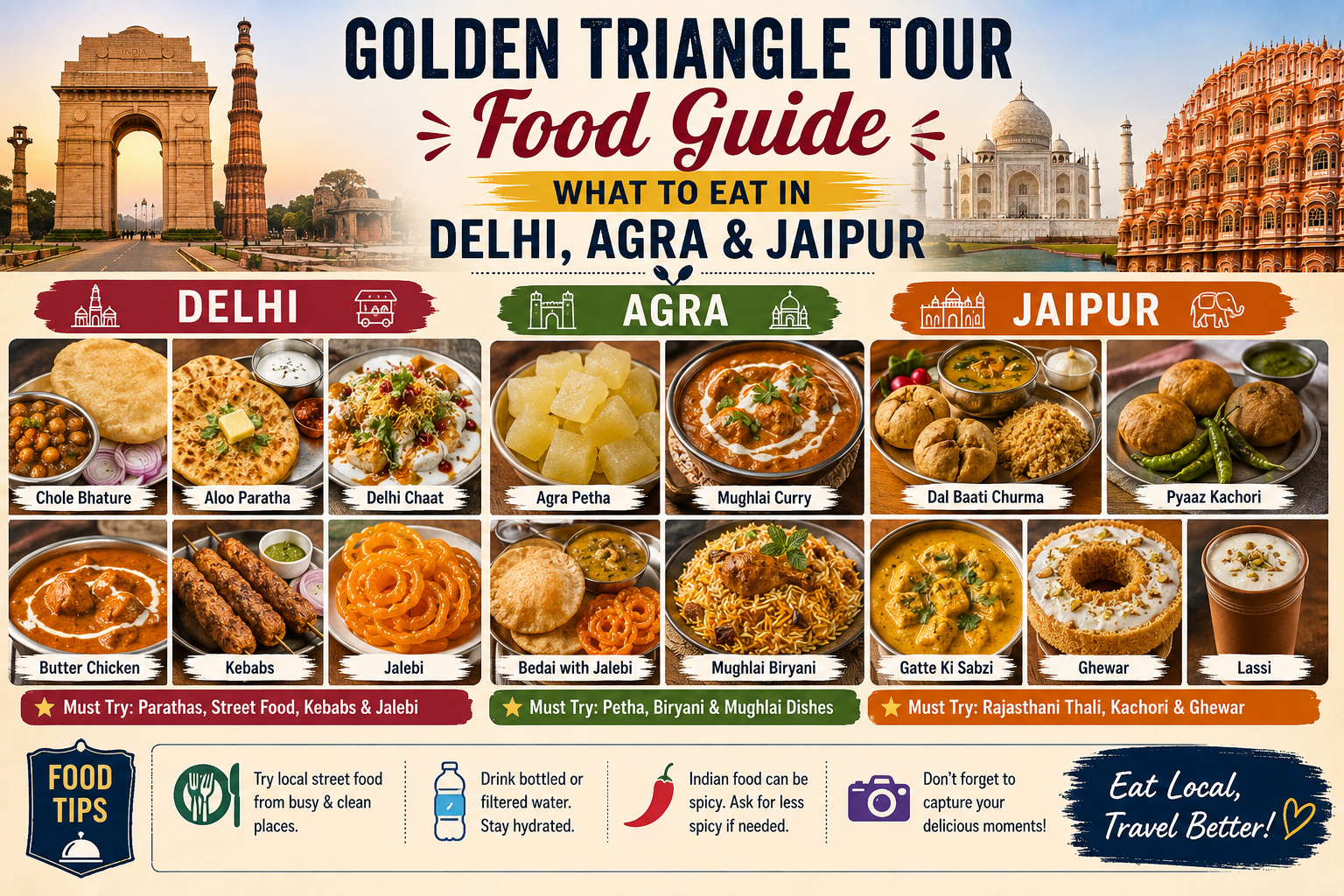
A Golden Triangle Tour is not only a journey through India’s history and architecture—it is also a delicious introduction to the country’s diverse food culture. Connecting Delhi, Agra, and Jaipur, this popular travel route gives visitors the chance to taste everything from spicy street food and rich Mughlai dishes to traditional Rajasthani specialties and tempting Indian sweets.
Each city has its own culinary identity. Delhi is known for its energetic street-food culture and Mughlai flavors, Agra combines its Mughal heritage with distinctive local sweets and snacks, while Jaipur showcases the rich and colorful cuisine of Rajasthan.
If you are planning a Golden Triangle Tour food guide, knowing what to eat in each city can make your trip even more memorable. From famous dishes to local snacks and traditional desserts, here is a practical guide to the best food experiences in Delhi, Agra, and Jaipur.
Why Food Should Be Part of Your Golden Triangle Tour
Food provides a different way to understand India’s culture.
A historic monument tells you about a city’s past, while its cuisine can reveal how different communities, traditions, ingredients, and cooking methods have influenced local life.
During your Golden Triangle journey, you can experience:
- Traditional Indian breakfasts
- Mughlai cuisine
- North Indian street food
- Rajasthani thalis
- Local sweets
- Spiced snacks
- Traditional drinks
- Regional desserts
You do not need to visit expensive restaurants to experience great food. Some of the most memorable dishes can be found in traditional eateries, established food markets, and popular local restaurants.
Delhi Food Guide: What to Eat in Delhi
Delhi is the perfect place to begin your culinary journey.
The capital’s food culture reflects centuries of migration and cultural exchange. You can find traditional North Indian dishes, Mughlai cuisine, Punjabi flavors, street snacks, modern cafes, and food from almost every region of India.
1. Chole Bhature
Chole bhature is one of Delhi’s most popular comfort foods.
It consists of spicy chickpea curry served with bhature, a large deep-fried bread. The combination is filling, flavorful, and particularly popular as a breakfast or brunch option.
The dish is often accompanied by pickles, onions, chutney, or other sides.
Best for: Breakfast or a hearty lunch.
2. Aloo Paratha
Aloo paratha is another classic North Indian dish worth trying in Delhi.
A wheat flatbread is stuffed with seasoned mashed potatoes and cooked on a hot griddle, traditionally with ghee or oil.
It is commonly served with yogurt, pickles, butter, or chutney.
For travelers looking for a traditional Indian breakfast, this is an excellent choice.
3. Delhi-Style Chaat
If you enjoy bold flavors, Delhi’s chaat should be high on your food list.
Depending on the variety, chaat can combine crispy ingredients, potatoes, chickpeas, yogurt, chutneys, spices, and tangy flavors.
Popular varieties include:
- Aloo tikki
- Papdi chaat
- Dahi bhalla
- Golgappa
- Bhalla papdi
Chaat is less about one specific recipe and more about the combination of contrasting textures and flavors.
4. Butter Chicken
Butter chicken is one of India’s best-known dishes and has strong associations with Delhi’s Punjabi culinary tradition.
Tender chicken is served in a creamy tomato-based gravy flavored with spices.
It is commonly eaten with naan, roti, or rice.
Food tip: If you prefer milder flavors, ask about the spice level before ordering.
5. Kebabs
Delhi’s Mughlai food culture makes it an excellent destination for kebab lovers.
You can find different varieties prepared using meat, spices, herbs, and traditional cooking techniques.
For a complete Mughlai meal, pair kebabs with naan or other breads and a flavorful rice dish.
6. Parathas From Old Delhi
Old Delhi is famous for its traditional paratha eateries.
These stuffed flatbreads can contain a variety of fillings, including potato, paneer, vegetables, and other ingredients.
The experience is as much about the atmosphere as the food. Narrow lanes, old buildings, busy shops, and traditional eateries create a lively environment for food lovers.
7. Jalebi
End your Delhi food adventure with jalebi.
These bright orange, spiral-shaped sweets are made by frying batter and soaking it in sugar syrup.
They are crispy on the outside and syrupy inside.
Jalebi is particularly enjoyable when served warm.
Best Delhi Food Experiences
If you have limited time, consider trying:
Breakfast: Aloo paratha or chole bhature
Snack: Chaat or golgappa
Lunch/Dinner: Butter chicken, kebabs, naan, or a North Indian thali
Dessert: Jalebi or traditional Indian sweets
Agra Food Guide: What to Eat in Agra
Agra is internationally famous for the Taj Mahal, but the city also has a fascinating food culture influenced by its Mughal history.
The city is particularly known for Mughlai dishes and its famous sweet, petha.
8. Agra Petha
No Agra food guide would be complete without petha.
Petha is a translucent sweet traditionally prepared from ash gourd and cooked with sugar.
It comes in different varieties and flavors, depending on the preparation.
Common versions may include:
- Plain petha
- Angoori petha
- Kesar petha
- Flavored varieties
It is one of the most popular edible souvenirs from Agra.
Travel tip: Buy sweets from established shops and check packaging and freshness before purchasing.
9. Mughlai Cuisine
Agra’s history as an important Mughal city is reflected in its cuisine.
Mughlai dishes often feature rich gravies, aromatic spices, meat, nuts, and carefully prepared sauces.
Popular dishes to look for include:
- Mughlai chicken
- Korma
- Kebabs
- Biryani
- Rich meat curries
- Naan and other breads
If you enjoy hearty North Indian cuisine, Agra is a great place to explore these flavors.
10. Agra Chaat
Agra also has its own street-food culture.
Local chaat can include spicy, tangy, sweet, and crispy elements.
Aloo tikki, dahi-based snacks, samosa, and other Indian street foods can be found at established food spots around the city.
As with street food anywhere, choose busy places with good hygiene practices and high food turnover.
11. Bedai and Jalebi
Bedai is a popular breakfast combination in parts of North India and can be found in Agra.
It is generally a crispy fried bread served with a spicy lentil or potato-based curry, often accompanied by jalebi.
The combination of savory curry and sweet jalebi creates an interesting contrast.
Best for: A traditional local breakfast experience.
12. Mughlai Biryani
Biryani is another dish worth trying in Agra.
Fragrant rice is cooked with spices and other ingredients, producing a flavorful and aromatic meal.
Different restaurants use different techniques and spice combinations, so the taste can vary considerably.
Best Agra Food Experiences
Breakfast: Bedai and jalebi
Lunch: Mughlai curry with naan
Snack: Chaat or samosa
Dessert: Agra petha
Dinner: Biryani or a traditional Mughlai meal
Jaipur Food Guide: What to Eat in Jaipur
Jaipur brings the flavors of Rajasthan to your Golden Triangle Tour.
Rajasthani cuisine developed in an environment where ingredients and water could be limited, leading to creative cooking methods and dishes that could be stored or prepared with relatively simple ingredients.
Today, Jaipur is one of India’s best cities for experiencing traditional Rajasthani food.
13. Dal Baati Churma
Dal baati churma is arguably the most famous dish associated with Rajasthan.
It combines three components:
Dal: A flavorful lentil preparation.
Baati: Firm baked wheat dough balls traditionally cooked until crisp.
Churma: A sweet, crumbly preparation made from crushed wheat-based baati combined with ghee and sugar or other sweetening ingredients.
The combination offers savory, rich, and sweet flavors in one meal.
14. Rajasthani Thali
A Rajasthani thali is one of the best ways to sample several regional dishes in one sitting.
Depending on the restaurant, a thali may include:
- Dal
- Baati
- Churma
- Gatte ki sabzi
- Ker sangri
- Kadhi
- Seasonal vegetables
- Rotis
- Rice
- Pickles
- Chutneys
- Sweets
The exact menu varies between restaurants.
Best for: First-time visitors who want to try several Rajasthani dishes at once.
15. Gatte Ki Sabzi
Gatte ki sabzi is a traditional Rajasthani dish prepared with gram-flour dumplings cooked in a spiced yogurt-based gravy.
It is typically served with roti, rice, or other traditional breads.
The dish is a great example of how Rajasthani cuisine transforms simple ingredients into flavorful meals.
16. Ker Sangri
Ker sangri is another traditional Rajasthani specialty.
It is prepared using regional desert plants and is commonly cooked with spices and oil.
Its distinctive taste makes it a worthwhile choice for travelers who want to explore authentic regional cuisine beyond the most famous dishes.
17. Pyaaz Kachori
Jaipur is well known for its kachoris.
Pyaaz kachori consists of a crisp, deep-fried pastry filled with a spicy onion mixture.
It is commonly enjoyed as a breakfast or snack.
For travelers who enjoy spicy foods, it is one of the city’s must-try snacks.
18. Mirchi Vada
Mirchi vada is another popular Rajasthani snack.
Large green chilies are stuffed with a savory filling, coated in batter, and fried until crisp.
It is usually served with chutney.
If you are sensitive to spicy food, ask about the heat level before ordering.
19. Ghewar
Ghewar is a traditional Rajasthani sweet with a distinctive honeycomb-like texture.
It is particularly associated with festive occasions and can be found in different varieties.
Some versions are topped with rabri, nuts, or other sweet ingredients.
20. Lassi
After exploring Jaipur’s forts and markets, a chilled glass of lassi can be a refreshing choice.
Lassi is a traditional yogurt-based drink that can be prepared sweet or savory.
Some places also offer flavored versions.
Best Jaipur Food Experiences
Breakfast: Pyaaz kachori with tea
Lunch: Rajasthani thali
Snack: Mirchi vada
Dinner: Dal baati churma
Dessert: Ghewar
Drink: Lassi
Street Food Safety Tips for the Golden Triangle
Trying local food is an important part of the Golden Triangle experience, but travelers should make sensible choices.
Choose Busy Food Spots
Restaurants and food stalls with many customers often have high food turnover.
Drink Safe Water
Use sealed bottled water or a reliable safe-water source. Be cautious with ice if you are uncertain about the water used.
Eat Food Served Hot
Freshly cooked food that is served hot is generally preferable to food that has been sitting uncovered for long periods.
Introduce Spicy Food Gradually
Indian cuisine can be considerably spicier than some travelers expect.
Start with moderate spice levels and increase them if you are comfortable.
Carry Basic Medicines
A small travel health kit can be useful, particularly if you are traveling for several days.
Vegetarian Food on the Golden Triangle Tour
Vegetarian travelers will find plenty of choices across Delhi, Agra, and Jaipur.
Some excellent vegetarian dishes to try include:
- Aloo paratha
- Chole bhature
- Paneer dishes
- Dal
- Dal baati churma
- Gatte ki sabzi
- Ker sangri
- Samosa
- Kachori
- Chaat
- Rajasthani thali
Jaipur, in particular, offers a wide variety of traditional vegetarian Rajasthani dishes.
Best Drinks to Try
Food is only part of the culinary experience.
Depending on the season and location, travelers can try traditional drinks such as:
Masala Chai
Indian spiced tea is widely enjoyed throughout the Golden Triangle.
Lassi
A yogurt-based drink available in sweet and savory versions.
Fresh Lime Drinks
A refreshing choice during warmer weather, provided it is prepared hygienically.
Traditional Regional Drinks
Some restaurants offer regional beverages and seasonal specialties. Ask about the ingredients if you have dietary restrictions.
Golden Triangle Food Itinerary
If food is one of your main reasons for visiting India, you can build your sightseeing schedule around local meals.
Day 1 – Delhi
Explore Old Delhi and try traditional street food.
Day 2 – Delhi
Enjoy a North Indian breakfast, followed by a Mughlai lunch or dinner.
Day 3 – Agra
Try a local breakfast and explore Agra’s Mughlai cuisine.
Day 4 – Agra
Visit the Taj Mahal and finish the day with a traditional Agra meal and petha.
Day 5 – Jaipur
Begin with kachori and tea before exploring Jaipur.
Day 6 – Jaipur
Enjoy a traditional Rajasthani thali for lunch and dal baati churma for dinner.
Day 7 – Jaipur
Explore local markets and finish your trip with ghewar and lassi.
How to Experience the Golden Triangle Food Culture
Do not treat food simply as something you eat between sightseeing stops.
Make it part of your journey.
Visit traditional markets, explore established local eateries, ask your hotel for recommendations, and try dishes you have never tasted before.
If you are unsure about an unfamiliar ingredient, simply ask the restaurant staff. Most established restaurants can explain the ingredients and preparation.
Food walks and cooking experiences can also be excellent ways to learn about local culinary traditions.
Final Thoughts
A Golden Triangle Tour food guide is incomplete without exploring the distinctive flavors of Delhi, Agra, and Jaipur.
Delhi introduces travelers to energetic street food, Punjabi flavors, and Mughlai cuisine. Agra combines its rich Mughal heritage with local specialties such as petha, bedai, and traditional Mughlai dishes. Jaipur brings the bold and distinctive flavors of Rajasthan through dal baati churma, kachori, gatte ki sabzi, Rajasthani thali, and traditional sweets.
The best part is that you do not have to choose between history and food. You can visit magnificent monuments during the day and discover local flavors in the evening.
So, when planning your Delhi–Agra–Jaipur Golden Triangle Tour, leave some space in your itinerary for food. Taste something new in every city, explore local culinary traditions, and let India’s incredible cuisine become one of the highlights of your journey.