
·
Last Updated: September 19, 2026
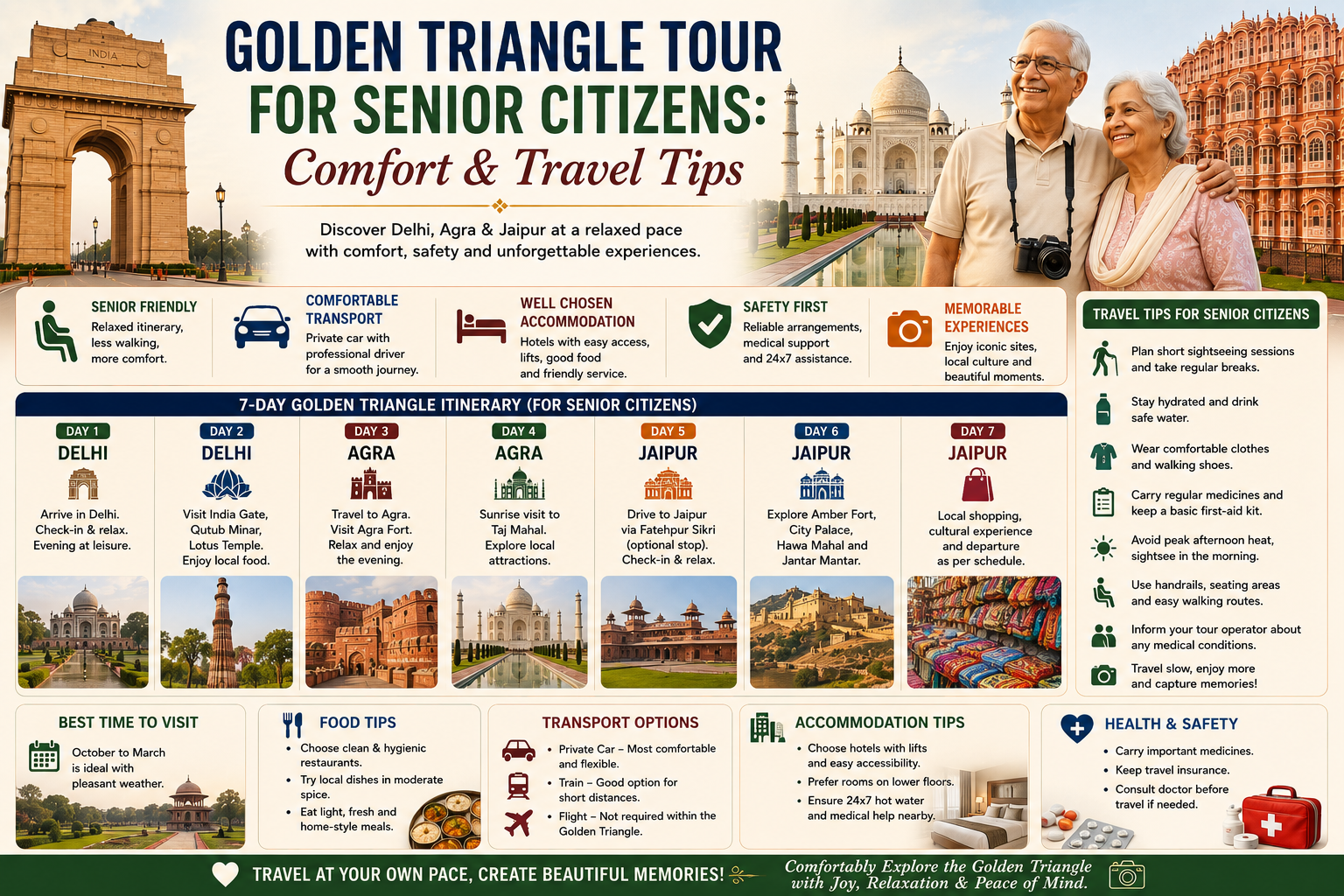
The Golden Triangle Tour is one of the best ways to discover India’s history and culture in a manageable travel circuit. Connecting Delhi, Agra, and Jaipur, the route offers famous monuments, royal architecture, colorful markets, traditional cuisine, gardens, and unforgettable cultural experiences.
For senior citizens, however, a successful Golden Triangle Tour is not about seeing as many attractions as possible in the shortest time. The key is to create a comfortable, flexible, and well-paced itinerary with suitable transportation, convenient hotels, regular rest breaks, and carefully planned sightseeing.
Whether you are traveling as a couple, with family, or as part of a small group, this guide provides practical tips for planning a Golden Triangle Tour for senior citizens.
Is the Golden Triangle Suitable for Senior Travelers?
Yes. Senior travelers can enjoy Delhi, Agra, and Jaipur comfortably when the itinerary is planned around their pace and preferences.
The three cities offer a wide range of accommodation and transportation options, making it possible to customize the journey.
The most important considerations are:
- Comfortable transportation
- Convenient accommodation
- Shorter sightseeing sessions
- Regular rest breaks
- Suitable travel dates
- Easy access to food and water
- Avoiding unnecessary rushing
- Planning assistance when needed
Instead of trying to cover every attraction, choose the places that matter most to you.
How Many Days Are Best for Senior Citizens?
A rushed five-day Golden Triangle itinerary may be tiring for some older travelers.
A 6 to 8-day itinerary can provide a more comfortable pace.
5 Days
Suitable for travelers who are comfortable with a faster schedule.
6 Days
A good balance between sightseeing and relaxation.
7 Days
An excellent option for senior travelers who want a relaxed experience.
8 Days or More
Ideal if you prefer slower travel, additional rest, or extra cultural experiences.
The right duration depends on individual comfort, mobility, and travel preferences.
Best Time for a Golden Triangle Tour for Seniors
Weather can have a major impact on comfort.
The period from October to March is generally popular for sightseeing because temperatures are usually more comfortable than during the hottest months.
October to November
Pleasant conditions for outdoor sightseeing, with relatively comfortable daytime temperatures.
December to January
Mornings and evenings can be cold. Fog may occasionally affect visibility and transportation, particularly in northern India.
Pack warm layers if traveling during this period.
February to March
Often a comfortable time for sightseeing before temperatures rise significantly.
April to June
The weather can become extremely hot, particularly during the afternoon.
Senior travelers should consider avoiding long outdoor sightseeing sessions during peak daytime heat.
July to September
The monsoon season can bring rain and humidity. Travel is still possible, but outdoor plans should remain flexible.
Always check current weather forecasts before your journey.
A Comfortable 7-Day Golden Triangle Itinerary
A slower itinerary allows senior travelers to enjoy the journey without unnecessary exhaustion.
Day 1: Arrive in Delhi
Arrive in Delhi and check into your hotel.
Keep the first day light.
After a long flight, spend time resting and adjusting to the local environment.
If you feel comfortable, enjoy a relaxed dinner near your hotel.
Overnight: Delhi
Day 2: Comfortable Delhi Sightseeing
Start the day after breakfast.
Choose two or three major attractions rather than trying to visit everything.
Possible choices include:
- Humayun’s Tomb
- India Gate
- Qutub Minar
- Lotus Temple
- Red Fort
Take breaks between attractions.
A private vehicle can make the day significantly more comfortable by reducing walking and waiting time.
Overnight: Delhi
Day 3: Delhi to Agra
Travel from Delhi to Agra in the morning.
You can choose between train travel and a private car depending on comfort and convenience.
After reaching Agra, check into your hotel and rest.
If you still have energy, visit Agra Fort or enjoy a relaxed evening.
Do not feel obligated to add another attraction simply because you have free time.
Overnight: Agra
Day 4: Taj Mahal and Relaxed Agra
Visit the Taj Mahal during the morning when temperatures are generally more comfortable than later in the day.
The monument requires some walking, so wear comfortable shoes and take breaks whenever necessary.
After visiting the Taj Mahal, return to your hotel for breakfast and rest.
Later, visit another attraction if you feel comfortable.
Possible options include:
- Agra Fort
- Itmad-ud-Daulah’s Tomb
- Mehtab Bagh
Overnight: Agra
Day 5: Agra to Jaipur
Travel from Agra to Jaipur.
If your energy level and schedule permit, consider a stop at Fatehpur Sikri.
However, senior travelers should not feel pressured to add extra sightseeing.
If the journey itself is enough for the day, travel directly to Jaipur and relax at the hotel.
Overnight: Jaipur
Day 6: Jaipur Sightseeing
Begin with Jaipur’s major attractions.
Amber Fort
Explore the areas that are comfortable to reach and avoid unnecessary climbing.
City Palace
Spend time exploring the sections that interest you most.
Hawa Mahal
Enjoy the architecture and surrounding area without rushing.
Jantar Mantar
This attraction can be explored at a comfortable pace.
Use a private vehicle between locations whenever possible.
Overnight: Jaipur
Day 7: Relaxed Jaipur and Departure
Keep your final day flexible.
You can:
- Visit a local market
- Shop for handicrafts
- Enjoy a traditional meal
- Explore a garden
- Visit a craft workshop
- Relax at your hotel
If you have a late departure, keep plenty of time for transportation.
If you are traveling onward by air or train, avoid scheduling a major attraction immediately before departure.
Why Private Transportation Can Be Useful for Seniors
Transportation is one of the most important elements of a comfortable Golden Triangle Tour.
A private car with a professional driver can provide:
- Door-to-door travel
- Flexible departure times
- Fewer changes of vehicle
- Easy luggage management
- Rest stops
- Personalized sightseeing
- Reduced walking between transportation points
Senior travelers can stop whenever they need a break.
This flexibility can make the entire journey less tiring.
Train Travel for Senior Citizens
Trains can be a practical way to travel between Delhi, Agra, and Jaipur.
They can be comfortable and save time compared with some road journeys.
However, railway stations can be busy and involve walking, stairs, platforms, and crowds.
If you choose train travel:
- Arrive with enough time.
- Keep luggage manageable.
- Confirm platform information.
- Arrange assistance if needed.
- Avoid carrying more luggage than you can comfortably handle.
- Arrange transportation from the destination station.
For travelers with limited mobility, private transportation may be more convenient.
Choosing the Right Hotel
Accommodation plays a major role in comfort.
When selecting hotels in Delhi, Agra, and Jaipur, look for:
- Elevator access
- Ground-floor rooms where available
- Comfortable beds
- Private bathrooms
- Reliable hot water
- Air conditioning or heating as appropriate
- On-site restaurant
- Easy vehicle access
- Quiet rooms
- Good recent guest reviews
Ask the hotel about accessibility before booking if you have specific mobility requirements.
Do not assume that every historic or boutique property has elevators or step-free access.
Choosing a Convenient Location
A beautiful hotel far from major attractions may not be the most practical choice for senior travelers.
Consider staying somewhere with convenient access to:
- Main roads
- Restaurants
- Pharmacies
- Hospitals or medical facilities
- Tourist attractions
- Transportation
Reducing unnecessary travel time can make sightseeing much more comfortable.
Plan Shorter Sightseeing Sessions
Senior travelers should not feel pressured to spend six or eight hours continuously sightseeing.
A better approach is:
Sightseeing → Rest → Meal → Sightseeing → Rest
For example:
Morning
Visit one or two attractions.
Afternoon
Return to the hotel for lunch and rest.
Evening
Enjoy a short market visit or relaxed cultural experience.
This can provide a much better experience than an exhausting full-day schedule.
Comfortable Walking Tips
Many historic attractions involve walking on uneven surfaces.
Wear:
- Comfortable walking shoes
- Supportive sandals where appropriate
- Lightweight clothing
- Sun protection
Carry water and take regular breaks.
Do not hesitate to use available seating areas.
At large attractions, ask your guide or staff about the easiest route through the site.
Accessibility Considerations
Accessibility varies between attractions.
Some modern facilities may offer better accessibility than historic monuments.
Before visiting an attraction, check:
- Step-free access
- Wheelchair availability
- Rest areas
- Accessible toilets
- Elevator availability
- Distance from vehicle drop-off points
Historic structures can contain stairs, uneven surfaces, narrow pathways, or limited accessibility.
If accessibility is important for your trip, discuss your requirements with your tour operator before booking.
Wheelchair Travel on the Golden Triangle
Senior travelers using wheelchairs should plan ahead.
Ask hotels and transportation providers about:
- Vehicle access
- Ramp availability
- Luggage space
- Room accessibility
- Bathroom design
- Entrance routes
Do not assume that every attraction is fully wheelchair accessible.
A local tour operator familiar with accessibility can help identify suitable routes and transportation arrangements.
Food Tips for Senior Travelers
India is famous for its diverse cuisine, and the Golden Triangle provides excellent opportunities to try regional dishes.
However, older travelers may prefer familiar foods during parts of the journey.
You can combine local cuisine with simpler meals.
Delhi
Try:
- Chole bhature
- Parathas
- Chaat
- Dal
- North Indian vegetarian dishes
Agra
Try:
- Mughlai cuisine
- Biryani
- Local sweets
- North Indian vegetarian dishes
Jaipur
Try:
- Dal baati churma
- Gatte ki sabzi
- Rajasthani thali
- Pyaaz kachori
If you are not accustomed to spicy food, request mild or moderate spice.
Food and Water Precautions
Travelers should take sensible food and water precautions.
Choose clean, reputable restaurants and eat freshly prepared food.
Use a reliable source of drinking water.
Be cautious with:
- Unsealed water
- Ice from uncertain sources
- Raw food that has not been properly washed
- Food that has been sitting uncovered
If you have dietary restrictions or allergies, communicate them clearly to restaurants and your tour operator.
Senior Travel and Health Preparation
Before an international trip, senior travelers may benefit from discussing travel plans with their healthcare professional, particularly if they have specific medical or mobility needs.
Keep necessary personal medications in your carry-on luggage and bring enough for the trip according to your doctor’s advice.
It can also be useful to carry:
- A list of medications
- Relevant medical information
- Emergency contact details
- Travel insurance information
Keep important information organized and accessible.
Carry Travel Insurance
Travel insurance can provide additional protection during an international journey.
Depending on the policy, coverage may include certain medical emergencies, trip interruptions, delays, lost baggage, or cancellations.
Read the policy carefully and check whether it covers your specific circumstances.
Staying Hydrated
Sightseeing in Delhi, Agra, and Jaipur can involve significant outdoor exposure.
Drink water regularly and take breaks, especially during warmer weather.
Do not wait until you feel extremely thirsty.
Senior travelers should plan sightseeing around comfortable weather conditions rather than trying to follow an overly ambitious schedule.
Golden Triangle Safety Tips for Seniors
Senior travelers should use the same basic precautions as other visitors, with additional attention to comfort and mobility.
Keep Important Items Secure
Keep your passport, money, phone, and documents secure.
Avoid Unnecessary Rushing
Do not run for trains, rush through attractions, or climb difficult areas simply to stay on schedule.
Use Reliable Transportation
Choose established transportation providers or trusted tour operators.
Stay Connected
Keep your phone charged and important contact numbers accessible.
Take Breaks
Regular breaks can prevent exhaustion.
Ask for Help
If you need assistance with luggage, transportation, or directions, ask a trusted hotel employee, guide, or transportation provider.
Avoiding Tourist Scams
Busy tourist areas can sometimes attract people offering unsolicited services.
You may encounter:
- Unofficial guides
- Aggressive sellers
- Overpriced transportation
- Shopping recommendations
- Unofficial ticket assistance
Do not feel pressured to accept an offer.
If someone tells you that a monument is closed or your hotel is unavailable, verify the information independently.
Senior travelers may be particularly vulnerable to pressure when tired, so keep important decisions simple and planned in advance.
Best Clothing for Senior Travelers
Comfort should be the priority.
Pack lightweight, breathable clothing for warmer weather and layers for winter.
For religious sites, carry modest clothing that covers shoulders and knees when appropriate.
A lightweight scarf can be useful for sun protection and for visiting places where additional coverage is expected.
What to Pack
A practical Golden Triangle packing list for senior travelers includes:
- Comfortable walking shoes
- Lightweight clothing
- Warm layers for winter
- Sun hat
- Sunglasses
- Sunscreen
- Reusable water bottle
- Personal medications
- Basic first-aid supplies
- Travel insurance information
- Copies of important documents
- Phone charger
- Power bank
- Small day bag
Avoid overpacking.
A lighter suitcase is much easier to manage between cities.
Best Attractions for Senior Travelers
Not every attraction requires extensive walking.
Consider including:
Delhi
- India Gate
- Humayun’s Tomb
- Lotus Temple
- Qutub Minar
- Selected museums
Agra
- Taj Mahal
- Agra Fort
- Itmad-ud-Daulah’s Tomb
- Mehtab Bagh
Jaipur
- City Palace
- Hawa Mahal
- Jantar Mantar
- Amber Fort
- Selected gardens
Choose attractions according to mobility, weather, and personal interests.
Attractions That May Require More Physical Effort
Some heritage sites can involve:
- Stairs
- Sloping pathways
- Uneven ground
- Long walking distances
- Crowds
Before visiting, ask your guide about the easiest route.
Do not hesitate to skip a section if it is uncomfortable.
The purpose of the trip is to enjoy the experience, not to complete every possible pathway.
Golden Triangle Tour for Senior Couples
Senior couples can create a particularly relaxing itinerary by combining sightseeing with comfortable hotels and private transportation.
A couple’s itinerary could include:
- Taj Mahal sunrise
- Relaxed hotel breakfasts
- Private sightseeing
- Traditional dinners
- Local handicraft shopping
- Garden visits
- Cultural performances
Avoid packing every evening with activities.
A quiet dinner or early night can be just as valuable as another sightseeing stop.
Golden Triangle Tour With Elderly Parents
If you are traveling with elderly parents, planning becomes even more important.
Before the trip:
- Discuss the itinerary together.
- Confirm mobility requirements.
- Choose suitable hotels.
- Arrange transportation.
- Keep emergency contacts available.
- Plan regular breaks.
- Avoid excessively long sightseeing days.
Allow parents to decide when they need to rest.
A flexible itinerary is usually better than a rigid schedule.
Golden Triangle Tour for Grandparents and Grandchildren
A multigenerational trip can be a wonderful way for families to explore India together.
Choose experiences that different age groups can enjoy.
For example:
- Monument visits
- Food experiences
- Craft workshops
- Cultural performances
- Photography
- Shopping
- Gardens
Avoid planning every activity around only one age group.
The best itinerary gives everyone something to enjoy.
How to Make the Golden Triangle More Comfortable
Follow the slow travel principle.
Instead of asking:
“How many places can we visit today?”
ask:
“How can we enjoy today’s places without feeling exhausted?”
This simple change can improve the entire trip.
Choose fewer attractions, travel comfortably, eat well, take breaks, and leave room for unexpected moments.
Sample Comfortable Golden Triangle Schedule
| Day | Destination | Main Activities |
|---|---|---|
| Day 1 | Delhi | Arrival, hotel check-in, rest |
| Day 2 | Delhi | 2–3 major attractions |
| Day 3 | Delhi → Agra | Comfortable transfer, Agra Fort |
| Day 4 | Agra | Taj Mahal, rest, optional attraction |
| Day 5 | Agra → Jaipur | Transfer, optional Fatehpur Sikri |
| Day 6 | Jaipur | Amber Fort, City Palace, Hawa Mahal |
| Day 7 | Jaipur | Shopping, cultural experience, relaxation |
| Day 8 | Departure | Easy morning and onward travel |
This schedule can be shortened or extended according to individual comfort.
Golden Triangle Tour Cost for Senior Citizens
The total cost depends on accommodation, transportation, sightseeing, and the level of assistance required.
A budget itinerary may use:
- Comfortable budget hotels
- Trains
- Local restaurants
- Independent sightseeing
A mid-range itinerary may include:
- Comfortable hotels
- Private transfers
- Selected guides
- Better dining options
A premium itinerary can include:
- Luxury hotels
- Private chauffeur-driven vehicle
- Private guides
- Customized sightseeing
- Special dining experiences
For senior travelers, spending a little more on comfortable transportation and convenient accommodation can sometimes provide significantly greater value.
Should Seniors Choose a Private Golden Triangle Tour?
For many senior travelers, a private tour can be the most comfortable option.
Benefits may include:
- Flexible sightseeing
- Private vehicle
- Hotel-to-attraction transfers
- Assistance with luggage
- Personalized itinerary
- Local guide support
- Easier schedule changes
A private tour is not essential, but it can reduce the physical and logistical effort involved in traveling independently.
Senior-Friendly Travel Philosophy
The Golden Triangle should not be treated as a race.
Give yourself permission to:
- Sleep longer
- Skip an attraction
- Sit and enjoy the scenery
- Have a long lunch
- Return to your hotel early
- Spend more time at one place
- Change plans when the weather is uncomfortable
Travel is about creating memories, not collecting locations.
Frequently Asked Questions
Is the Golden Triangle suitable for senior citizens?
Yes. Senior citizens can enjoy the Golden Triangle comfortably with a slower itinerary, reliable transportation, suitable accommodation, and regular rest breaks.
How many days should seniors spend on the Golden Triangle?
Seven to eight days is a comfortable option for many senior travelers, although the ideal duration depends on mobility and personal preferences.
Is private transportation better for seniors?
Private transportation can be more convenient because it reduces transfers, provides flexibility, and allows travelers to take breaks when needed.
Is the Taj Mahal suitable for elderly visitors?
Yes, but the visit involves walking. Comfortable footwear, early timing, rest breaks, and advance planning can make the experience easier.
What is the best season for senior travelers?
October to March is generally popular because temperatures are more comfortable for sightseeing than during the hottest months.
Can wheelchair users visit the Golden Triangle?
Yes, but accessibility varies between hotels, transportation providers, and historic attractions. Specific accessibility requirements should be confirmed before booking.
Should senior travelers hire a guide?
A guide is not mandatory, but a reputable guide can make sightseeing easier and provide useful historical and logistical assistance.
Final Thoughts
A Golden Triangle Tour for senior citizens can be comfortable, enriching, and unforgettable when the itinerary is designed around the traveler rather than the clock.
Delhi offers fascinating history and culture, Agra provides the extraordinary Taj Mahal and Mughal heritage, while Jaipur adds royal architecture, colorful markets, traditional crafts, and Rajasthani culture.
The most important advice is simple: slow down and travel comfortably.
Choose convenient hotels, use reliable transportation, schedule sightseeing during comfortable hours, take regular breaks, stay hydrated, and avoid trying to see everything in one day.
If mobility is limited, discuss accessibility requirements before booking and choose attractions and transportation accordingly.
The Golden Triangle does not need to be physically exhausting to be memorable. With thoughtful planning and a flexible schedule, senior travelers can enjoy India’s famous monuments while also having time to relax, taste local food, meet people, and appreciate the journey.
Travel at your own pace, enjoy every destination, and let the Golden Triangle become a comfortable and memorable chapter of your travels.