
·
Last Updated: August 25, 2026
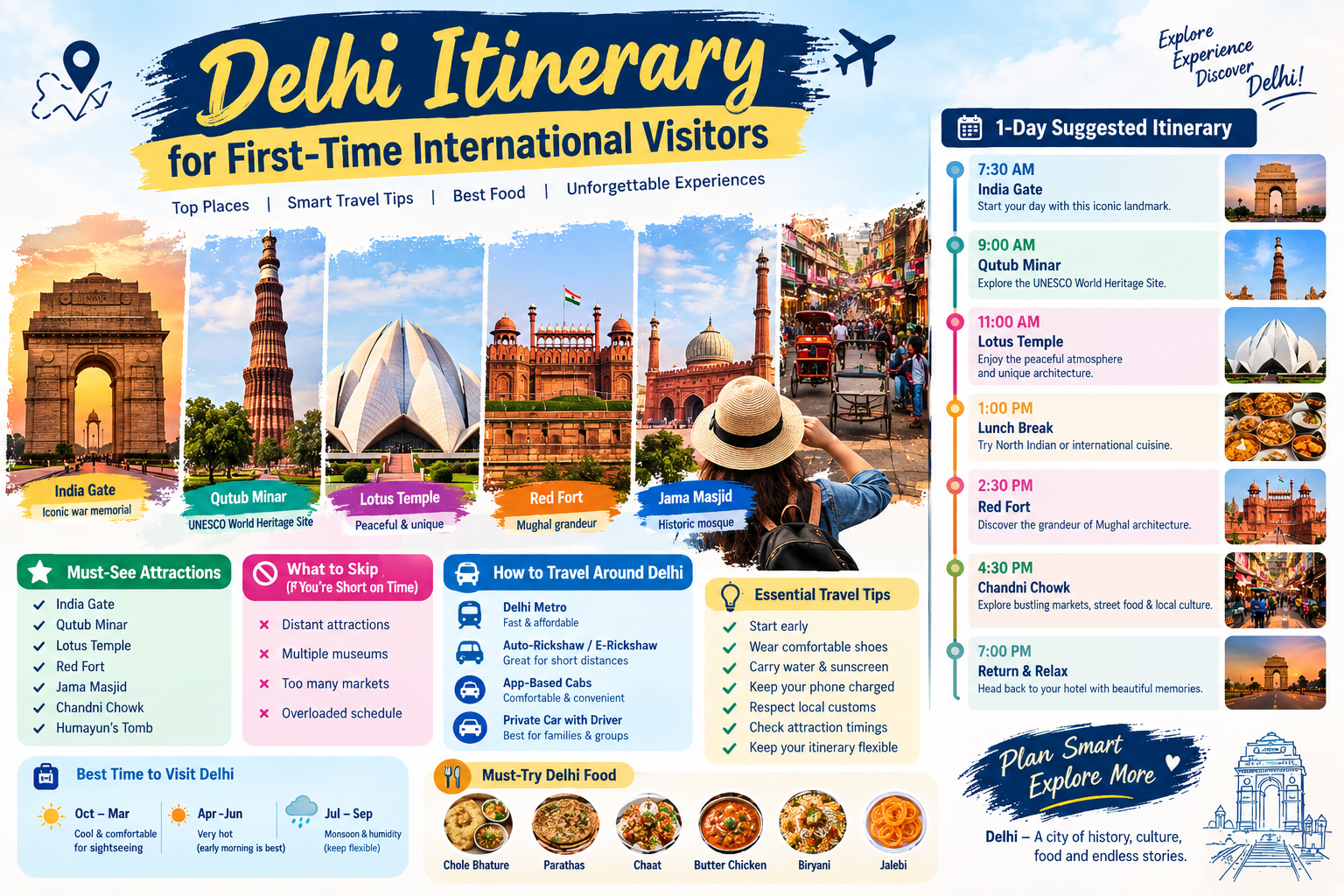
Delhi Itinerary for First-Time International Visitors: A Complete Day-by-Day Guide
Planning your first trip to India’s capital can feel overwhelming. Delhi is a huge city filled with historic monuments, colorful markets, religious landmarks, delicious food, and modern neighborhoods. With so many things to see, creating the right Delhi itinerary for first-time international visitors is essential if you want to enjoy the city without spending most of your trip stuck in traffic.
Delhi offers a fascinating combination of ancient history and modern life. You can explore magnificent Mughal architecture in the morning, taste authentic Indian food at lunchtime, walk through a centuries-old market in the afternoon, and finish your evening surrounded by the energy of modern Delhi.
For international travelers, the experience can be even more rewarding with a little preparation. Understanding how to travel around Delhi, what attractions deserve your time, what to skip, what food to try, and how to organize your sightseeing can make your trip much more comfortable.
This complete Delhi travel itinerary is designed for first-time international visitors who want to experience the city’s most important attractions while keeping their schedule realistic and flexible.
Why Delhi Should Be on Your India Itinerary
Delhi is more than just India’s capital. It is one of the country’s most historically significant cities and a major gateway for international travelers.
The city has been shaped by different dynasties, cultures, religions, and communities over centuries. This history can be seen in its monuments, architecture, markets, neighborhoods, and food.
A first visit can include famous landmarks such as:
- India Gate
- Qutub Minar
- Lotus Temple
- Humayun’s Tomb
- Red Fort
- Jama Masjid
- Chandni Chowk
- Rashtrapati Bhavan and central New Delhi
However, you should not try to visit every attraction in a single day. Delhi’s traffic and large distances can make an overloaded itinerary exhausting.
The best approach is to choose the most important attractions and organize them geographically.
How Many Days Do You Need in Delhi?
The ideal length of a Delhi trip depends on your interests and travel schedule.
One Day in Delhi
A one-day Delhi itinerary is suitable if you are stopping in the city during a longer India trip. You can experience several major landmarks, but you will need to keep your schedule focused.
Two Days in Delhi
Two days provide a much more comfortable introduction to the city. You can dedicate one day to New Delhi and South Delhi and another to Old Delhi.
Three Days in Delhi
Three days allow you to explore major monuments, markets, food experiences, museums, shopping areas, and cultural attractions without rushing.
For most first-time international visitors to Delhi, two or three days are ideal.
Best Delhi Itinerary for First-Time International Visitors
If you have multiple days, the following itinerary provides a balanced combination of history, architecture, food, culture, and local experiences.
Day 1: Discover New Delhi and South Delhi
Your first day should focus on some of the city’s most recognizable landmarks.
Starting early is important because Delhi can become busy as the day progresses.
7:00 AM – Start Your Day
Begin your first day with an early breakfast.
If your hotel offers breakfast, have something light and prepare for several hours of sightseeing. Carry drinking water and make sure your phone is fully charged.
Comfortable shoes are strongly recommended because sightseeing involves walking.
8:00 AM – Visit India Gate
Start your Delhi sightseeing itinerary at India Gate.
This iconic landmark is one of the most recognizable symbols of New Delhi. The monument stands in a large open area surrounded by gardens and important government buildings.
The area is especially pleasant earlier in the day when temperatures are more comfortable.
Spend around 30–45 minutes walking around the monument and taking photographs.
Why Visit India Gate?
- Iconic Delhi landmark
- Excellent photography location
- Easy to combine with central New Delhi
- Good introduction to the city
- Suitable for first-time visitors
9:00 AM – Explore the Central New Delhi Area
After India Gate, continue toward the central government district.
The area around Kartavya Path and Rashtrapati Bhavan showcases some of New Delhi’s most impressive planned architecture.
Even if you do not enter every attraction, seeing the broad avenues and grand buildings gives you a better understanding of modern Delhi.
Allow approximately 30–45 minutes for this part of the journey.
International Visitor Tip
Access to certain government buildings and attractions may have specific security requirements or visitor schedules. Check the latest information before planning an interior visit.
10:30 AM – Visit Qutub Minar
Next, travel toward Qutub Minar.
Qutub Minar is one of Delhi’s most important historic attractions and one of the places you should prioritize on a first visit.
The famous tower forms part of a larger archaeological complex containing historic structures and architectural remains.
Instead of simply taking a photograph and leaving, spend time walking through the complex and appreciating the details.
Recommended Time
Allow approximately 1–1.5 hours.
Why Qutub Minar Is Worth Visiting
- Important historical landmark
- Impressive architecture
- Great photography opportunities
- Interesting heritage experience
- Suitable for history and architecture lovers
Comfortable footwear is useful because you will spend considerable time walking.
12:00 PM – Lunch Break
After exploring Qutub Minar, take a proper lunch break.
First-time international visitors may want to try some popular Indian dishes, but you do not need to start with extremely spicy food.
Good options include:
- Butter chicken
- Biryani
- Dal
- Naan
- Paneer dishes
- Chole bhature
- Vegetarian thali
If you have a sensitive stomach, choose a clean and well-reviewed restaurant and start with moderate portions.
1:30 PM – Visit Humayun’s Tomb
After lunch, continue to Humayun’s Tomb.
The monument is surrounded by landscaped gardens and is an excellent example of historic Mughal architecture.
Its symmetrical design, large arches, detailed stonework, and garden setting make it one of the most attractive heritage locations in Delhi.
Recommended Time
Spend approximately 1 hour here.
Photography Tip
The monument’s symmetrical architecture and gardens provide excellent photography opportunities.
3:00 PM – Explore Lotus Temple
Continue your journey to the Lotus Temple.
The unique lotus-shaped structure is one of Delhi’s most recognizable modern landmarks.
The peaceful atmosphere makes it a pleasant contrast to the city’s busy streets.
Visitors from different backgrounds are welcome, but the site has rules regarding behavior and photography. Maintain a respectful and quiet atmosphere during your visit.
Recommended Time
Approximately 45 minutes to 1 hour.
4:30 PM – Take a Break
After several hours of sightseeing, take some time to rest.
You can stop at a café, return to your hotel, or simply enjoy a relaxed afternoon.
Do not underestimate the importance of breaks during a Delhi sightseeing trip. Walking, heat, crowds, and traffic can make a full day tiring.
6:30 PM – Evening in Delhi
For your first evening, choose a relaxed activity instead of adding another major monument.
You could:
- Enjoy dinner at a local restaurant.
- Explore a modern shopping area.
- Visit a café.
- Try traditional Indian desserts.
- Relax at your hotel.
The goal is to save energy for your second day.
Day 2: Experience Old Delhi
Your second day should focus on the historic heart of Delhi.
Old Delhi offers an entirely different experience from New Delhi. The streets are busier, the markets are more traditional, and the atmosphere is full of history and local activity.
8:00 AM – Breakfast
Start your day with breakfast and prepare for several hours of walking.
Old Delhi can be crowded, so keep your belongings secure and carry only what you need.
9:00 AM – Visit Red Fort
Begin your Old Delhi experience at the Red Fort, also known as Lal Qila.
The massive red sandstone complex is one of Delhi’s most important historic landmarks.
If you are interested in Indian history, Mughal architecture, or heritage, give yourself enough time to explore the complex.
Recommended Time
Approximately 1–1.5 hours.
Should You Visit the Red Fort?
For first-time international visitors, the Red Fort is generally worth considering, particularly if historical attractions are a priority.
If your trip is extremely short, you can choose between spending more time inside the fort and exploring Old Delhi’s markets and food streets.
10:30 AM – Jama Masjid
From the Red Fort, continue toward Jama Masjid.
The historic mosque is one of the most recognizable religious landmarks in Old Delhi.
The large courtyard and surrounding architecture provide a glimpse into the city’s historic character.
Important Visitor Tip
Jama Masjid is an active religious site. Dress respectfully, follow local rules, and be mindful of visitors who are there for worship.
Spend approximately 30–45 minutes here.
11:30 AM – Explore Chandni Chowk
Now it is time to experience one of the most famous areas of Old Delhi: Chandni Chowk.
Chandni Chowk is known for its narrow streets, traditional shops, food vendors, markets, spices, clothing, jewelry, sweets, and energetic atmosphere.
This is where you can experience a different side of Delhi that cannot be captured by visiting monuments alone.
Things to Experience in Chandni Chowk
- Traditional Indian markets
- Street food
- Local sweets
- Spices
- Traditional clothing
- Jewelry
- Historic streets
- Local shopping
Do not try to explore every lane. Pick a few areas and enjoy the experience.
1:00 PM – Try Delhi Street Food
Food is one of the highlights of visiting Old Delhi.
Depending on your preferences, you can try:
Chaat
A flavorful Indian street-food category featuring combinations of crispy, spicy, tangy, and sweet flavors.
Parathas
Stuffed flatbreads that are particularly associated with Old Delhi’s food culture.
Kebabs
Old Delhi is famous for its Mughlai culinary traditions.
Jalebi
A popular Indian sweet with a crisp exterior and syrupy sweetness.
Chole Bhature
Spiced chickpeas served with fried bread, a popular North Indian meal.
Food Safety for International Visitors
If you are not accustomed to Indian street food, choose busy vendors where food is freshly prepared and served hot.
Avoid eating large quantities of unfamiliar foods immediately. Start with small portions and see how your body responds.
2:30 PM – Explore Old Delhi Markets
After lunch, spend some time exploring the markets.
You can shop for:
- Spices
- Textiles
- Souvenirs
- Handicrafts
- Jewelry
- Traditional clothing
- Indian sweets
If shopping is not your priority, simply walk through selected streets and enjoy the atmosphere.
Keep your phone, wallet, passport, and other valuables secure in crowded areas.
4:00 PM – Take a Break
Old Delhi can be intense, particularly for first-time visitors.
Take a break before continuing with your evening plans.
You can return to your hotel, relax at a café, or simply sit somewhere comfortable.
6:00 PM – Enjoy a Delhi Evening
Use your second evening for a relaxed experience.
You could enjoy dinner, explore a modern part of Delhi, or visit a shopping area.
Do not feel pressured to add another major monument. You have already experienced many of Delhi’s key attractions.
Day 3: Culture, Shopping and Flexible Exploration
If you have three days in Delhi, keep the third day flexible.
This is one of the best ways to make your trip more enjoyable because you can choose attractions based on what you enjoyed during the first two days.
Option 1: Visit Akshardham
If you are interested in architecture and cultural experiences, consider visiting the Akshardham temple complex.
Check current visitor rules, opening days, security requirements, and photography restrictions before visiting.
Option 2: Explore Museums
Delhi has several museums covering history, art, culture, crafts, and other subjects.
Choose one or two based on your interests rather than trying to visit several museums in a single day.
Option 3: Shopping
Use your third day for shopping.
You can explore local markets, modern shopping centers, handicraft stores, or souvenir shops.
Remember to compare prices and understand what you are purchasing before completing a transaction.
Option 4: Relax and Explore Local Neighborhoods
You do not need to spend every hour visiting tourist attractions.
Spend some time in a café, walk around a neighborhood, or enjoy a relaxed meal.
This gives you a chance to experience the everyday side of Delhi.
How to Travel Around Delhi
Transportation is one of the most important factors when planning a Delhi itinerary for international tourists.
Delhi Metro
The Delhi Metro is one of the most useful transportation options for exploring the city.
It connects many important areas and can help you avoid road traffic.
Benefits of the Metro
- Affordable
- Fast on many routes
- Useful for independent travelers
- Helps avoid traffic congestion
- Connects many major areas
However, remember that attractions are not always directly beside metro stations. You may need to walk or use an auto-rickshaw, e-rickshaw, or taxi for the final part of your journey.
App-Based Cabs
App-based taxis can be convenient for international travelers who prefer door-to-door transportation.
They are particularly useful when:
- Traveling with luggage
- Traveling with family
- Visiting multiple destinations
- Carrying shopping bags
- Traveling to areas not directly connected by metro
Always allow extra time because Delhi road traffic can be unpredictable.
Auto-Rickshaws and E-Rickshaws
These are useful for short distances and can be convenient around markets.
Confirm the fare before starting the journey or use an appropriate digital booking option where available.
Private Car With Driver
If convenience is your priority, hiring a private car with a driver can be useful.
It can reduce the stress of navigating unfamiliar roads and finding parking.
This option is particularly convenient for families, groups, and travelers with limited time.
What International Visitors Should Know Before Visiting Delhi
Keep Your Passport Safe
Carry identification when necessary, but avoid exposing your passport unnecessarily in crowded public places.
Keep important documents securely stored.
Carry Some Local Currency
Digital payments are widely used, but carrying some cash can still be useful for smaller purchases and situations where digital payment is unavailable.
Keep Your Phone Charged
Your phone may be needed for:
- Navigation
- Translation
- Transportation
- Digital payments
- Communication
- Tickets
A power bank can be extremely useful.
Dress Appropriately
When visiting religious or cultural sites, wear clothing that is respectful and appropriate for the location.
Stay Hydrated
Delhi’s weather can be hot, especially during summer.
Carry drinking water and take regular breaks.
Protect Your Belongings
Crowded markets and public transport require extra attention to your wallet, phone, passport, and bags.
What to Skip on Your First Delhi Trip
With limited time, knowing what not to include in your Delhi itinerary is important.
Avoid Too Many Monuments
Visiting monument after monument can become tiring.
Choose a combination of historical, cultural, and local experiences instead.
Skip Attractions That Are Too Far Away
If reaching an attraction requires a long journey, consider whether it is worth sacrificing several hours of your day.
Don’t Visit Multiple Markets
Choose one major market and explore it properly rather than rushing through several.
Avoid an Overloaded Schedule
A realistic itinerary is better than a long checklist.
Leave room for meals, traffic, walking, photography, and rest.
Best Time to Visit Delhi
The best time for sightseeing is generally during the cooler months.
October to March
These months are typically more comfortable for exploring outdoor attractions.
You can spend more time walking around monuments and markets without dealing with extreme summer heat.
April to June
Delhi can become very hot during this period.
If you visit during summer, start sightseeing early and avoid long outdoor activities during the hottest part of the day.
July to September
The monsoon season can bring rain and humidity.
Keep your itinerary flexible and allow additional travel time.
Best Delhi Food for First-Time Visitors
Delhi is an excellent destination for food lovers.
Some popular foods to consider include:
- Chole bhature
- Parathas
- Chaat
- Kebabs
- Butter chicken
- Biryani
- Samosas
- Jalebi
- Indian sweets
- North Indian thali
International visitors who are not accustomed to spicy food should communicate their preferences clearly when ordering.
Delhi Travel Tips for a Smooth Trip
Start Early
Starting early helps you make better use of your day.
Wear Comfortable Shoes
Delhi sightseeing involves plenty of walking.
Check Attraction Timings
Opening hours and visitor rules can change, so verify information before traveling.
Leave Buffer Time
Do not schedule attractions back-to-back with no travel allowance.
Keep Your Itinerary Flexible
Traffic and weather can affect your plans.
Carry Water
Staying hydrated is particularly important during warmer months.
Use Reliable Transportation
Choose transportation based on distance, time, comfort, and traffic conditions.
Respect Local Culture
Be respectful at religious sites and follow local customs.
Try Local Food Carefully
Start with smaller portions if you are unfamiliar with Indian cuisine.
Sample Delhi Itinerary at a Glance
| Day | Morning | Afternoon | Evening |
|---|---|---|---|
| Day 1 | India Gate, Central Delhi | Qutub Minar, Humayun’s Tomb | Lotus Temple & Dinner |
| Day 2 | Red Fort, Jama Masjid | Chandni Chowk & Local Food | Relaxed Delhi Evening |
| Day 3 | Cultural Attraction | Shopping or Museum | Dinner & Relaxation |
This flexible structure allows first-time visitors to experience Delhi’s major attractions without making every minute of the trip feel scheduled.
Frequently Asked Questions About Delhi Itinerary
What is the best Delhi itinerary for first-time international visitors?
A good first-time itinerary should combine India Gate, Qutub Minar, Humayun’s Tomb, Lotus Temple, Red Fort, Jama Masjid, and Chandni Chowk. If you have three days, add cultural attractions, shopping, or museums.
Is one day enough to visit Delhi?
One day can provide a quick introduction to Delhi, but you will need to prioritize. Two or three days are better for a relaxed experience.
What should international visitors see in Delhi?
First-time visitors should consider India’s major landmarks, historic Old Delhi, local markets, religious architecture, and Delhi’s food culture.
Is the Delhi Metro useful for tourists?
Yes. The metro is a practical way to travel between many parts of Delhi and can help avoid road traffic.
What should I avoid in Delhi?
Avoid overloading your itinerary, visiting too many distant attractions, and trying to explore every market in a short trip.
What food should first-time visitors try in Delhi?
Chole bhature, parathas, chaat, kebabs, butter chicken, biryani, and jalebi are popular choices.
What is the best time to visit Delhi?
October through March is generally more comfortable for sightseeing, while summer can be very hot and monsoon months can bring rain.
How many days are ideal for Delhi?
Two to three days are ideal for most first-time international visitors who want to explore the city’s major attractions without rushing.
Final Thoughts
A well-planned Delhi itinerary for first-time international visitors should balance famous landmarks with authentic local experiences.
Start your trip with the grand architecture of New Delhi and South Delhi. Visit India Gate, explore the central government district, admire Qutub Minar, discover Humayun’s Tomb, and experience the peaceful atmosphere of the Lotus Temple.
Then dedicate a full day to Old Delhi. Explore the Red Fort, visit Jama Masjid, walk through Chandni Chowk, and try traditional Delhi food.
If you have a third day, slow down. Visit a cultural attraction, explore a museum, shop for souvenirs, or simply enjoy Delhi’s neighborhoods and food.
The most important thing is not to treat your trip like a race. Delhi is a city that rewards travelers who take time to observe, taste, explore, and interact with their surroundings.
Plan your routes carefully, choose practical transportation, keep some flexibility in your schedule, and respect local customs.
With the right preparation, your first Delhi trip can become one of the most memorable parts of your India journey.