
·
Last Updated: August 18, 2026
The Taj Mahal is one of the most recognized landmarks in the world. Every year, millions of travelers visit this magnificent monument to admire its beauty, history, and architectural brilliance. While most visitors are captivated by its white marble façade and perfect symmetry, few realize that the Taj Mahal is filled with hidden symbols and deeper meanings.
Built by Shah Jahan in memory of his beloved wife Mumtaz Mahal, the Taj Mahal is much more than a mausoleum. Its architecture incorporates elements of spirituality, paradise, eternal love, and Mughal artistic traditions. Every garden, arch, inscription, and decorative motif was carefully designed to communicate a message.
For travelers planning a Taj Mahal tour, understanding these hidden symbols can transform a simple sightseeing experience into a fascinating journey through history and culture.
The Taj Mahal: More Than a Monument
The Taj Mahal was completed in the 17th century and remains one of the finest examples of Mughal architecture. The structure combines Persian, Islamic, Indian, and Central Asian influences into a harmonious masterpiece.
What makes the monument truly remarkable is that almost every architectural element serves a symbolic purpose. The entire complex was designed to represent ideas of heaven, perfection, balance, and everlasting love.
These hidden meanings continue to intrigue historians, architects, and travelers from around the globe.
The Symbolism of Perfect Symmetry
One of the first things visitors notice during a Taj Mahal visit is its extraordinary symmetry.
The monument is almost perfectly balanced from every angle:
- Identical buildings on both sides
- Matching gardens
- Symmetrical pathways
- Balanced decorative elements
What Does It Symbolize?
In Islamic architecture, symmetry often represents:
- Divine perfection
- Harmony
- Order in the universe
- Spiritual balance
The balanced design reflects the belief that paradise is a place of perfect order and peace.
This architectural feature also enhances the visual impact of the monument, making it appear almost unreal when viewed from a distance.
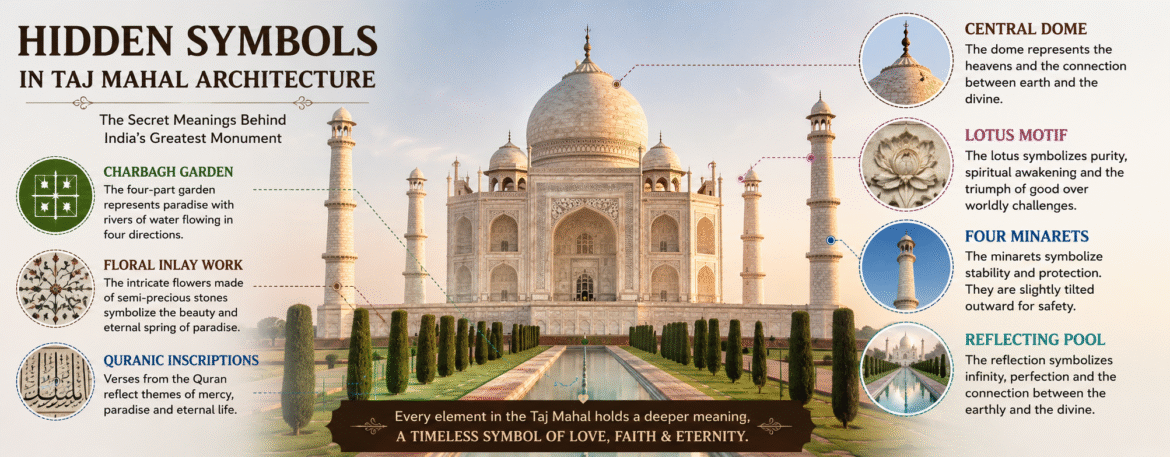
The Charbagh Garden Represents Paradise
The beautiful gardens surrounding the Taj Mahal are known as the Charbagh, a traditional Persian garden layout.
The garden is divided into four sections by water channels that intersect at the center.
Hidden Meaning
The four-part garden symbolizes the Islamic description of paradise.
According to Islamic tradition, paradise contains rivers flowing in four directions.
The flowing water channels represent:
- Purity
- Life
- Renewal
- Divine blessings
As visitors walk through the gardens toward the mausoleum, they symbolically travel through a representation of heaven.
This is one reason why the approach to the Taj Mahal feels so peaceful and serene.
White Marble as a Symbol of Purity
The Taj Mahal’s most striking feature is its gleaming white marble.
Unlike many Mughal structures built from red sandstone, the Taj Mahal was constructed primarily using white marble.
Why White?
The color white traditionally symbolizes:
- Purity
- Spiritual enlightenment
- Peace
- Eternal love
For Emperor Shah Jahan, white marble was the perfect material to honor Mumtaz Mahal.
The stone also changes color throughout the day:
- Pinkish at sunrise
- Bright white during the day
- Golden at sunset
- Silvery under moonlight
Many scholars believe this changing appearance symbolizes the changing moods and stages of life itself.
Quranic Inscriptions and Spiritual Messages
As travelers enter the main gateway and approach the mausoleum, they encounter beautiful Arabic calligraphy.
These inscriptions contain verses from the Quran.
Symbolic Purpose
The verses focus on themes such as:
- Mercy
- Judgment
- Paradise
- Eternal life
The inscriptions prepare visitors spiritually before entering the sacred space.
An interesting architectural trick is also used.
The calligraphy becomes larger as it rises higher on the building.
From ground level, however, the letters appear perfectly proportioned.
This optical illusion demonstrates the incredible skill of Mughal craftsmen.
The Lotus Motif and Spiritual Awakening
One of the lesser-known symbols found throughout the Taj Mahal is the lotus flower.
The lotus appears in:
- Decorative carvings
- Dome designs
- Marble inlay work
Hidden Meaning
In Indian traditions, the lotus often symbolizes:
- Purity
- Creation
- Spiritual growth
Because the flower rises from muddy water yet blooms beautifully, it represents the triumph of purity over worldly imperfections.
The Mughal architects incorporated this symbol to connect Persian and Indian artistic traditions.
The Central Dome Represents Heaven
The massive dome of the Taj Mahal is one of its most recognizable features.
Rising above the main mausoleum, the dome dominates the skyline of Agra.
Symbolic Interpretation
Architectural historians often interpret the dome as representing:
- The celestial heavens
- Divine protection
- The connection between earth and paradise
The dome’s shape creates a sense of upward movement, directing attention toward the sky.
This reinforces the monument’s spiritual message of eternal life and reunion beyond the physical world.
The Reflecting Pool and the Idea of Eternity
The long reflecting pool leading toward the Taj Mahal is among the most photographed locations in India.
Beyond its beauty, the pool serves an important symbolic role.
What Does It Mean?
The reflection symbolizes:
- Infinity
- Balance
- The connection between earthly and heavenly realms
The mirror-like image creates a visual doubling effect, enhancing the monument’s theme of perfection.
For many visitors, this reflection represents the enduring memory of love that inspired the Taj Mahal’s creation.
Floral Inlay Work and the Garden of Paradise
The marble walls of the Taj Mahal are decorated with intricate floral patterns created using semi-precious stones.
This technique is known as Pietra Dura.
Hidden Symbolism
The flowers symbolize:
- Eternal spring
- Paradise gardens
- Beauty beyond death
Unlike real flowers that fade over time, these stone flowers remain forever.
This permanence reflects the idea of everlasting love and eternal remembrance.
Travelers who examine the marble closely can appreciate the extraordinary craftsmanship behind these delicate designs.
The Four Minarets and Their Deeper Meaning
The Taj Mahal’s four minarets stand at each corner of the platform.
They appear perfectly vertical but actually lean slightly outward.
Practical and Symbolic Functions
Architecturally, the outward tilt protects the main mausoleum during earthquakes.
Symbolically, the four minarets represent:
- Stability
- Protection
- Spiritual guardianship
They frame the central structure and create a sense of balance throughout the complex.
This design contributes significantly to the monument’s harmonious appearance.
Light and Shadow as Architectural Symbols
One fascinating aspect of the Taj Mahal is how it interacts with natural light.
Throughout the day, sunlight transforms the appearance of the monument.
Symbolic Meaning
Light has long represented:
- Divine presence
- Knowledge
- Spiritual truth
The changing shadows and colors create a living monument that evolves with time.
Visitors often describe feeling different emotions depending on whether they view the Taj Mahal at sunrise, midday, sunset, or under moonlight.
This dynamic relationship between architecture and light is one of the monument’s greatest artistic achievements.
The Symbol of Eternal Love
While many hidden symbols exist within the Taj Mahal, the monument’s overall message remains clear.
Every element contributes to a larger narrative of:
- Love
- Memory
- Devotion
- Eternity
Shah Jahan commissioned the monument after the death of Mumtaz Mahal, and the structure became a lasting tribute to their relationship.
The gardens, marble, calligraphy, symmetry, and decorative details work together to express an enduring emotional legacy.
This universal theme continues to resonate with travelers from every corner of the world.
Why Understanding These Symbols Enhances Your Taj Mahal Tour
Many visitors admire the Taj Mahal primarily for its beauty.
However, understanding the hidden meanings behind its architecture adds a deeper layer of appreciation.
Instead of simply seeing:
- A white marble building
- Decorative carvings
- Beautiful gardens
Travelers begin to recognize:
- Symbols of paradise
- Messages of spirituality
- Expressions of eternal love
- Examples of extraordinary craftsmanship
A knowledgeable Taj Mahal tour guide can help reveal these details and enrich the overall experience.
Conclusion
The Taj Mahal is far more than a masterpiece of architecture. It is a carefully crafted symbolic work of art that communicates profound ideas through design, geometry, gardens, inscriptions, and decorative motifs.
From the paradise-inspired Charbagh gardens and sacred Quranic calligraphy to the lotus motifs and celestial dome, every detail was designed with purpose. These hidden symbols transform the monument from a simple mausoleum into a timeless expression of love, faith, and perfection.
For travelers visiting Agra, taking the time to understand these architectural secrets can make a Taj Mahal tour even more memorable. The next time you stand before this wonder of the world, look beyond its stunning beauty and discover the remarkable stories hidden within its marble walls.
For More Information : Read More