
·
Last Updated: August 18, 2026
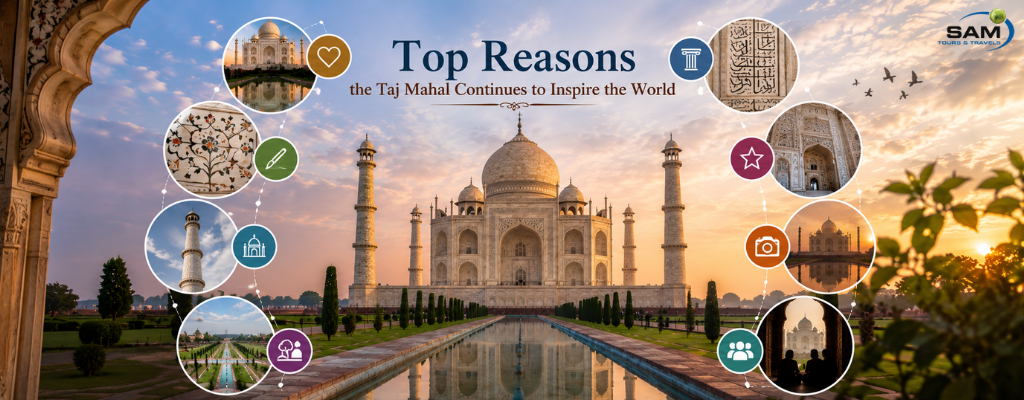
Few monuments on Earth possess the power to inspire people across cultures, generations, and borders quite like the Taj Mahal. Located in Agra, India, this magnificent white marble masterpiece attracts millions of visitors every year and remains one of the most recognizable landmarks in the world. While countless historic buildings exist across the globe, the Taj Mahal occupies a unique place in the hearts of travelers, historians, architects, artists, and dreamers alike.
More than 370 years after its construction, the Taj Mahal continues to symbolize love, beauty, devotion, and human creativity. Whether seen in photographs, films, travel guides, or in person, the monument leaves a lasting impression on anyone who encounters it.
But what exactly makes the Taj Mahal so inspiring? Why does it continue to capture the imagination of people from every corner of the world?
Let’s explore the top reasons why the Taj Mahal remains one of humanity’s most admired and inspiring creations.
A Universal Symbol of Love
The most famous reason behind the Taj Mahal’s enduring popularity is its remarkable love story.
Built by Mughal Emperor Shah Jahan in memory of his beloved wife Mumtaz Mahal, the monument stands as a tribute to deep affection and devotion.
Unlike many historic structures built for military or political purposes, the Taj Mahal was created to honor a personal bond. This emotional foundation resonates with people regardless of language, nationality, or culture.
Visitors often feel connected to the monument because it represents emotions that are universally understood—love, remembrance, and commitment.
Extraordinary Architectural Beauty
The Taj Mahal is widely regarded as one of the finest examples of architecture ever created.
Its design combines elements of:
- Persian architecture
- Islamic architecture
- Indian craftsmanship
- Mughal artistic traditions
The result is a perfectly balanced structure that appears elegant from every angle.
The monument’s harmonious proportions, graceful domes, towering minarets, and detailed carvings create a visual masterpiece that continues to inspire architects and designers around the world.
Even centuries after its construction, the Taj Mahal remains a benchmark for architectural excellence.
Perfect Symmetry and Design
One of the first things visitors notice is the remarkable symmetry of the Taj Mahal.
Every aspect of the complex appears carefully balanced.
Examples include:
- Matching minarets
- Symmetrical gardens
- Reflecting pools
- Identical architectural elements
This precision creates a sense of order and harmony that appeals naturally to the human eye.
The monument demonstrates how thoughtful design can transform stone and marble into something that feels almost timeless.
The Beauty of White Marble

The Taj Mahal’s brilliant white marble contributes significantly to its global appeal.
Unlike structures built from darker stone, the marble reflects sunlight in unique ways throughout the day.
Visitors often witness:
- Soft pink tones at sunrise
- Bright white brilliance during daylight
- Golden shades at sunset
- Silvery reflections under moonlight
This ever-changing appearance gives the monument a living quality that few landmarks can match.
Every visit feels slightly different depending on the weather, season, and time of day.
Incredible Craftsmanship
The Taj Mahal showcases some of the finest craftsmanship in human history.
Thousands of artisans worked for decades to create intricate decorative details.
Visitors can admire:
- Floral marble inlays
- Delicate carvings
- Precious stone decorations
- Elegant calligraphy
- Geometric patterns
Even modern technology struggles to replicate some of these artistic achievements.
The monument serves as a reminder of what human skill, patience, and dedication can accomplish.
A UNESCO World Heritage Site
The Taj Mahal’s global importance is recognized through its status as a UNESCO World Heritage Site.
This designation highlights:
- Historical significance
- Architectural value
- Cultural importance
- Universal appeal
As one of the world’s most treasured landmarks, the Taj Mahal inspires efforts to preserve cultural heritage for future generations.
It reminds people of the importance of protecting historic monuments and celebrating shared human achievements.
Inspiration for Artists and Creators
For centuries, the Taj Mahal has inspired artists from every discipline.
Painters, photographers, filmmakers, writers, musicians, and designers continue to draw inspiration from its beauty.
Creative works featuring the monument appear in:
- Paintings
- Travel photography
- Literature
- Movies
- Documentaries
- Fashion design
Its elegant form and emotional story provide endless material for artistic expression.
As a result, the Taj Mahal remains deeply embedded in global culture.
A Dream Destination for Travelers
For many people, visiting the Taj Mahal is a lifelong dream.
Travelers often place it alongside iconic destinations such as:
- Eiffel Tower
- Great Wall of China
- Machu Picchu
The monument represents an achievement many travelers aspire to experience at least once.
The excitement of seeing the Taj Mahal in person often exceeds expectations, which contributes to its enduring reputation.
A Symbol of India’s Rich Heritage
The Taj Mahal plays an important role in representing India’s cultural and historical identity.
It showcases:
- Mughal history
- Traditional craftsmanship
- Architectural innovation
- Artistic excellence
For international visitors, the monument often serves as an introduction to India’s rich heritage and diverse cultural traditions.
Its global recognition helps strengthen appreciation for Indian history and tourism.
A Masterpiece of Landscape Design
The Taj Mahal is more than a building.
The surrounding gardens were carefully planned to complement the monument.
The layout includes:
- Symmetrical pathways
- Reflecting pools
- Green lawns
- Decorative fountains
Together, these elements create a peaceful environment that enhances the visitor experience.
The integration of architecture and landscape continues to influence garden and urban design around the world.
Timeless Relevance Across Generations
Many historic monuments become less relevant as centuries pass.
The Taj Mahal is different.
Its themes remain meaningful today because they revolve around universal human experiences.
People continue to connect with:
- Love
- Memory
- Beauty
- Creativity
- Legacy
These ideas transcend time and ensure that the monument remains relevant to each new generation.
A Photographer’s Paradise
The Taj Mahal is one of the most photographed landmarks on Earth.
Professional photographers and casual travelers alike are drawn to its:
- Symmetry
- Reflections
- Marble details
- Changing light conditions
Whether captured at sunrise, sunset, or under dramatic skies, the monument consistently produces stunning images.
Photography helps introduce the Taj Mahal to millions who may not yet have the opportunity to visit.
Educational and Historical Importance
The Taj Mahal also serves as an important educational resource.
Students and researchers study it to learn about:
- Mughal architecture
- Indian history
- Engineering techniques
- Cultural heritage
Its construction demonstrates the advanced knowledge and artistic capabilities of its era.
The monument continues to inspire curiosity and learning around the world.
A Place of Reflection and Wonder
Many visitors describe the Taj Mahal as more than a tourist attraction.
Standing before the monument often creates a sense of reflection and wonder.
The peaceful atmosphere encourages people to slow down and appreciate:
- Beauty
- History
- Human achievement
- Cultural connections
In a fast-paced world, the Taj Mahal offers a rare opportunity to pause and admire something truly extraordinary.
The Power of Storytelling
Every great landmark has a story.
The Taj Mahal’s story is among the most powerful ever told.
The combination of:
- Historical significance
- Romantic symbolism
- Architectural brilliance
- Cultural importance
creates a narrative that continues to inspire audiences worldwide.
People remember stories more than facts, and the Taj Mahal’s story remains unforgettable.
Why the Taj Mahal Will Continue to Inspire Future Generations
As technology advances and societies change, the Taj Mahal remains a timeless reminder of what humanity can achieve through creativity, vision, and dedication.
Its enduring appeal comes from the fact that it represents something larger than itself.
It symbolizes:
- Love that transcends time
- Art that defies generations
- Architecture that inspires innovation
- Heritage worth preserving
These values ensure that the Taj Mahal will continue inspiring people for centuries to come.
Conclusion
The Taj Mahal continues to inspire the world because it combines beauty, history, emotion, and craftsmanship in a way that few landmarks can match. It is not merely a monument made of marble; it is a symbol of human creativity, devotion, and cultural achievement.
From its extraordinary architecture and fascinating history to its universal message of love, the Taj Mahal speaks to people from every background. Whether experienced through photographs, travel stories, or an unforgettable visit to Agra, the monument leaves a lasting impression that transcends borders and generations.
For travelers, historians, photographers, and dreamers alike, the Taj Mahal remains one of the world’s greatest sources of inspiration—and a destination that deserves a place on every travel bucket list.
For More Information : Read More