
·
Last Updated: August 27, 2026
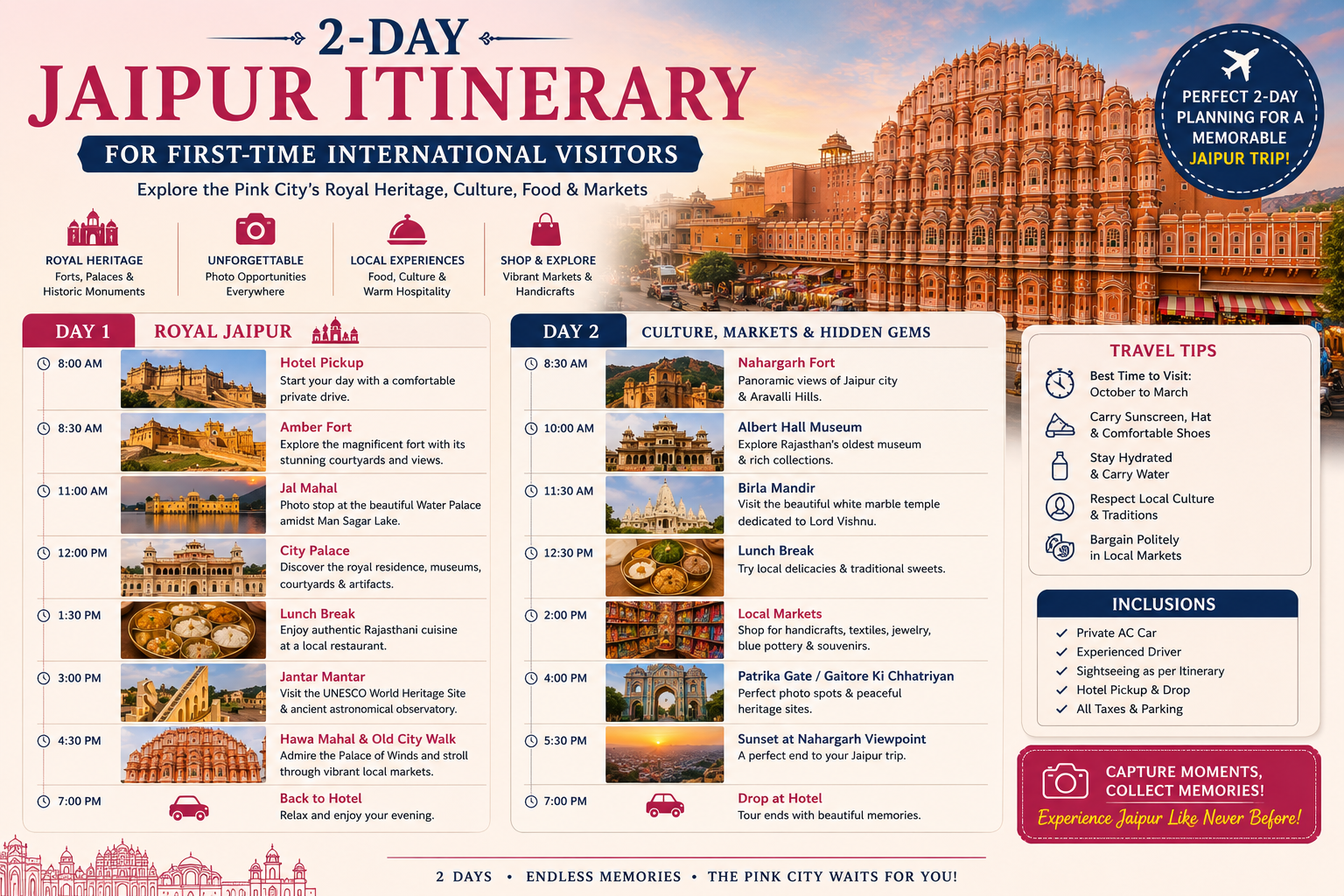
First-Time International Visitors 2 day Jaipur itinerary
Introduction
Jaipur is one of the best cities in India for international travelers who want to experience royal architecture, colorful markets, traditional crafts, local cuisine, and the cultural heritage of Rajasthan in a relatively short amount of time.
Known as the Pink City, Jaipur combines historic forts and palaces with busy bazaars, modern restaurants, artisan workshops, museums, and traditional neighborhoods. For a first-time international visitor, the city can feel exciting and unfamiliar at the same time. Having a practical itinerary can make the experience much easier.
A well-planned 2 day Jaipur itinerary gives you enough time to visit the city’s major attractions without spending your entire trip rushing from one monument to another.
This guide is designed specifically for first-time international visitors. It covers where to go, what to see, how to organize your days, what to eat, how to get around, what to wear, how to shop, and how to make your Jaipur experience comfortable and memorable.
The goal isn’t simply to visit as many attractions as possible. Instead, this itinerary combines Jaipur sightseeing, culture, food, shopping, and relaxation so you can experience the character of the Pink City.
Why Spend 2 Days in Jaipur?
One day in Jaipur can cover the major highlights, but two days provide a much better experience.
With two days, you can explore:
- Amber Fort
- Jal Mahal
- City Palace
- Jantar Mantar
- Hawa Mahal
- Albert Hall Museum
- Jaipur markets
- Local handicrafts
- Traditional food
- Optional forts and viewpoints
You also have more time to stop for photographs, enjoy a relaxed meal, and explore the city without constantly watching the clock.
For first-time international visitors, two days provide a good balance between sightseeing and experiencing local culture.
Quick Overview of the 2-Day Jaipur Itinerary
Day 1: Royal Jaipur
- Amber Fort
- Jal Mahal
- City Palace
- Jantar Mantar
- Hawa Mahal
- Traditional dinner
Day 2: Culture, Markets & Local Experiences
- Albert Hall Museum
- Local breakfast
- Jaipur markets
- Handicraft shopping
- Optional Nahargarh Fort or Jaigarh Fort
- Cultural experience or rooftop dinner
You can adjust this schedule according to your interests, weather, opening hours, and travel arrangements.
Before You Start Your Jaipur Trip
International visitors should prepare a few things before arriving.
Keep your:
- Passport
- Visa documents
- Hotel booking
- Travel insurance information
- Transportation details
- Emergency contact information
- Important medication
- Payment cards
accessible but secure.
It is also useful to keep digital copies of important documents.
Where Should International Visitors Stay in Jaipur?
Choosing the right location can make your two-day itinerary easier.
Popular areas include:
C-Scheme
A convenient area with restaurants, cafés, hotels, and relatively easy access to central Jaipur.
MI Road
A practical location for travelers who want access to restaurants, shopping, and transportation.
Bani Park
Known for hotels and guesthouses and convenient for travelers looking for a quieter base.
Old Jaipur
Staying near the historic walled city can put you closer to markets and landmarks such as Hawa Mahal and City Palace.
Heritage Hotels
For travelers who want a more traditional experience, Jaipur has many heritage-style accommodation options.
Choose based on your budget, preferred atmosphere, and sightseeing plans.
Day 1: Discover the Royal Heritage of Jaipur
Your first day should focus on Jaipur’s most important historic landmarks.
Start early.
An early morning departure gives you more sightseeing time and can make outdoor attractions more comfortable, particularly during warmer months.
7:30 AM – Start Your Day
Have breakfast at your hotel or a nearby restaurant.
Keep breakfast relatively light if you plan to spend the morning walking through forts and palaces.
Good options may include:
- Fresh fruit
- Toast
- Eggs
- Paratha
- Yogurt
- Tea
- Coffee
If you want to try local food, you can also explore traditional breakfast options, but choose a clean and well-reviewed establishment.
8:00 AM – Travel to Amber Fort
Begin your first major sightseeing stop at Amber Fort, located outside central Jaipur.
The journey from central Jaipur takes time, so starting early is useful.
A private car or taxi can be particularly convenient because you don’t need to arrange transportation separately after reaching each attraction.
8:30 AM–10:30 AM – Explore Amber Fort
Amber Fort is one of Jaipur’s most important historic attractions.
The fort combines Rajput and Mughal architectural influences and contains impressive courtyards, gates, palaces, gardens, and decorative interiors.
Allow approximately two hours if you want to explore the complex properly.
What to See Inside Amber Fort
Look for:
Ganesh Pol
An elaborately decorated gateway.
Sheesh Mahal
Known for its decorative mirror work.
Diwan-i-Aam
The Hall of Public Audience.
Courtyards
The fort’s courtyards demonstrate how the royal complex was organized.
Take time to observe the architecture rather than simply photographing each building.
Tips for Visiting Amber Fort
Wear comfortable walking shoes.
There are stairs, slopes, and uneven areas.
Carry:
- Water
- Sunglasses
- Sunscreen
- Hat or cap
If you are visiting during hot weather, the early morning is particularly valuable.
Also, avoid accepting unsolicited offers from people claiming that an attraction is closed or insisting that you need a particular guide or service. Check official ticket information or your tour provider.
10:45 AM – Jal Mahal
After Amber Fort, continue toward Jal Mahal.
This beautiful palace sits in Man Sagar Lake and creates one of Jaipur’s most recognizable landscapes.
A short stop is generally enough.
Spend around 15–30 minutes enjoying the view and taking photographs from an appropriate public viewpoint.
Why International Visitors Love Jal Mahal
Jal Mahal offers a completely different visual experience from Amber Fort.
Instead of a hilltop fortress, you see:
- Water
- Palace architecture
- Hills
- Sky
- Traditional design
It is an excellent place to slow down briefly before continuing into the center of Jaipur.
11:30 AM – City Palace
Continue to the historic center of Jaipur.
Your next major stop is City Palace.
The palace complex provides an introduction to Jaipur’s royal history.
It includes courtyards, decorative buildings, galleries, museum collections, and architectural details.
Allow around 1–1.5 hours depending on your interests.
What to See at City Palace
Look for:
- Ornate gates
- Courtyards
- Royal clothing
- Historical objects
- Artwork
- Decorative architecture
If you enjoy history, consider hiring a knowledgeable guide or using an official audio or visitor resource if available.
A good explanation can make the palace considerably more meaningful.
1:00 PM – Jantar Mantar
Jantar Mantar is located close to City Palace.
This historic astronomical observatory contains large instruments designed to measure and calculate astronomical information.
Allow around 30–45 minutes.
Why Visit Jantar Mantar?
It provides a different perspective on Jaipur’s heritage.
The city’s history is not only about kings, forts, and palaces.
Jantar Mantar demonstrates the importance of:
- Astronomy
- Mathematics
- Timekeeping
- Scientific observation
For international visitors unfamiliar with these instruments, a guide can be particularly useful.
1:45 PM – Lunch
After a busy morning, take a proper lunch break.
This is an excellent opportunity to try traditional Rajasthani food.
Popular dishes include:
- Dal Baati Churma
- Gatte ki Sabzi
- Ker Sangri
- Bajra roti
- Rajasthani thali
If you are not accustomed to spicy food, tell the restaurant staff.
You can also choose familiar Indian or international dishes if preferred.
3:00 PM – Hawa Mahal
After lunch, visit Hawa Mahal, one of Jaipur’s most recognizable landmarks.
The building is famous for its distinctive façade filled with small windows.
Its design allowed royal women to observe street activity while maintaining privacy.
How to Experience Hawa Mahal
You can photograph the famous exterior and, if desired, explore the interior.
The area around Hawa Mahal is busy, so take care when crossing streets and follow local traffic conditions.
For the best experience, don’t spend your entire visit taking the same photograph.
Look at:
- Windows
- Architectural patterns
- Decorative details
- Street life
- Nearby historic buildings
4:00 PM – Explore Jaipur’s Old City
After Hawa Mahal, walk or drive through parts of the historic walled city.
This is where Jaipur begins to feel less like a collection of tourist attractions and more like a living city.
You may see:
- Local shops
- Traditional clothing
- Street food
- Handicraft stores
- Jewelry shops
- Flower sellers
- Historic architecture
This is a good opportunity to experience everyday Jaipur.
4:30 PM – Shopping at Bapu Bazaar or Johari Bazaar
Reserve around 1–1.5 hours for shopping.
Depending on your interests, look for:
- Block-printed textiles
- Scarves
- Traditional clothing
- Jewelry
- Blue pottery
- Leather goods
- Handicrafts
- Decorative objects
Shopping Tips for International Visitors
Don’t assume the first price is the final price in every market.
You can:
- Compare similar products.
- Ask about materials.
- Ask whether something is handmade.
- Check quality.
- Negotiate politely where bargaining is customary.
- Avoid pressure to make immediate purchases.
For expensive gemstones or jewelry, be particularly careful.
Ask for appropriate documentation and consider independent verification for significant purchases.
6:00 PM – Return to Your Hotel
After a full day of sightseeing, take some time to rest.
This is important.
Trying to continue sightseeing without a break can make the second day unnecessarily tiring.
Freshen up and relax before dinner.
7:30 PM – Traditional Rajasthani Dinner
Your first evening is a good opportunity to experience Rajasthani cuisine.
Consider trying:
- Dal Baati Churma
- Gatte
- Ker Sangri
- Rajasthani thali
- Traditional sweets
Choose a reputable restaurant with good hygiene standards.
If you’re sensitive to spicy food, ask for a milder preparation.
Day 2: Culture, Shopping and Local Jaipur
Your second day can be more flexible.
Instead of visiting only major monuments, combine a museum, shopping, crafts, and an optional fort or viewpoint.
8:00 AM – Breakfast
Start your second day with a relaxed breakfast.
You can try a local breakfast if you are feeling adventurous.
Popular options may include:
- Kachori
- Poha
- Paratha
- Chai
- Lassi
Again, choose a clean and well-reviewed place.
9:00 AM – Albert Hall Museum
Begin Day 2 with Albert Hall Museum.
The museum is housed in an impressive historic building and contains collections related to art, crafts, decorative objects, and cultural history.
Allow approximately 1–1.5 hours.
Why Visit Albert Hall Museum?
It complements the previous day’s palace and fort sightseeing.
Instead of focusing primarily on royal architecture, the museum provides a broader view of art and culture.
It can be particularly interesting for travelers who want to understand Rajasthan beyond its famous monuments.
10:30 AM – Jaipur Craft Experience
After the museum, consider experiencing one of Jaipur’s traditional crafts.
Options may include:
- Block printing
- Blue pottery
- Textile making
- Jewelry craftsmanship
- Traditional handicrafts
A workshop is particularly valuable because you can see how products are actually created.
Jaipur Block Printing Experience
Traditional block printing involves carved wooden blocks being used to create repeated patterns on fabric.
A demonstration can help you understand:
- How blocks are carved
- How colors are applied
- How patterns are positioned
- How fabric is prepared
- Why handmade printing takes time
Sanganer and Bagru are particularly associated with traditional textile printing around Jaipur.
Jaipur Blue Pottery Experience
Another option is a blue pottery workshop or craft center.
Blue pottery is recognized for its distinctive decorative patterns and blue-and-white appearance.
Visitors can learn about:
- Materials
- Moulding
- Painting
- Glazing
- Firing
Small pieces can also make practical souvenirs.
12:30 PM – Lunch
After your craft experience, have lunch.
This time you could choose a restaurant serving:
- Indian cuisine
- Rajasthani food
- Vegetarian dishes
- International cuisine
Jaipur has plenty of options for international travelers.
2:00 PM – Choose Your Afternoon Experience
Your second afternoon should depend on your interests.
You can choose between:
Option A: Nahargarh Fort
Best for views and photography.
Option B: Jaigarh Fort
Best for history and military architecture.
Option C: More Shopping
Best for travelers interested in handicrafts and textiles.
Option D: Relaxed Café Time
Best if you prefer a slower trip.
Option A: Nahargarh Fort
Nahargarh Fort sits in the hills overlooking Jaipur.
The location offers impressive views across the city.
It can be particularly attractive for photographers and travelers who enjoy scenic viewpoints.
Allow approximately 1–2 hours, including travel time.
Option B: Jaigarh Fort
Jaigarh Fort provides another perspective on Jaipur’s military heritage.
It is known for its fortifications and historical significance.
If you’re especially interested in forts, architecture, and military history, this can be a better choice than spending the afternoon shopping.
Option C: More Jaipur Shopping
If handicrafts are a major reason for your visit, use the afternoon for shopping.
Explore:
- Johari Bazaar
- Bapu Bazaar
- Tripolia Bazaar
- Chandpole Bazaar
Look for authentic local crafts and compare products before making purchases.
4:30 PM – Relaxed Jaipur Experience
Don’t fill every minute of your second day.
Take time to:
- Enjoy tea
- Visit a café
- Walk through a quieter area
- Sit at a rooftop restaurant
- Review your photographs
- Shop for final souvenirs
Travel is not a race.
A little free time can make your experience much more enjoyable.
6:00 PM – Sunset or Rooftop Experience
If the weather is suitable, consider ending your Jaipur itinerary with a rooftop dinner or sunset experience.
Many parts of Jaipur offer views of:
- Historic buildings
- City streets
- Forts
- Hills
Choose a reputable establishment and confirm its current opening hours.
7:30 PM – Final Dinner in Jaipur
For your final evening, consider a memorable meal rather than rushing through another attraction.
Try something you haven’t eaten yet.
You could choose:
- Traditional Rajasthani cuisine
- Indian fine dining
- Rooftop dining
- International cuisine
Getting Around Jaipur
For international visitors, transportation can initially feel confusing.
The main options include:
- Private car with driver
- App-based taxis
- Auto-rickshaws
- Local buses
- Walking in suitable areas
For a two-day sightseeing itinerary, a private car with driver can be particularly convenient.
It allows you to move between attractions without repeatedly arranging transportation.
Is a Private Car Worth It?
For first-time international visitors, a private car can provide:
- Convenience
- Flexible timing
- Hotel pickup
- Comfortable travel
- Storage for shopping
- Easy movement between attractions
It can be especially useful for Amber Fort, Nahargarh Fort, and other attractions farther from central Jaipur.
Should You Hire a Guide?
A guide isn’t essential for every attraction, but it can significantly improve your experience.
A knowledgeable guide can explain:
- Royal history
- Architecture
- Local traditions
- Stories behind monuments
- Cultural practices
If you hire one, choose a reputable licensed or professionally recommended guide.
What Should International Visitors Wear in Jaipur?
Choose comfortable and culturally respectful clothing.
Good options include:
- Lightweight trousers
- Loose shirts
- Long skirts
- Dresses
- Comfortable walking shoes
- Scarves
For temples and religious places, clothing that covers shoulders and knees is generally a respectful choice.
Comfort matters because sightseeing involves considerable walking.
What Should You Pack?
For a two-day Jaipur trip, carry:
- Passport
- Phone
- Charger
- Power bank
- Water bottle
- Sunscreen
- Sunglasses
- Hat
- Comfortable shoes
- Small backpack
- Necessary medication
- Some cash
- Travel documents
Keep valuable items secure.
Food and Drinking Water Tips
International visitors should pay attention to food and water hygiene.
Use bottled or reliably treated drinking water.
When eating street food:
- Choose busy vendors.
- Prefer freshly cooked food.
- Avoid food that has been sitting uncovered for long periods.
- Wash or sanitize your hands before eating.
If you have dietary restrictions or allergies, communicate them clearly to restaurant staff.
Jaipur Shopping Etiquette
Shopping can be fun, but remember that you are interacting with local sellers.
Do
- Ask questions
- Compare prices
- Negotiate politely
- Check quality
- Respect shopkeepers
Don’t
- Insult a product because you dislike the price
- Feel obligated to purchase
- Allow yourself to be pressured
- Buy expensive products without checking authenticity
Common Tourist Scams to Watch For
First-time international visitors should be aware of common tourist-pressure situations.
Be cautious if someone tells you:
- A major attraction is closed
- You need a special ticket that only they can provide
- Your driver cannot enter an area
- A shop has an exclusive government-approved product
- A gemstone has guaranteed investment value
Verify important claims independently.
Is Jaipur Safe for International Visitors?
Jaipur is a major tourist destination and welcomes visitors from around the world.
Nevertheless, normal travel precautions are important.
Keep valuables secure.
Use reputable transportation.
Avoid isolated areas late at night.
Be cautious with unsolicited offers.
Keep your hotel address available.
Follow local laws and customs.
Stay aware in crowded markets.
If something feels uncomfortable, politely leave the situation and seek assistance from a trusted source.
How Much Does a 2-Day Jaipur Trip Cost?
Your budget can vary widely.
Budget Traveler
Approximately ₹3,000–₹6,000 per person, excluding international flights.
Mid-Range Traveler
Approximately ₹7,000–₹14,000 per person.
Premium Traveler
Approximately ₹14,000–₹30,000+ per person.
These are broad planning ranges and can change according to accommodation, transport, activities, dining, and shopping.
Best Time for a 2-Day Jaipur Trip
Jaipur can be visited throughout the year, but weather affects comfort.
Cooler months
Generally comfortable for sightseeing and outdoor activities.
Summer
Hot temperatures can make afternoon sightseeing difficult.
Monsoon
Rain can occasionally disrupt outdoor plans but can also make the surroundings greener.
If you are sensitive to heat, plan outdoor attractions early in the morning.
How to Make the Most of Two Days
The biggest mistake is trying to visit every attraction.
Instead:
Start early.
Group nearby attractions.
Keep travel time in mind.
Leave time for lunch.
Don’t rush through museums.
Keep one afternoon flexible.
Reserve time for shopping.
Take breaks.
This approach creates a more enjoyable trip.
2-Day Jaipur Itinerary at a Glance
| Time | Day 1 | Day 2 |
|---|---|---|
| 7:30 AM | Breakfast | Breakfast |
| 8:00 AM | Amber Fort | Albert Hall Museum |
| 10:45 AM | Jal Mahal | Craft workshop |
| 11:30 AM | City Palace | — |
| 1:00 PM | Jantar Mantar | Lunch |
| 1:45 PM | Lunch | Optional fort/shopping |
| 3:00 PM | Hawa Mahal | Shopping |
| 4:00 PM | Old City | Relaxation |
| 4:30 PM | Markets | Sunset/rooftop |
| Evening | Dinner | Final dinner |
Adjust the schedule according to opening hours, weather, traffic, and your personal interests.
Alternative 2-Day Itinerary for Culture Lovers
If you care more about culture than monuments:
Day 1
Amber Fort
City Palace
Jantar Mantar
Hawa Mahal
Old City
Day 2
Block-printing workshop
Blue pottery experience
Local market
Traditional lunch
Craft shopping
Cultural performance
Alternative Itinerary for Photography Lovers
Day 1
Amber Fort
Jal Mahal
City Palace
Hawa Mahal
Day 2
Albert Hall Museum
Old City streets
Markets
Nahargarh Fort
Sunset photography
Alternative Itinerary for Families
Day 1
Amber Fort
Jal Mahal
City Palace
Lunch
Hawa Mahal
Hotel/rest
Day 2
Albert Hall Museum
Craft experience
Lunch
Shopping
Relaxed dinner
Avoid scheduling too many attractions back-to-back if traveling with young children.
Frequently Asked Questions
Is 2 days enough for Jaipur?
Yes. Two days are enough to see many of Jaipur’s major attractions and experience its markets, food, and culture.
What are the must-see places in Jaipur for first-time visitors?
Amber Fort, City Palace, Hawa Mahal, Jantar Mantar, and Jal Mahal are excellent starting points.
Is Jaipur suitable for international tourists?
Yes. Jaipur is an established tourist destination with hotels, restaurants, transportation options, and attractions catering to international visitors.
What is the best way to get around Jaipur?
A private car with driver is convenient for a packed two-day itinerary. App-based taxis and auto-rickshaws can also be useful.
How much money should I budget for two days in Jaipur?
A budget traveler can spend around ₹3,000–₹6,000, while a mid-range visitor may spend approximately ₹7,000–₹14,000 or more, excluding international flights.
Should I hire a guide in Jaipur?
A guide is optional but can add valuable historical and cultural context to major monuments.
What food should I try in Jaipur?
Try Dal Baati Churma, Gatte ki Sabzi, Ker Sangri, Rajasthani thali, Pyaaz Kachori, and traditional sweets.
Is bargaining expected in Jaipur?
Bargaining is common in some traditional markets but not in every store. Negotiate politely and don’t assume every seller operates the same way.
What should I avoid doing in Jaipur?
Avoid accepting unsolicited offers, purchasing expensive gemstones without verification, ignoring local customs, and rushing into purchases.
Final Thoughts
A 2-day Jaipur itinerary for first-time international visitors should combine the city’s famous landmarks with enough time to experience its culture.
On your first day, focus on Jaipur’s royal heritage.
Explore Amber Fort, admire Jal Mahal, discover the history of City Palace, understand the astronomical instruments at Jantar Mantar, and photograph the iconic Hawa Mahal.
On your second day, slow down.
Visit Albert Hall Museum, experience a traditional craft such as block printing or blue pottery, explore Jaipur’s colorful markets, taste more local food, and choose an optional fort or cultural experience.
Don’t worry about seeing every attraction.
The best Jaipur trip is not necessarily the one with the longest checklist. It is the one that gives you enough time to understand what makes the city special.
For international visitors, a little preparation goes a long way. Choose reliable transportation, dress comfortably and respectfully, stay aware in crowded areas, check prices before purchasing, and keep important documents secure.
Most importantly, leave some room for discovery.
Walk through an old market. Talk to a craftsperson. Try a local dish. Watch the city change as the evening arrives.
Two days may be short, but with the right itinerary, they are enough to experience the forts, palaces, markets, food, craftsmanship, and unforgettable character of Jaipur.