
·
Last Updated: August 27, 2026
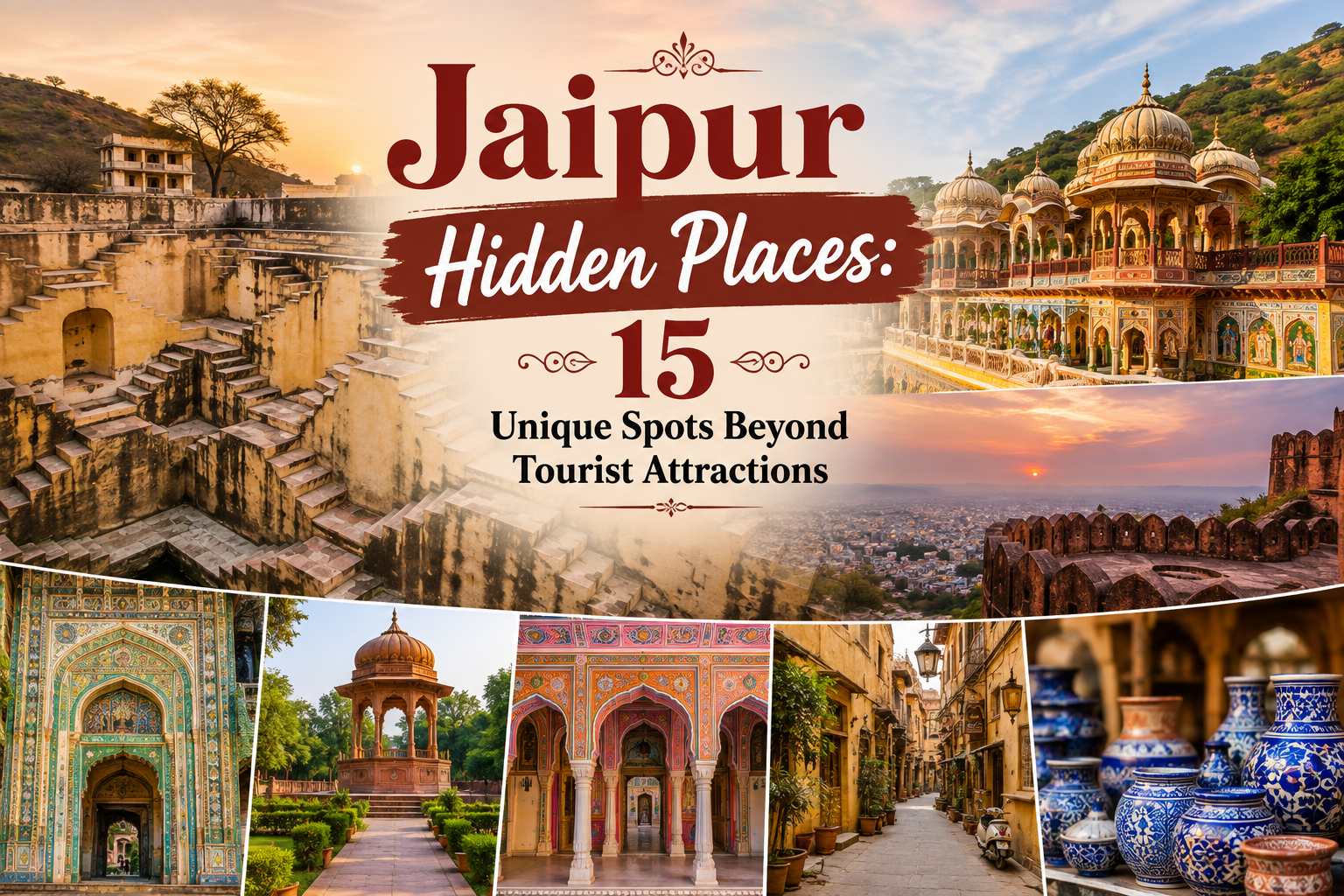
Jaipur is famous around the world for its grand forts, magnificent palaces, colorful bazaars, and the iconic Hawa Mahal. Every year, travelers visit the Pink City to admire its royal architecture and experience the rich heritage of Rajasthan. But there is another side of Jaipur that many visitors never discover.
Beyond the well-known tourist attractions are peaceful temples, artistic neighborhoods, historic stepwells, traditional craft workshops, beautiful gardens, local food streets, and lesser-known heritage sites. These places offer a different perspective of Jaipur and allow travelers to experience the city beyond the usual sightseeing route.
If you have already seen the major monuments or simply want a more authentic Jaipur experience, exploring the city’s lesser-known attractions can make your trip much more memorable.
Why Explore the Lesser-Known Side of Jaipur?
Popular attractions such as Amber Fort, City Palace, and Hawa Mahal are undoubtedly worth visiting. However, Jaipur’s character cannot be understood through monuments alone.
The city’s real charm can often be found in its everyday life. Artisans creating traditional crafts, shopkeepers opening colorful bazaars in the morning, families visiting historic temples, and locals enjoying traditional snacks all contribute to Jaipur’s unique identity.
Exploring lesser-known places also gives travelers an opportunity to escape some of the busiest tourist areas.
Instead of simply taking photographs and moving to the next attraction, you can slow down and understand how Jaipur’s history, traditions, architecture, and modern lifestyle are connected.
1. Panna Meena Ka Kund
Located close to Amber Fort, Panna Meena Ka Kund is a historic stepwell known for its symmetrical staircase design.
Stepwells were traditionally constructed to collect and store water, particularly in regions where water management was essential. Over time, many of these structures became important architectural and social spaces.
The geometric arrangement of the stairs makes Panna Meena Ka Kund especially attractive to photographers.
Its location near Amber Fort makes it easy to include in a heritage-focused Jaipur itinerary.
Rather than spending only a few minutes photographing the structure, take time to observe its design. The repeated patterns of stairs create fascinating shapes and perspectives from different angles.
2. Anokhi Museum of Hand Printing
For travelers interested in traditional Indian textiles, the Anokhi Museum of Hand Printing offers a fascinating cultural experience.
The museum focuses on the traditional craft of hand block printing. Visitors can learn about the tools, techniques, designs, and processes involved in creating printed textiles.
Block printing is an important part of Rajasthan’s artistic heritage, and understanding how these fabrics are produced adds another dimension to shopping for traditional textiles in Jaipur.
The museum is particularly interesting for visitors who want to connect the finished products found in Jaipur’s markets with the craftsmanship behind them.
3. Gaitore Ki Chhatriyan
Gaitore is a beautiful royal memorial complex situated in a peaceful valley surrounded by hills.
The site contains intricately carved marble and sandstone cenotaphs associated with Jaipur’s former rulers.
Compared with the city’s larger monuments, Gaitore often feels quieter and more atmospheric. The detailed stonework, domed structures, pillars, and surrounding landscape create a beautiful setting for visitors interested in architecture and photography.
Gaitore demonstrates how Rajput memorial architecture combines elegance with intricate craftsmanship.
4. Sisodia Rani Garden
Located outside the central part of Jaipur, Sisodia Rani Garden is a historic garden associated with the royal family.
The garden combines landscaped terraces, fountains, pavilions, paintings, and greenery.
Its design reflects the tradition of royal gardens while providing a peaceful contrast to Jaipur’s busy streets.
For travelers looking for a relaxing stop between monument visits, the garden can be an excellent choice.
It is also an interesting place for understanding how gardens were incorporated into royal architecture and leisure spaces.
5. Garh Ganesh Temple
Garh Ganesh Temple is one of Jaipur’s historic religious sites and is situated on a hill near Nahargarh.
The temple is associated with Lord Ganesha and is believed to have an important connection with the history of Jaipur’s foundation.
Reaching the temple involves climbing steps, but the elevated location provides beautiful views of the surrounding area.
Visitors should remember that this is a place of worship, so respectful behavior and appropriate clothing are important.
6. Patrika Gate
Patrika Gate has become one of Jaipur’s most recognizable modern photography locations.
Its colorful arches, painted corridors, intricate artwork, and decorative details showcase different aspects of Rajasthan’s artistic traditions.
Unlike many of Jaipur’s ancient monuments, Patrika Gate is a relatively modern structure, yet its design draws heavily from the region’s architectural and cultural identity.
The vibrant colors make it particularly popular among photographers and social media travelers.
Early morning can be a good time to visit if you want to experience the location with fewer people.
7. Jawahar Circle
Located close to Patrika Gate, Jawahar Circle is a large circular garden and recreational space.
The park offers walking paths, landscaped areas, fountains, and open spaces where visitors can relax.
It is particularly popular with local residents and provides an opportunity to experience a more contemporary side of Jaipur.
Visiting the park alongside Patrika Gate can make for an easy addition to a sightseeing itinerary.
8. Explore Jaipur’s Traditional Bazaars
One of the best ways to discover the authentic character of Jaipur is simply to explore its markets.
The city’s traditional bazaars are filled with textiles, jewelry, handicrafts, footwear, pottery, decorative objects, spices, and souvenirs.
Johari Bazaar is well known for jewelry, while Bapu Bazaar is popular for textiles, traditional clothing, footwear, and souvenirs.
Walking through these markets allows visitors to observe the rhythm of everyday life in the Pink City.
You may see artisans, traders, local shoppers, tourists, and traditional businesses operating side by side.
Shopping here is not simply a commercial activity. It can also be a cultural experience.
9. Discover Jaipur’s Blue Pottery
Blue pottery is one of Jaipur’s most recognizable traditional crafts.
Despite its name, blue pottery can feature a variety of colors and decorative patterns. The craft is known for its distinctive appearance and delicate designs.
Visitors can find blue pottery products ranging from plates and bowls to decorative pieces and tiles.
If you are interested in crafts, consider visiting a workshop or artisan store where you can learn about how these products are designed and created.
Buying directly from craftspeople can also help support traditional craftsmanship.
10. Experience Traditional Block Printing
Rajasthan is famous for its textile traditions, and Jaipur is an important center for block printing.
The process involves carving designs into wooden blocks and applying them to fabric using dyes.
The patterns can include flowers, leaves, geometric shapes, and traditional motifs.
A block-printing demonstration can be one of the most interesting cultural experiences in Jaipur because it allows visitors to see the amount of skill and patience involved in creating seemingly simple fabrics.
For travelers who enjoy fashion, art, and crafts, this is an experience worth adding to a Jaipur trip.
11. Try Jaipur’s Street Food
Jaipur’s food culture is another reason to explore beyond the monuments.
Traditional snacks can be found throughout the city’s markets and neighborhoods.
Some foods worth trying include:
- Pyaaz Kachori
- Mirchi Bada
- Dal Baati Churma
- Ghewar
- Mawa Kachori
- Gatte Ki Sabzi
- Bajre Ki Roti
- Ker Sangri
- Lassi
Pyaaz kachori is particularly popular among visitors looking to experience Jaipur’s street-food culture.
For dessert lovers, ghewar is a classic Rajasthani sweet that is especially associated with festive occasions.
Trying local food can turn an ordinary sightseeing day into a much more immersive experience.
12. Visit a Traditional Haveli
Jaipur’s heritage is not limited to royal palaces.
The city also contains numerous traditional havelis featuring courtyards, decorative balconies, carved doors, painted walls, and intricate architectural details.
Havelis provide insight into how wealthy families and merchants lived in historic Jaipur.
Some have been converted into heritage hotels, restaurants, museums, or cultural spaces, allowing visitors to experience historic architecture in a more intimate setting.
The courtyards and decorative details often reveal architectural elements that are easy to miss when visiting larger monuments.
13. Explore Jaipur’s Historic Gates
The old city of Jaipur was traditionally surrounded by defensive walls and entered through large gates.
These historic gates were not simply functional structures. They also represented the city’s architectural identity.
Walking through the old city and observing its gateways can help visitors understand Jaipur’s original urban design.
The gates also provide excellent opportunities for photography, especially when combined with the colorful streets and traditional buildings surrounding them.
14. Visit a Local Temple
Jaipur has numerous temples ranging from major pilgrimage sites to small neighborhood shrines.
Temples offer a different perspective on the city because they connect architecture with living traditions.
Instead of seeing Jaipur only as a former royal capital, visitors can experience it as a city where religious customs continue to shape everyday life.
When visiting temples, travelers should follow local customs, remove footwear where required, and ask before taking photographs of people or religious ceremonies.
15. Watch Jaipur Come Alive in the Evening
One of the most enjoyable ways to experience Jaipur is to simply spend an evening walking through the city.
As the temperature becomes more comfortable, markets become busier and streets fill with shoppers and visitors.
Historic buildings illuminated after sunset create a completely different atmosphere from daytime sightseeing.
You can combine an evening walk with shopping, street food, local sweets, or a traditional dinner.
Sometimes these simple experiences become the most memorable part of a Jaipur journey.
A Different Way to Experience Jaipur
A traditional Jaipur sightseeing itinerary usually focuses on major attractions. There is nothing wrong with that approach, especially for first-time visitors.
However, travelers who want something different can organize their trip around experiences instead of monuments.
For example, one day could focus on architecture and history, another on local crafts and food, and another on markets and cultural experiences.
This slower approach allows you to appreciate Jaipur instead of rushing from one attraction to another.
Jaipur for Art and Architecture Lovers
Jaipur is an excellent destination for travelers interested in architecture.
The city offers examples of:
- Rajput architecture
- Mughal influences
- Indo-Saracenic architecture
- Traditional haveli design
- Stepwell architecture
- Temple architecture
- Contemporary interpretations of Rajasthani design
Look beyond the famous monuments and pay attention to doors, windows, balconies, arches, courtyards, frescoes, stone carvings, and decorative patterns.
These smaller details often tell fascinating stories about Jaipur’s artistic traditions.
Jaipur for Photography Lovers
You do not need to visit only famous monuments to capture beautiful photographs in Jaipur.
Try photographing:
- Colorful market streets
- Traditional doors
- Palace windows
- Stepwell patterns
- Handicrafts
- Textile designs
- Local food
- Historic architecture
- Hilltop views
- Sunset landscapes
Morning and late afternoon generally offer softer natural light for outdoor photography.
Always respect restrictions at monuments and religious sites, and avoid photographing people without permission when appropriate.
Jaipur for Food Lovers
Food can become a major part of your Jaipur experience.
Rather than eating only at restaurants designed for tourists, explore traditional food streets and local eateries.
Start your morning with a traditional breakfast, enjoy a Rajasthani lunch, sample street snacks during the afternoon, and finish the day with a classic dessert.
A food-focused experience can also introduce you to ingredients and cooking techniques that are closely connected to Rajasthan’s dry climate and cultural history.
Jaipur for Culture Lovers
Culture is everywhere in Jaipur.
Traditional textiles, music, dance, handicrafts, festivals, religious traditions, food, architecture, and local markets all contribute to the city’s identity.
Visitors can experience this culture by attending traditional performances, visiting craft workshops, exploring markets, or simply spending time in historic neighborhoods.
The key is to slow down and observe.
Best Time to Explore Jaipur
The cooler months are generally the most comfortable for exploring Jaipur, particularly from October through March.
During these months, travelers can spend more time outdoors visiting forts, walking through markets, exploring heritage neighborhoods, and enjoying viewpoints.
Summer months can be extremely hot, particularly during the afternoon. If you visit during warmer periods, schedule outdoor activities for the morning and evening whenever possible.
The monsoon season can bring occasional rain and may provide a different atmosphere, with surrounding landscapes becoming greener.
How Long Should You Stay in Jaipur?
If you only want to visit the major attractions, two days can cover many highlights.
However, travelers who want to explore Jaipur beyond the famous monuments should consider staying for at least three days.
A longer stay gives you time to:
- Visit major forts and palaces
- Explore traditional markets
- Discover hidden heritage sites
- Experience local crafts
- Try regional food
- Visit temples
- Enjoy sunset viewpoints
- Explore the Old City at a slower pace
Suggested Three-Day Jaipur Experience
Day 1: Royal Jaipur
Begin with Jaipur’s most famous heritage attractions.
Visit Amber Fort in the morning, followed by Jaigarh Fort. Later, explore Jal Mahal and continue toward the Old City.
Spend the evening around Hawa Mahal and nearby markets.
Day 2: Culture and Crafts
Begin with a visit to a traditional craft experience or textile museum.
Explore block printing, blue pottery, or other local crafts.
Later, visit City Palace and Jantar Mantar.
In the evening, explore Jaipur’s markets and enjoy traditional Rajasthani food.
Day 3: Hidden Jaipur
Dedicate your third day to lesser-known attractions.
Visit Panna Meena Ka Kund, Gaitore, Sisodia Rani Garden, and other quieter heritage locations.
End the day with a sunset view from one of Jaipur’s elevated viewpoints.
This itinerary gives you a combination of famous landmarks and experiences that many short-term visitors miss.
Travel Tips for Exploring Jaipur
Begin Early
Starting your day early helps you avoid the strongest heat and some of the busiest crowds.
Wear Comfortable Clothing
Choose lightweight and comfortable clothing suitable for walking.
When visiting temples and religious sites, dress respectfully.
Carry Water
Hydration is particularly important when exploring forts and outdoor monuments.
Keep Your Camera Ready
Jaipur is full of small architectural and cultural details that can make excellent photographs.
Support Local Artisans
When purchasing handicrafts, consider buying from genuine local craftspeople and traditional businesses.
Be Respectful
Jaipur is a living city, not an open-air museum. Respect residents, religious traditions, local customs, and heritage structures.
Why Jaipur Is More Than the Pink City
The phrase “Pink City” immediately brings Jaipur’s famous architecture to mind.
But Jaipur is much more than its pink façades.
It is a city of craftsmen, traders, artists, historians, cooks, musicians, religious communities, and families who continue traditions that have developed over generations.
Its heritage is not locked inside museums or monuments.
It can be found in a block-printed textile, a carved doorway, a traditional recipe, a market conversation, a temple ceremony, or an artisan carefully creating a handmade product.
This living heritage is what makes Jaipur so fascinating.