
·
Last Updated: August 29, 2026
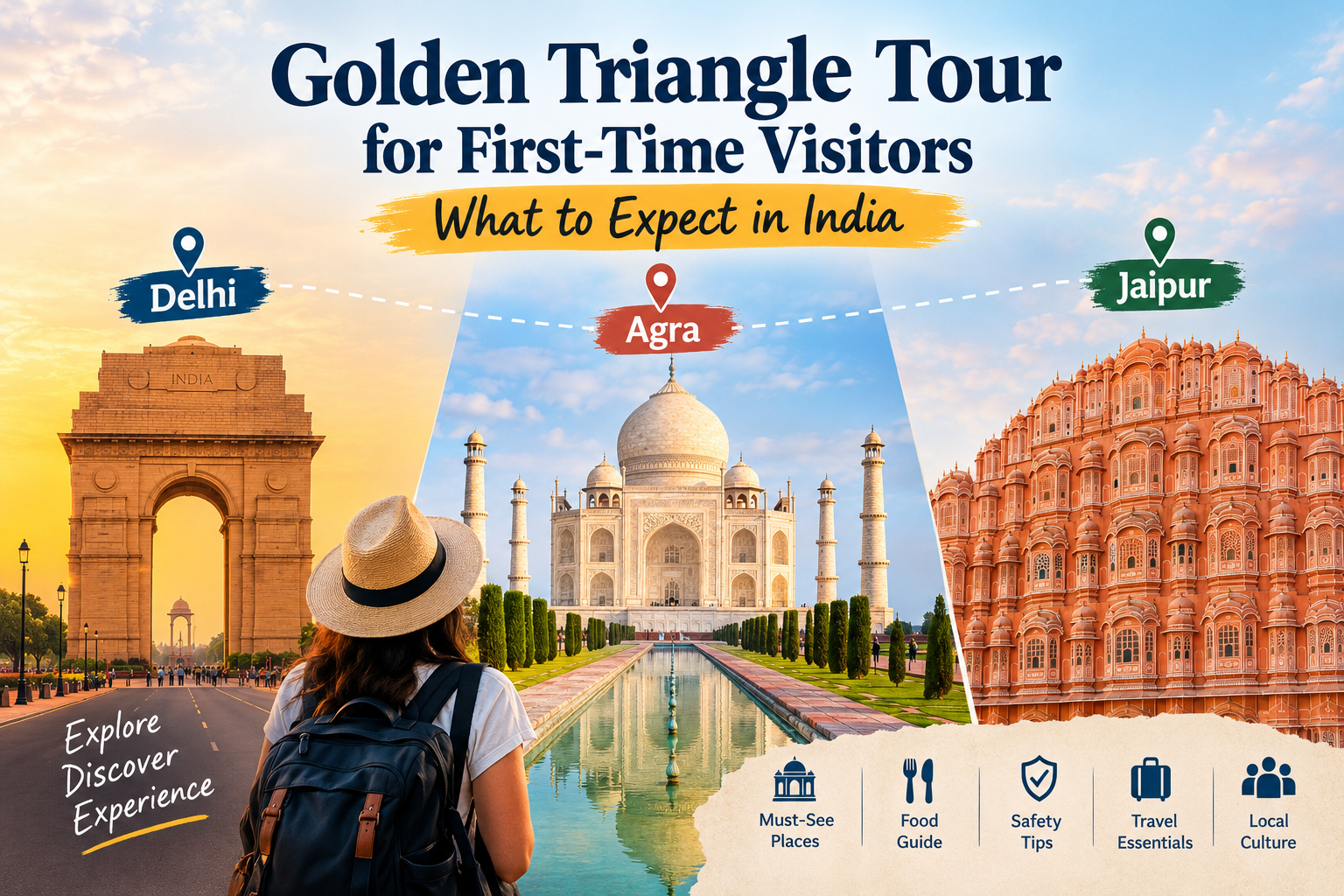
Planning your first trip to India can feel exciting, overwhelming, and sometimes difficult to organize. With its historic monuments, colorful markets, diverse food, busy streets, and centuries of culture, India offers an experience unlike almost anywhere else in the world.
For first-time visitors, the Golden Triangle Tour is one of the easiest and most rewarding ways to experience northern India. The classic route connects Delhi, Agra, and Jaipur, giving travelers an opportunity to discover Mughal architecture, Rajput heritage, traditional markets, Indian cuisine, local culture, and some of the country’s most famous monuments.
But what should you actually expect on your first Golden Triangle Tour?
How many days should you spend? What is transportation like? Is India safe for international tourists? What should you wear? What food should you try? Should you hire a private guide? And how can you avoid common mistakes?
This guide explains what first-time visitors should know before starting a Golden Triangle Tour in India.
What Is the Golden Triangle Tour?
The Golden Triangle is one of India’s most popular tourist circuits. It connects three major destinations:
- Delhi – India’s historic and modern capital
- Agra – Home of the Taj Mahal and an important center of Mughal history
- Jaipur – The famous Pink City of Rajasthan
These three cities form a roughly triangular route on the map, which is why the journey is known as the Golden Triangle Tour.
The route is especially suitable for first-time visitors because the three destinations offer very different experiences.
Delhi introduces you to India’s enormous cultural and historical diversity. Agra focuses heavily on Mughal architecture and the Taj Mahal. Jaipur takes you into the world of Rajasthan’s royal palaces, forts, handicrafts, and colorful traditions.
Agra is also part of several important tourist circuits in northern India, making it easy to combine with Delhi and Jaipur.
Why Is the Golden Triangle Good for First-Time Visitors?
India is a huge country, and trying to see too much during your first trip can make your journey exhausting.
The Golden Triangle provides a manageable introduction to the country.
During one trip, you can experience:
- Mughal architecture
- Rajput history
- UNESCO World Heritage attractions
- Indian street food
- Traditional handicrafts
- Local markets
- Hindu temples
- Historic forts
- Royal palaces
- Indian festivals and traditions
- Modern Indian cities
- Rural landscapes between destinations
The biggest advantage is variety.
You can begin your journey in the modern, multicultural environment of Delhi, continue to the historic atmosphere of Agra, and then finish among the royal architecture of Jaipur.
This variety is one of the main reasons the route remains popular with international travelers.
What to Expect in Delhi
Delhi is usually the starting point for a Golden Triangle Tour because it has major international and domestic transportation connections.
For a first-time visitor, Delhi can initially feel intense.
The city is large, crowded, energetic, and constantly moving. Traffic can be heavy, streets can be busy, and the contrast between historic neighborhoods and modern areas can be surprising.
Don’t expect Delhi to feel like a quiet European capital.
Instead, expect a city where old and new exist side by side.
You may see ancient monuments surrounded by modern buildings, traditional markets near shopping malls, and historic neighborhoods only a short distance from contemporary business districts.
Places First-Time Visitors Can Explore in Delhi
Depending on your available time, popular attractions include:
- India Gate
- Humayun’s Tomb
- Qutub Minar
- Red Fort
- Jama Masjid
- Lotus Temple
- Raj Ghat
- Old Delhi
- Chandni Chowk
Delhi is best experienced without trying to visit every attraction in one day.
Choose a few major sites and leave enough time for transportation, meals, and unexpected discoveries.
What to Expect in Agra
Agra is the second major stop on most Golden Triangle itineraries.
For many international travelers, Agra is the emotional highlight of the journey because it is home to the Taj Mahal.
However, Agra is more than one monument.
The city has a deep Mughal heritage and contains several historic attractions, markets, gardens, and traditional crafts.
The official tourism information highlights Agra’s Mughal heritage, historic monuments, bazaars, local crafts, food, and multiple UNESCO World Heritage Sites.
The Taj Mahal Experience
If the Taj Mahal is one of the main reasons you are visiting India, consider planning your visit carefully.
A sunrise visit can provide a particularly memorable experience because the changing morning light creates a different atmosphere around the monument.
Your guide can also explain the history, architecture, symbolism, and stories connected with the Taj Mahal rather than leaving you simply to walk around and take photographs.
Other Agra Experiences
Consider adding:
- Agra Fort
- Mehtab Bagh
- Itimad-ud-Daulah’s Tomb
- Local marble craftsmanship
- Traditional markets
- Mughlai cuisine
- Fatehpur Sikri, depending on your itinerary
Agra Fort is particularly important for understanding the Mughal history behind the city. It evolved into a major fortified imperial complex during the Mughal period.
What to Expect in Jaipur
After Delhi and Agra, Jaipur introduces you to a completely different side of India.
Known as the Pink City, Jaipur is the capital of Rajasthan and one of the three destinations of the Golden Triangle.
Jaipur is associated with:
- Rajput history
- Forts
- Palaces
- Colorful bazaars
- Traditional jewelry
- Textiles
- Handicrafts
- Rajasthani cuisine
Popular attractions include:
- Amber Fort
- City Palace
- Hawa Mahal
- Jantar Mantar
- Jal Mahal
- Albert Hall Museum
- Jaipur’s traditional markets
The city is also an excellent place to shop for traditional Indian products.
Depending on your interests, you may find textiles, jewelry, handicrafts, pottery, block-printed products, and other traditional items.
How Many Days Do You Need?
For a first-time Golden Triangle Tour, 5 to 7 days is a comfortable starting point.
However, the ideal duration depends on your travel style.
3 Days
A three-day trip is possible but fast-paced.
You will have very little time to explore each destination properly.
4 Days
A four-day Golden Triangle itinerary can work for travelers with limited vacation time, but the schedule will remain relatively busy.
5 Days
Five days provides a better balance between sightseeing and travel.
6–7 Days
Six or seven days is often more comfortable for first-time visitors.
You can slow down, spend more time at major attractions, enjoy local food, shop, and have some flexibility in your schedule.
8+ Days
If you have more time, consider adding experiences or destinations beyond the classic route.
Possible extensions include:
- Ranthambore
- Varanasi
- Udaipur
- Pushkar
- Jodhpur
Rather than trying to see everything, choose destinations that match your interests.
How Do You Travel Between Delhi, Agra and Jaipur?
Transportation is one of the most important decisions when planning a Golden Triangle Tour.
You can travel by:
- Private car
- Train
- Bus
- Combination of transportation
Golden Triangle Tour by Private Car
A private car with a professional driver is one of the most convenient choices for first-time international visitors.
You have more flexibility over departure times, stops, meals, photography breaks, and sightseeing.
It can also be easier when traveling with luggage.
For travelers unfamiliar with Indian roads and transportation systems, a private vehicle can make the journey more comfortable.
Traveling by Train
India has an extensive railway network, and trains can be an interesting part of the experience.
However, first-time visitors may find the railway system confusing, particularly during busy periods.
If you choose trains, plan your tickets and stations carefully.
Which Option Is Better?
There is no single answer for every traveler.
Choose private transportation if you value:
- Convenience
- Flexibility
- Door-to-door travel
- Personalized sightseeing
- Comfort
Choose trains if you enjoy:
- Rail travel
- Local experiences
- Fixed schedules
- Independent travel
What Is Indian Food Like?
Food is an important part of the Golden Triangle experience.
Indian cuisine is not one single type of food. It varies significantly by region, city, community, and cooking tradition.
During your trip, you may encounter:
- Butter chicken
- Paneer dishes
- Dal
- Biryani
- Samosas
- Chaat
- Naan
- Roti
- Paratha
- Lassi
- Jalebi
- Rajasthani thali
- Mughlai dishes
If you are not accustomed to spicy food, tell your restaurant or guide that you prefer mild food.
You don’t need to avoid Indian cuisine simply because you are worried about spice.
Many dishes can be prepared with a milder level of heat.
Food Safety Tips for First-Time Visitors
A few simple habits can make your food experience more comfortable:
- Choose busy restaurants with good customer turnover.
- Drink sealed bottled water or trusted filtered water.
- Be careful with raw food from uncertain sources.
- Wash your hands before eating.
- Start with smaller portions of unfamiliar dishes.
- Tell your guide about allergies or dietary restrictions.
And don’t forget to try local specialties.
Food can be one of the best ways to understand the culture of each destination.
What Should You Wear in India?
India is culturally diverse, and clothing expectations vary by location.
For sightseeing, lightweight and comfortable clothing is usually practical.
When visiting temples, religious sites, or traditional areas, modest clothing is a respectful choice.
Consider packing:
- Comfortable walking shoes
- Lightweight trousers
- Cotton shirts
- Comfortable dresses or long skirts
- A light scarf
- Sunglasses
- Hat or cap
- Light jacket depending on season
A scarf can be particularly useful when visiting religious places where additional covering may be appropriate.
You should also check specific dress requirements for individual attractions before visiting.
What Is the Weather Like?
The Golden Triangle experiences different conditions throughout the year.
Delhi, Agra, and Jaipur can become very hot during the summer months, while winter can bring cooler mornings and evenings.
Jaipur’s official tourism information shows substantial seasonal temperature variation throughout the year, with particularly high temperatures during April and May.
For many first-time visitors, the cooler months can be more comfortable for sightseeing.
However, the best travel season also depends on your tolerance for heat, crowds, and your preferred travel experience.
Before booking your trip, check current weather conditions for all three cities rather than relying only on a general seasonal description.
Is the Golden Triangle Safe for First-Time Visitors?
Millions of travelers visit India’s major tourist destinations every year.
Nevertheless, first-time visitors should use normal travel precautions.
Keep your passport, money, and important documents secure.
Avoid displaying large amounts of cash in crowded areas and be cautious with unsolicited offers.
Practical Safety Tips
1. Keep Important Documents Secure
Make digital and physical copies of your passport, visa, travel insurance, and important reservations.
2. Use Reliable Transportation
Use prearranged transportation or trusted transportation services, particularly when arriving at airports and railway stations.
3. Be Careful in Crowded Markets
Busy markets and transportation areas require extra attention to personal belongings.
4. Don’t Feel Pressured to Buy
You may encounter shopkeepers and street sellers who are enthusiastic about their products.
It is perfectly acceptable to politely say no.
5. Stay Connected
Keep your phone charged and carry essential contact information.
6. Follow Local Advice
Your professional guide or hotel staff can often provide useful information about local areas, transportation, and appropriate behavior.
Should First-Time Visitors Hire a Tour Guide?
A guide is not mandatory, but it can significantly change the experience.
Without a guide, you may see the Taj Mahal, Agra Fort, Amber Fort, or other attractions without understanding the historical events behind them.
With a knowledgeable guide, you can learn about:
- Architecture
- Mughal history
- Rajput traditions
- Local customs
- Religious practices
- Historical personalities
- Stories connected with monuments
- Local markets
- Traditional crafts
A good guide should do more than repeat information from a plaque.
They should help you understand the destination.
For international visitors experiencing India for the first time, this additional context can make sightseeing more meaningful.
How Much Money Should You Carry?
India offers options for different travel budgets.
You can travel:
- On a budget
- Mid-range
- In a premium style
- Through luxury experiences
Your overall cost depends on accommodation, transportation, restaurants, entrance fees, shopping, guide services, and the duration of your trip.
Avoid carrying unnecessarily large amounts of cash.
Cards are useful in many hotels, restaurants, and established businesses, while cash can still be useful for smaller purchases and local markets.
Keep some smaller denominations available for everyday expenses.
What About Internet and Mobile Connectivity?
Staying connected can make your first trip much easier.
A working phone allows you to:
- Use maps
- Contact your hotel
- Communicate with your guide
- Check transportation information
- Translate unfamiliar words
- Contact family
- Access emergency information
International visitors should consider their options for an Indian SIM or eSIM before or shortly after arrival.
Make sure your phone is unlocked if you plan to use a local SIM.
What About the Indian Rupee?
India uses the Indian Rupee (INR).
You will encounter prices in rupees throughout Delhi, Agra, and Jaipur.
When shopping in markets, understand the price clearly before purchasing.
For some products, bargaining may be part of the shopping experience.
However, bargaining should remain polite and reasonable.
Remember that a small price difference may be much more significant to a local seller than it is to an international traveler.
Should You Book Everything Before Arriving?
For a first Golden Triangle Tour, it is generally easier to arrange important parts of the journey in advance.
Consider booking:
- International flights
- Hotels
- Major transportation
- Tour guides
- Monument visits where advance booking is available
- Travel insurance
- Airport transfers
You can leave some flexibility for restaurants, shopping, and optional experiences.
A completely unplanned trip can be exciting for experienced travelers, but first-time visitors may appreciate having the main structure already organized.
India Visa Requirements for First-Time International Visitors
International travelers should verify their entry requirements before traveling.
The official Indian Visa Online portal states that foreign nationals generally need a valid passport and appropriate visa or eVisa unless they fall under an applicable exemption. The portal also provides official information about e-Arrival requirements and visa applications.
Visa eligibility, documentation, fees, and conditions can vary according to nationality and visa type.
Therefore, do not rely on old blog posts or social media information.
Always check the current requirements through the official Indian government visa portal before your trip.
Your passport should also meet the required validity conditions for your visa category.
Common Mistakes First-Time Visitors Make
A little preparation can prevent many common problems.
Mistake 1: Trying to See Everything
Don’t turn your vacation into a race.
It is better to properly experience a few places than rush through dozens of attractions.
Mistake 2: Underestimating Travel Time
Distances on a map can look short, but traffic and road conditions can affect journey times.
Allow some flexibility.
Mistake 3: Planning Every Hour
Leave some free time.
You may discover a local market, restaurant, craft workshop, or cultural experience that wasn’t part of your original plan.
Mistake 4: Packing Too Much
You probably won’t need your entire wardrobe.
Pack comfortable clothing and leave some luggage space for shopping.
Mistake 5: Ignoring the Weather
India’s weather can strongly affect your sightseeing experience.
Check the forecast before traveling and dress accordingly.
Mistake 6: Being Afraid to Try Local Food
You don’t need to eat everything you see, but don’t spend your entire trip eating only familiar international food.
Try local dishes carefully and gradually.
Mistake 7: Choosing the Cheapest Tour Without Checking What Is Included
A very low price may not include everything you expect.
Always check:
- Transportation
- Hotel category
- Guide services
- Entrance tickets
- Meals
- Airport transfers
- Taxes
- Driver arrangements
Understanding inclusions before booking helps prevent surprises later.
A Comfortable Golden Triangle Itinerary for First-Time Visitors
Here is a simple example of how you could organize your first trip.
Day 1: Arrive in Delhi
Arrive in Delhi, check into your hotel, rest, and explore a nearby area if you have enough energy.
Day 2: Explore Delhi
Visit selected historic attractions and experience Old Delhi or another cultural area.
Day 3: Delhi to Agra
Travel from Delhi to Agra.
Depending on your schedule, visit Agra Fort and explore the local area.
Day 4: Taj Mahal and Agra to Jaipur
Begin with the Taj Mahal, preferably early in the day.
Continue toward Jaipur, with optional sightseeing along the route.
Day 5: Explore Jaipur
Visit Amber Fort, City Palace, Hawa Mahal, Jantar Mantar, and selected markets according to your interests.
Day 6: Jaipur
Use an additional day for deeper exploration, shopping, local food, photography, or cultural experiences.
Day 7: Departure or Extension
Depart Jaipur or continue to another destination.
This is only a sample structure. Your ideal itinerary should depend on your arrival time, departure city, interests, travel style, and available vacation days.
How to Make Your Golden Triangle Tour More Memorable
The biggest mistake you can make is treating the Golden Triangle as a checklist of monuments.
Instead, give yourself time to experience the places between the famous attractions.
Talk to your guide.
Try local food.
Visit traditional markets.
Watch artisans at work.
Learn about Indian history.
Take photographs beyond the obvious viewpoints.
Observe everyday life.
Spend time walking through appropriate local areas.
These experiences can become some of your strongest memories.
Why a Private Golden Triangle Tour Can Be a Good Choice
First-time international visitors often have different expectations from experienced travelers.
You may want:
- Flexible schedules
- Private transportation
- Local guides
- Hotel pickup and drop-off
- Personalized sightseeing
- Help navigating unfamiliar places
- Comfortable transfers between cities
A private Golden Triangle Tour can combine these elements into one organized journey.
Instead of worrying about every train, taxi, hotel transfer, and sightseeing arrangement, you can focus more on enjoying India.
For travelers visiting India for the first time, this can reduce logistical stress.
Golden Triangle Tour: What You Should Expect Overall
Your first Golden Triangle Tour will probably be different from what you imagine.
You may find India:
Louder than expected.
More colorful than expected.
Busier than expected.
More diverse than expected.
And, most importantly, more culturally rich than expected.
Delhi, Agra, and Jaipur each tell a different story.
Delhi introduces you to layers of Indian history and modern life.
Agra reveals the architectural legacy of the Mughal era and the extraordinary beauty of the Taj Mahal.
Jaipur introduces you to Rajasthan’s royal heritage, colorful markets, forts, palaces, and traditional crafts.
Together, these destinations create a fascinating introduction to India.
Frequently Asked Questions About the Golden Triangle Tour
Is the Golden Triangle good for first-time visitors to India?
Yes. Delhi, Agra, and Jaipur provide a diverse introduction to India’s history, architecture, food, culture, and everyday life while keeping the journey relatively manageable.
How long should a first Golden Triangle Tour be?
Five to seven days is a comfortable starting point for many first-time visitors. Travelers with limited time can create shorter itineraries, while those with more time can add destinations.
Is the Golden Triangle Tour expensive?
It can be adapted to different budgets. Your final cost depends on hotels, transportation, guides, entrance tickets, meals, shopping, and trip duration.
Is it better to travel by car or train?
Both options have advantages. Private cars offer flexibility and convenience, while trains can provide a different travel experience. Your choice should depend on your priorities.
Can I do the Golden Triangle without a guide?
Yes, independent travel is possible. However, first-time international visitors may find a professional guide useful for understanding history, navigating attractions, and learning about local culture.
What should I wear during the tour?
Choose comfortable, breathable clothing and comfortable walking shoes. More modest clothing is advisable when visiting religious or culturally sensitive places.
What should I eat during a Golden Triangle Tour?
Try regional Indian dishes such as paneer preparations, dal, paratha, chaat, Mughlai dishes, Rajasthani specialties, lassi, and traditional sweets. If you are sensitive to spice, request milder preparations.
Is India safe for first-time tourists?
Major tourist destinations receive large numbers of international visitors, but normal travel precautions are important. Secure your belongings, use reliable transportation, stay aware in crowded places, and follow advice from trusted local professionals.
What is the best time for a Golden Triangle Tour?
The most comfortable period depends on your preferences and tolerance for heat and crowds. Check current weather conditions for Delhi, Agra, and Jaipur before choosing your travel dates.