
·
Last Updated: August 31, 2026
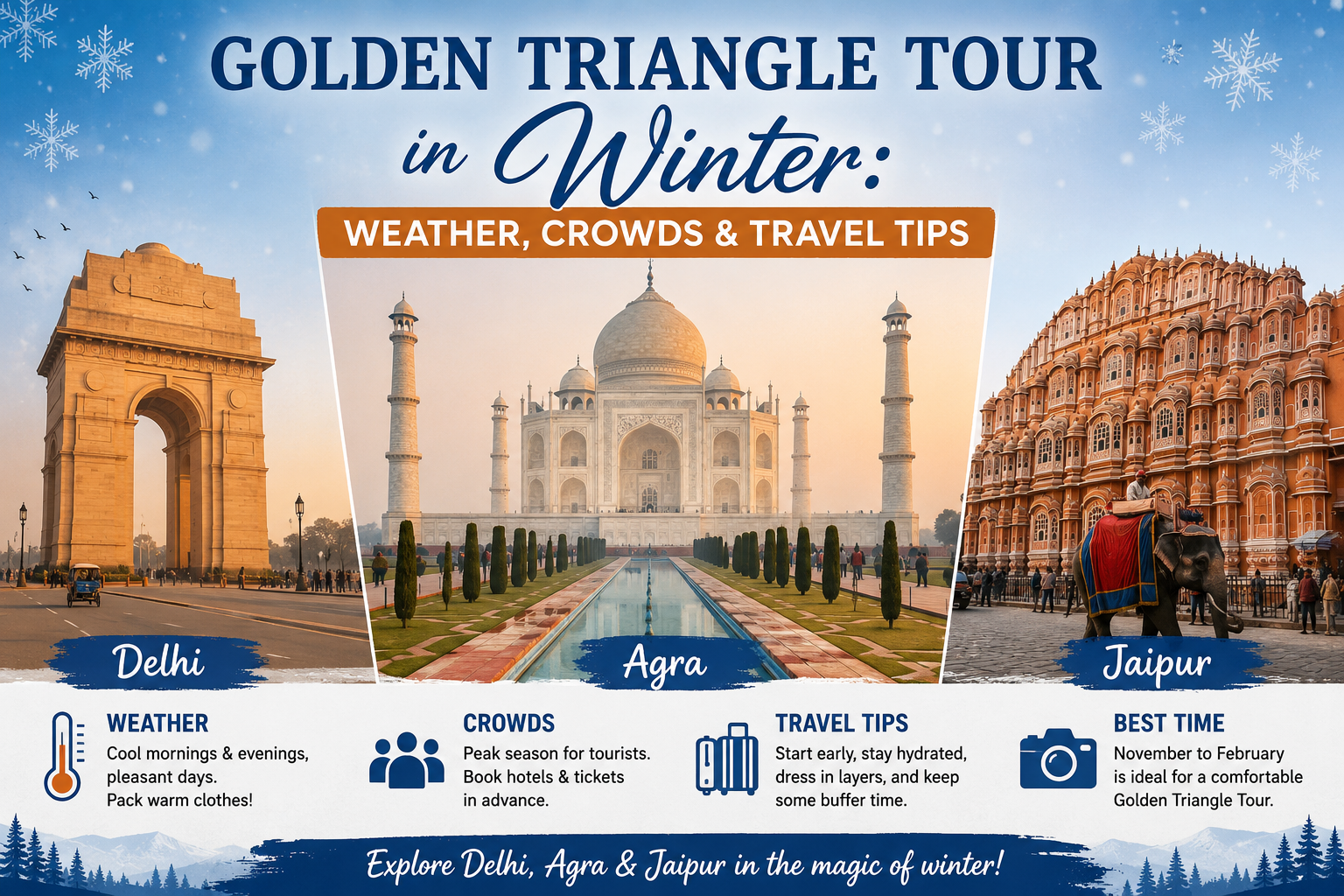
Winter is one of the most popular seasons for a Golden Triangle Tour in India. The cooler weather makes sightseeing more comfortable, while Delhi, Agra, and Jaipur become lively with travelers from around the world.
The Golden Triangle connects three of India’s most famous destinations:
Delhi → Agra → Jaipur
Each city offers something different. Delhi combines ancient monuments with modern city life, Agra is home to the world-famous Taj Mahal, and Jaipur showcases Rajasthan’s forts, palaces, markets, and royal heritage.
Winter is an excellent time to explore these destinations, but it also comes with its own considerations. Early mornings can be cold, fog may affect visibility and transportation, and popular monuments can become crowded during peak travel periods.
This guide explains Golden Triangle winter weather, crowds, what to pack, the best time to visit, transportation tips, and practical advice to help you plan a comfortable trip.
Why Visit the Golden Triangle in Winter?
Winter is generally considered one of the most comfortable seasons for sightseeing in North India.
During the hotter months, daytime temperatures can make walking around large forts, palaces, and archaeological sites tiring. Winter provides more pleasant conditions for spending several hours outdoors.
Some of the biggest reasons to visit during winter include:
- Comfortable sightseeing temperatures
- Pleasant daytime conditions
- Excellent season for photography
- Ideal weather for walking tours
- Festive atmosphere
- Popular cultural events
- Comfortable road journeys
- More enjoyable outdoor dining
For many travelers, winter provides a good balance between weather and sightseeing.
When Is Winter in Delhi, Agra and Jaipur?
Winter generally covers the months from November through February.
The experience changes throughout the season.
November
November marks the transition toward cooler weather.
Days are often comfortable for sightseeing, while evenings can become cooler.
It can be a good choice for travelers who want pleasant weather without the coldest conditions of winter.
December
December brings cooler mornings and evenings.
Early morning sightseeing can feel cold, especially around Agra.
Pack layers so you can adjust your clothing throughout the day.
January
January is usually among the coldest periods of the winter season in the Golden Triangle.
Mornings can be particularly chilly, and fog may sometimes affect visibility and transportation.
However, afternoons can become much more comfortable.
February
February generally brings gradually warmer conditions.
It can be a comfortable month for sightseeing, particularly for travelers who prefer mild rather than very cold mornings.
Winter Weather in Delhi
Delhi can have cool mornings and evenings during winter, while daytime conditions are often more comfortable for sightseeing.
Early mornings can sometimes be affected by fog or poor visibility.
This is important if you are planning:
- Airport transfers
- Train journeys
- Early morning sightseeing
- Road travel
A flexible itinerary can help reduce the impact of unexpected delays.
During the daytime, sightseeing around places such as Red Fort, Qutub Minar, India Gate, and Humayun’s Tomb can be much more comfortable than during India’s hotter months.
Winter Weather in Agra
Agra can feel particularly cold during early mornings.
This matters if you are planning an early visit to the Taj Mahal.
The cooler conditions can actually make the experience more comfortable once the sun rises, but you should carry warm clothing for the morning.
Fog can occasionally reduce visibility.
If photography is important to you, check the conditions before leaving your hotel.
Winter Weather in Jaipur
Jaipur generally offers pleasant winter sightseeing conditions, particularly during the daytime.
The mornings and evenings can be cool.
Winter is especially suitable for exploring large outdoor attractions such as:
- Amber Fort
- City Palace
- Jantar Mantar
- Hawa Mahal
- Jal Mahal
The comfortable daytime weather makes it easier to spend several hours exploring Jaipur.
Is Winter the Best Time for a Golden Triangle Tour?
For many travelers, yes.
Winter is often considered one of the most comfortable periods for visiting Delhi, Agra, and Jaipur.
However, “best” depends on your priorities.
Winter Is Best If You Want:
- Comfortable sightseeing
- Cooler temperatures
- Pleasant outdoor activities
- Better walking conditions
- A popular tourist atmosphere
Winter May Not Be Ideal If You Want:
- Fewer tourists
- Lower peak-season demand
- Very warm mornings
- Completely predictable visibility
Every season has advantages, but winter is particularly popular because of its comfortable daytime weather.
Golden Triangle Winter Crowds
Winter is a busy travel season for the Golden Triangle.
Popular attractions can become crowded, particularly during:
- December holidays
- New Year
- Weekends
- Public holidays
- Peak tourism periods
The Taj Mahal is especially popular.
You should expect larger crowds at major monuments during peak dates.
How to Avoid Winter Crowds
You don’t necessarily need to avoid winter.
Instead, plan your sightseeing strategically.
Start Early
Popular attractions are generally less crowded earlier in the day.
Early visits can also provide better opportunities for photography.
Visit on Weekdays
If your schedule allows, visit major monuments on weekdays rather than weekends.
Book Accommodation in Advance
Popular hotels can become busy during the winter season.
Booking early gives you more choice.
Allow Extra Time
Crowds can affect:
- Parking
- Security checks
- Ticket counters
- Traffic
- Entry queues
Don’t create an itinerary where every activity depends on perfect timing.
Winter at the Taj Mahal
The Taj Mahal is one of the main reasons travelers visit Agra during the Golden Triangle season.
Winter mornings can be cold, and fog may occasionally affect visibility.
If you’re planning a sunrise visit, prepare for lower temperatures.
Tips for Visiting the Taj Mahal in Winter
- Carry a warm layer
- Arrive early
- Keep your ticket ready
- Allow time for security checks
- Wear comfortable walking shoes
- Check visibility conditions
- Protect your camera equipment
- Keep some flexibility in your schedule
If photography is your priority, weather conditions can make a significant difference.
Is Fog a Problem During a Winter Golden Triangle Tour?
Fog can occasionally occur during winter, particularly during early mornings.
It can affect:
- Road journeys
- Train services
- Airport transfers
- Monument visibility
- Sunrise photography
This doesn’t mean you should avoid winter.
Instead, build some flexibility into your itinerary.
For example, don’t schedule a major international flight immediately after a long road journey without allowing enough buffer time.
Winter Travel by Train
Train travel can be a convenient way to move between Delhi, Agra, and Jaipur.
However, winter fog can sometimes affect railway operations.
If your itinerary depends on a specific train arriving at an exact time, allow some extra flexibility.
Keep your important travel documents and valuables with you.
For international travelers carrying large luggage, consider how you’ll manage bags at railway stations.
Winter Travel by Private Car
A private car provides flexibility when exploring the Golden Triangle.
You can travel:
Delhi → Agra → Jaipur
without having to coordinate separate station transfers.
A private car can also make it easier to:
- Stop for meals
- Take breaks
- Visit attractions along the route
- Adjust departure times
- Carry large luggage
However, road journeys can also be affected by winter fog and traffic.
Your driver should plan sufficient travel time.
What to Wear in Winter
Packing layers is one of the best strategies for a Golden Triangle winter trip.
Temperatures can change considerably between morning and afternoon.
Recommended Clothing
Pack:
- Light sweaters
- Warm jacket
- Long-sleeve shirts
- Comfortable trousers
- Scarf
- Comfortable walking shoes
- Socks
- Light thermal layers if needed
You may not need heavy winter clothing throughout the day.
Layering allows you to remove clothing when temperatures rise.
What Shoes Should You Wear?
Comfortable shoes are extremely important.
Golden Triangle sightseeing involves considerable walking.
You may walk through:
- Forts
- Palaces
- Courtyards
- Gardens
- Markets
- Monument complexes
Choose comfortable shoes with good grip.
Avoid wearing brand-new shoes on the trip.
Winter Packing List for the Golden Triangle
A practical winter packing list can include:
Clothing
- Warm jacket
- Sweater
- Long-sleeve shirts
- Comfortable trousers
- Scarf
- Socks
- Comfortable shoes
Travel Essentials
- Passport
- Copies of important documents
- Phone
- Power bank
- Universal adapter
- Travel insurance information
- Prescription medicines if applicable
Sightseeing Items
- Sunglasses
- Reusable water bottle
- Small backpack
- Camera
- Hand sanitizer
- Tissues
The exact clothing you need depends on your travel dates and personal comfort.
Winter Photography Tips
Winter can provide beautiful photography opportunities.
However, early morning fog can change the appearance of monuments.
For Sunrise Photography
Arrive prepared for cold temperatures.
Keep your camera or phone protected and allow time to reach the location.
For Taj Mahal Photography
If visibility is reduced, consider photographing the monument later when the air becomes clearer.
For Jaipur
The warm winter sunlight can create excellent conditions for photographing forts, palaces, and colorful markets.
Best Time of Day for Winter Sightseeing
The most comfortable sightseeing period can vary according to weather.
Early Morning
Pros:
- Fewer crowds
- Beautiful light
- Peaceful atmosphere
Cons:
- Colder
- Possible fog
- Lower visibility
Late Morning
Pros:
- Warmer
- Better visibility in many situations
- Comfortable for walking
Cons:
- More visitors
Afternoon
Pros:
- Pleasant temperatures
- Good visibility
- Comfortable sightseeing
Cons:
- Popular monuments can be busier
Evening
Pros:
- Cooler
- Good for markets and restaurants
Cons:
- Some attractions may have limited hours
A balanced itinerary can combine early visits with later sightseeing.
Winter Sightseeing in Delhi
Delhi offers plenty of attractions for winter travel.
Old Delhi
Explore:
- Red Fort
- Jama Masjid
- Chandni Chowk
The cooler weather makes walking around Old Delhi more comfortable.
New Delhi
Visit:
- India Gate
- Humayun’s Tomb
- Qutub Minar
- Lotus Temple
Try to avoid packing too many attractions into one day.
Delhi is a large city, and travel between different areas can take time.
Winter Sightseeing in Agra
Agra can usually be covered efficiently during a Golden Triangle trip.
Taj Mahal
Start with the Taj Mahal if you’re planning an early visit.
Agra Fort
Continue with Agra Fort and explore its Mughal architecture.
Mehtab Bagh
This garden across the Yamuna can offer a different perspective toward the Taj Mahal.
Local Markets
Winter evenings can be a good time to explore local shops and handicrafts.
Winter Sightseeing in Jaipur
Jaipur is especially enjoyable during the cooler months.
Amber Fort
Spend sufficient time exploring the fort complex.
City Palace
Discover Jaipur’s royal history and architecture.
Hawa Mahal
Visit the iconic façade and surrounding markets.
Jantar Mantar
Winter weather makes exploring this open-air astronomical site more comfortable.
Local Markets
Use the cooler evenings to explore traditional shopping areas.
Golden Triangle Winter Food Experiences
Winter is an excellent time to enjoy Indian cuisine.
Instead of rushing through meals, consider trying regional dishes in each destination.
Delhi
Explore North Indian and Mughlai cuisine.
Agra
Try local specialties and traditional Mughlai dishes.
Jaipur
Explore Rajasthani cuisine and traditional snacks.
If you’re unfamiliar with spicy food, start with smaller portions and choose reputable restaurants.
Winter Shopping in the Golden Triangle
Winter is a comfortable season for exploring local markets.
Delhi
Look for:
- Handicrafts
- Clothing
- Spices
- Souvenirs
Agra
Popular products include:
- Marble crafts
- Decorative items
- Traditional handicrafts
Jaipur
You can find:
- Textiles
- Block-printed fabrics
- Jewelry
- Blue pottery
- Handicrafts
Always compare prices and quality before making purchases.
Golden Triangle Winter Travel for International Tourists
International visitors should prepare for conditions that may be different from their home country.
Even if daytime temperatures feel comfortable, mornings can be surprisingly cold.
You should also remember that winter tourism can mean higher demand for:
- Hotels
- Transportation
- Popular attractions
- Tour services
Booking important parts of your trip in advance can make planning easier.
Golden Triangle Winter Travel for Families
Winter can be a comfortable season for families because children may find outdoor sightseeing easier than during extremely hot weather.
However, early mornings can be cold.
Families should:
- Carry warm layers
- Schedule breaks
- Choose comfortable hotels
- Avoid overly packed itineraries
- Keep snacks and water available
A seven-day itinerary can be more comfortable for families than trying to complete everything in five days.
Golden Triangle Winter Travel for Senior Travelers
Older travelers may appreciate winter’s cooler daytime temperatures.
However, cold mornings and long walking distances should be considered.
Choose accommodation with convenient access and discuss mobility requirements with your travel provider.
Plan regular breaks during sightseeing.
Golden Triangle Winter Travel for Couples
Winter is a popular season for couples.
The comfortable weather makes it easier to enjoy:
- Monument visits
- Rooftop dining
- Heritage hotels
- Photography
- Shopping
- Evening walks
A private itinerary can provide additional flexibility for couples who prefer a relaxed experience.
How Many Days Are Best in Winter?
A typical Golden Triangle trip can be completed in 5 to 7 days.
5-Day Itinerary
A fast-paced itinerary could include:
Day 1: Delhi
Day 2: Delhi sightseeing
Day 3: Delhi → Agra
Day 4: Agra → Jaipur
Day 5: Jaipur → Delhi
This option works well if your vacation time is limited.
7-Day Itinerary
A more relaxed itinerary could include:
Day 1: Delhi arrival
Day 2: Old Delhi
Day 3: New Delhi
Day 4: Delhi → Agra
Day 5: Agra sightseeing
Day 6: Agra → Jaipur
Day 7: Jaipur sightseeing and departure
Seven days provides more flexibility for weather and transportation changes.
Should You Book a Golden Triangle Tour in Advance?
Winter is a popular travel season, so advance planning is useful.
Consider booking major arrangements before arrival:
- Hotels
- Intercity transportation
- Airport transfers
- Guides
- Major activities
You can leave some free time for spontaneous exploration.
How to Deal With Winter Traffic
Winter traffic can become unpredictable when visibility is reduced.
To avoid unnecessary stress:
- Leave early for important journeys
- Avoid tight connections
- Keep buffer time
- Check travel conditions
- Follow your driver’s advice
- Avoid scheduling too many activities
If you have an international flight, leave plenty of time for the journey to the airport.
Winter Travel Budget
Winter is generally a popular travel season, so prices may vary depending on demand and travel dates.
Your total budget can include:
- Hotels
- Transportation
- Monument tickets
- Food
- Guide services
- Shopping
- Activities
- Travel insurance
Booking earlier can give you more accommodation choices.
However, always compare the complete package price rather than focusing only on the hotel or transportation cost.
Winter Golden Triangle Tour: Common Mistakes
Avoid these common mistakes when planning your winter trip.
1. Packing Only Light Clothes
Mornings and evenings can be cold.
2. Ignoring Fog
Fog can affect early transportation and photography.
3. Creating a Very Tight Schedule
Leave room for unexpected delays.
4. Booking Too Late
Popular hotels and services can fill during peak periods.
5. Visiting Every Attraction
Quality is often better than quantity.
6. Forgetting Comfortable Shoes
You’ll walk more than you may expect.
7. Not Checking Current Conditions
Weather and transportation conditions can change.
Tips for a Comfortable Golden Triangle Winter Tour
Here are some simple tips to make your journey smoother:
Start Early When Practical
Morning visits can help you avoid crowds.
Dress in Layers
Temperatures can change during the day.
Keep Your Schedule Flexible
Allow extra time for transportation.
Stay Hydrated
Cool weather doesn’t mean you don’t need water.
Carry Sunglasses
Winter sunlight can still be bright.
Protect Your Electronics
Cold and fog can affect cameras and phones, so keep equipment protected when necessary.
Book Popular Hotels Early
Winter demand can be high.
Choose Comfortable Transportation
Your transportation choice can make a major difference to the overall experience.
Winter vs Other Seasons
Each season offers a different Golden Triangle experience.
| Season | Weather | Crowds | Best For |
|---|---|---|---|
| Winter | Cool | High | Sightseeing |
| Spring | Mild to warm | Moderate | Balanced travel |
| Summer | Hot | Lower | Budget travelers |
| Monsoon | Warm and rainy | Lower | Fewer crowds |
Winter is particularly attractive if comfortable sightseeing weather is your priority.
Is Winter Worth It for the Golden Triangle?
For most travelers, yes.
Winter combines relatively comfortable daytime weather with excellent sightseeing opportunities.
You can explore Delhi’s historic monuments, see the Taj Mahal in Agra, and discover Jaipur’s forts and palaces without dealing with the extreme heat associated with some other parts of the year.
The main challenges are colder mornings, possible fog, and higher tourist demand.
These issues can usually be managed with good planning.