
·
Last Updated: August 25, 2026
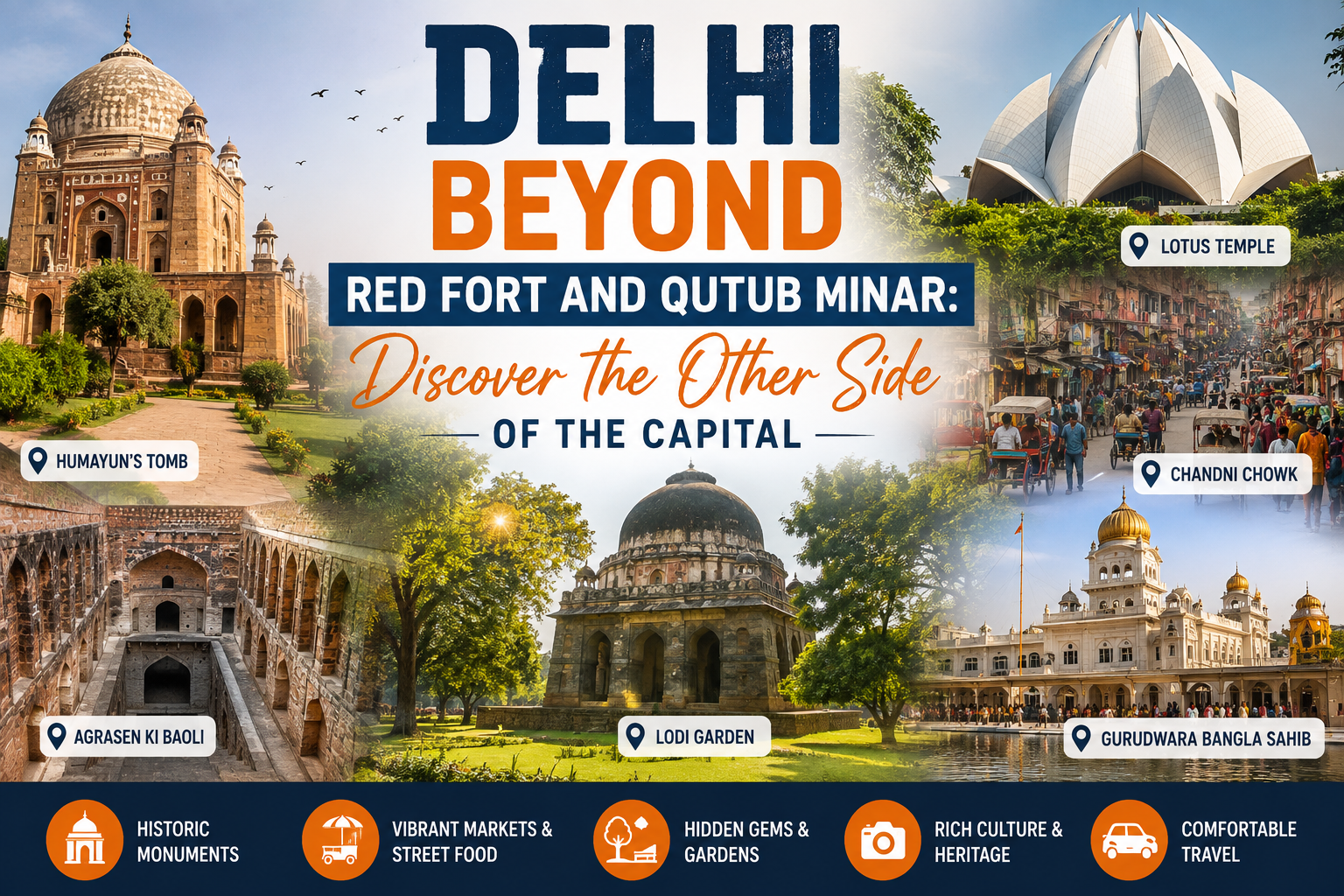 Delhi Beyond Red Fort and Qutub Minar: Discover the Other Side of the Capital
When people think about Delhi sightseeing, two attractions usually come to mind first: the Red Fort and Qutub Minar. Both are magnificent landmarks and important parts of Delhi’s history, but the city has much more to offer.
From peaceful gardens and impressive tombs to colorful markets, spiritual landmarks, historic neighborhoods, artistic spaces, and local food experiences, there is another side of Delhi waiting to be explored.
If you are planning a Delhi sightseeing tour beyond Red Fort and Qutub Minar, this guide will help you discover some of the city’s lesser-known attractions and experiences.
Whether you are a first-time visitor who wants something different or a returning traveler looking for a deeper experience, exploring Delhi beyond its most famous monuments can make your trip more memorable.
Why Explore Delhi Beyond Red Fort and Qutub Minar?
Delhi has a history spanning centuries. Different dynasties, cultures, religions, and communities have contributed to the city’s identity.
The Red Fort and Qutub Minar represent important chapters of this history, but they are only part of the story.
Exploring beyond these landmarks allows you to experience:
- Mughal architecture
- Colonial-era Delhi
- Traditional markets
- Religious heritage
- Modern Indian culture
- Local neighborhoods
- Art and crafts
- Food traditions
- Peaceful green spaces
- Unique historical sites
Instead of simply checking famous monuments off your travel list, you can experience how Delhi’s past and present exist together.
1. Humayun’s Tomb: A Masterpiece of Mughal Architecture
Humayun’s Tomb is one of the best alternatives to the traditional Red Fort-focused Delhi itinerary.
Built in the 16th century, the monument is known for its symmetrical gardens, grand architecture, and historical importance.
Its design is particularly interesting for travelers who want to understand the development of Mughal architecture.
The surrounding garden creates a peaceful environment that feels very different from the crowded streets of Old Delhi.
For photography enthusiasts, Humayun’s Tomb offers impressive architectural details and beautiful perspectives throughout the complex.
Why Visit Humayun’s Tomb?
- Beautiful Mughal architecture
- Peaceful garden setting
- Excellent photography opportunities
- Important historical significance
- Convenient addition to a New Delhi sightseeing route
2. Lodhi Garden: A Peaceful Escape in Delhi
If you want to take a break from busy roads and crowded tourist attractions, Lodhi Garden is an excellent place to visit.
The garden combines greenery with historic tombs and architectural remains.
Early morning and late afternoon can be particularly pleasant times to experience the area.
Lodhi Garden is also popular among local residents who visit for walking, exercise, photography, and relaxation.
This makes it an excellent place to experience a more everyday side of Delhi.
What Makes Lodhi Garden Special?
Unlike traditional monument visits, Lodhi Garden allows travelers to enjoy history in a natural setting.
You can walk through landscaped gardens while discovering centuries-old structures.
3. Safdarjung’s Tomb
Safdarjung’s Tomb is another beautiful example of Mughal-era architecture.
The monument features a large central structure surrounded by gardens and smaller architectural elements.
Although it may not receive the same attention as Qutub Minar, it is an interesting destination for visitors who appreciate architecture and history.
It can also be combined with Lodhi Garden and Humayun’s Tomb as part of a heritage-focused itinerary.
4. Agrasen Ki Baoli
Hidden among the modern buildings of central Delhi, Agrasen Ki Baoli is a fascinating historical stepwell.
Its long series of steps creates a unique architectural atmosphere that makes it popular with photographers and travelers interested in unusual historical places.
The contrast between the ancient structure and surrounding modern city buildings makes the site particularly interesting.
It is a great example of how Delhi’s history can appear unexpectedly in the middle of a modern urban environment.
5. Gurudwara Bangla Sahib
Delhi’s cultural identity is closely connected with its religious diversity.
Gurudwara Bangla Sahib is one of the city’s most well-known Sikh religious landmarks.
Visitors can experience its peaceful atmosphere, distinctive architecture, and important cultural traditions.
The site provides a different experience from visiting historical monuments.
Visitors should dress appropriately, follow site guidelines, and maintain respectful behavior.
6. Lotus Temple
The Lotus Temple is one of Delhi’s most recognizable modern architectural landmarks.
Its flower-inspired structure attracts visitors from around the world.
The peaceful atmosphere makes it a particularly good stop for travelers who want to experience something different from Delhi’s forts and historical monuments.
Photography enthusiasts can also enjoy capturing the building from different viewpoints.
7. India Gate and Central Delhi
India Gate is another iconic Delhi landmark, but the surrounding central Delhi area offers more than just a photo opportunity.
A drive through central Delhi can provide views of important government buildings, broad avenues, landscaped areas, and major architectural landmarks.
Depending on access and current visitor regulations, some locations may be viewed from designated areas or through a sightseeing drive.
Combining India Gate with central Delhi sightseeing can help visitors understand the planned character of New Delhi.
8. Chandni Chowk Beyond the Tourist Route
Chandni Chowk is one of the best places to experience the energy of Old Delhi.
Many visitors simply pass through the area, but spending time exploring its markets and streets can provide a deeper cultural experience.
You can discover:
- Traditional clothing
- Jewelry markets
- Spices
- Indian sweets
- Street food
- Historic shops
- Religious landmarks
- Traditional businesses
A walking experience through Old Delhi can reveal a completely different side of the city.
Food Experience in Chandni Chowk
Food lovers can explore traditional snacks and dishes in the area.
However, visitors should choose clean and reputable establishments, particularly if they are not accustomed to local food.
9. Dilli Haat: Handicrafts and Indian Culture
For travelers interested in Indian handicrafts, textiles, art, and regional products, Dilli Haat can be an excellent addition to a Delhi itinerary.
The market-style environment brings together products and food associated with different parts of India.
It provides an opportunity to purchase souvenirs while learning about India’s regional diversity.
Dilli Haat is particularly suitable for visitors who want a shopping experience beyond conventional malls.
10. Hauz Khas Village
Hauz Khas offers an interesting combination of history and contemporary culture.
The area features historical structures alongside cafes, restaurants, boutiques, art spaces, and creative businesses.
It is a good example of how Delhi’s old architecture has been integrated into a modern urban lifestyle.
Travelers interested in photography, food, shopping, and contemporary Delhi may enjoy spending time here.
11. Mehrauli Archaeological Park
If you enjoyed the history around Qutub Minar but want to explore beyond the main monument, Mehrauli Archaeological Park is worth considering.
The area contains several historical structures spread across a green landscape.
Instead of visiting one famous monument, you can explore a collection of lesser-known historical remains.
It provides a deeper look at Delhi’s layered history.
12. Sunder Nursery
Sunder Nursery offers a peaceful combination of gardens, heritage structures, and landscaped spaces.
It is particularly attractive to visitors who want a slower sightseeing experience.
The area provides excellent opportunities for walking, photography, and relaxing away from the city’s busiest streets.
It can be combined with Humayun’s Tomb and other nearby attractions.
13. National Crafts Museum
Visitors interested in Indian art, crafts, textiles, and traditional culture can consider adding the National Crafts Museum to their itinerary.
Museums like this provide context that monuments alone cannot offer.
Instead of only seeing historical buildings, visitors can learn about India’s traditional artistic practices and craftsmanship.
14. National Museum
For travelers who want a deeper understanding of Indian history and culture, the National Museum can be an excellent stop.
Its collections cover different periods and cultural traditions of India.
A museum visit can be particularly valuable during extremely hot or rainy weather when outdoor sightseeing may be less comfortable.
15. Old Delhi’s Historic Streets
Beyond Red Fort, Old Delhi itself is an attraction.
The historic streets provide an opportunity to see traditional architecture, local businesses, food culture, and everyday life.
Walking or taking a guided experience through selected parts of Old Delhi can help visitors understand how the historic city continues to function today.
Delhi’s Spiritual Side
Delhi is home to religious sites representing several traditions.
A cultural itinerary can include:
- Gurudwara Bangla Sahib
- Jama Masjid
- Lotus Temple
- Akshardham
- Birla Mandir
Each location offers a different architectural and cultural experience.
Visitors should always follow individual site rules regarding photography, clothing, footwear, and behavior.
Delhi Food Beyond Street Food
Delhi’s food culture extends far beyond popular street-food recommendations.
Visitors can explore restaurants specializing in:
- Mughlai cuisine
- North Indian food
- Vegetarian dishes
- Regional Indian cuisine
- Modern Indian dining
- International cuisine
A food-focused Delhi tour can be customized around your preferences.
If you are a foreign traveler, you can also ask your guide or driver to recommend restaurants that are suitable for your dietary preferences.
Explore Delhi’s Markets
Delhi offers many shopping experiences beyond Chandni Chowk.
Depending on your interests, you can explore markets for:
- Handicrafts
- Clothing
- Jewelry
- Books
- Art
- Home decoration
- Traditional textiles
- Indian souvenirs
Shopping can be added to your sightseeing itinerary if you have enough time.
Delhi for Photography Lovers
Delhi offers much more than famous monument photographs.
Photographers can explore:
- Historic neighborhoods
- Stepwells
- Tombs
- Gardens
- Markets
- Religious architecture
- Street scenes
- Colonial buildings
- Modern architecture
Early morning can be particularly useful for photography because of softer light and fewer crowds.
Always check photography rules at individual monuments and religious sites.
Delhi for First-Time Visitors
If this is your first visit to Delhi, you don’t necessarily need to skip the Red Fort and Qutub Minar completely.
Instead, create a balanced itinerary.
For example:
Day 1: Red Fort → Jama Masjid → Chandni Chowk → India Gate
Day 2: Humayun’s Tomb → Sunder Nursery → Lodhi Garden → Safdarjung’s Tomb
This gives you both famous landmarks and less-explored attractions.
Delhi Beyond the Traditional Tourist Route
One of the best ways to explore Delhi is to think in terms of experiences rather than just monuments.
Instead of asking:
“Which monuments should I visit?”
Ask:
“What kind of Delhi experience do I want?
For History Lovers
Choose Humayun’s Tomb, Safdarjung’s Tomb, Mehrauli Archaeological Park, museums, and historic neighborhoods.
For Food Lovers
Explore Old Delhi, Chandni Chowk, traditional restaurants, and regional cuisine.
For Art and Culture Lovers
Consider museums, Dilli Haat, craft markets, galleries, and cultural spaces.
For Nature Lovers
Explore Lodhi Garden, Sunder Nursery, and other green spaces.
For Architecture Lovers
Visit Humayun’s Tomb, Agrasen Ki Baoli, Lotus Temple, Safdarjung’s Tomb, and historic buildings around Delhi.
Private Delhi Tour Beyond Red Fort and Qutub Minar
A private Delhi sightseeing tour by car can be particularly useful when exploring lesser-known attractions.
Many of these destinations are located in different parts of the city, so having a private vehicle can make transportation easier.
A private tour can provide:
- Hotel pickup
- Air-conditioned vehicle
- Experienced driver
- Flexible itinerary
- Customized sightseeing
- Hotel drop-off
- Optional professional guide
You can tell your tour provider that you want a Delhi tour beyond Red Fort and Qutub Minar and request an itinerary based on your interests.
Sample One-Day Alternative Delhi Itinerary
If you want to avoid the traditional tourist route, consider:
8:00 AM: Hotel pickup
8:30 AM: Humayun’s Tomb
10:00 AM: Sunder Nursery
11:30 AM: Safdarjung’s Tomb
12:30 PM: Lunch
1:30 PM: Lodhi Garden
3:00 PM: Agrasen Ki Baoli
4:00 PM: Gurudwara Bangla Sahib
5:00 PM: Connaught Place
6:30 PM: Return to hotel
This itinerary is only a sample. Traffic, opening hours, weather, and visitor schedules should be considered when planning your actual route.
Two-Day Delhi Beyond the Famous Monuments
If you have more time, you can explore the city at a slower pace.
Day One: Heritage and Architecture
- Humayun’s Tomb
- Sunder Nursery
- Safdarjung’s Tomb
- Lodhi Garden
- Agrasen Ki Baoli
- India Gate
Day Two: Culture and Local Life
- Gurudwara Bangla Sahib
- Dilli Haat
- Hauz Khas
- Mehrauli Archaeological Park
- Old Delhi markets
- Connaught Place
This type of itinerary provides a broader understanding of Delhi.
Best Time for Exploring Alternative Delhi Attractions
Delhi’s weather changes significantly throughout the year.
For extensive outdoor sightseeing, cooler periods can be more comfortable.
During hotter months, start early and include indoor attractions during the afternoon.
During monsoon periods, keep your itinerary flexible because rain can affect walking and transportation.
Private air-conditioned transportation can make moving between attractions more comfortable in challenging weather.
Tips for Exploring Delhi Beyond the Famous Landmarks
Start Early
Popular and lesser-known attractions can become busy later in the day.
Research Opening Hours
Not every attraction follows the same schedule.
Don’t Rush
Alternative attractions are often best enjoyed at a slower pace.
Hire a Guide for Historical Sites
A guide can help explain the stories behind lesser-known monuments.
Carry Water
Delhi sightseeing can involve significant walking.
Wear Comfortable Shoes
Gardens, heritage complexes, and markets may require considerable walking.
Respect Religious Sites
Follow clothing, footwear, photography, and visitor guidelines.
Keep Your Itinerary Flexible
Delhi traffic can change your schedule.
Why Delhi Is More Than Its Famous Monuments
Delhi’s true character becomes clearer when you move beyond its most famous landmarks.
The Red Fort tells one part of the city’s story. Qutub Minar tells another. But gardens, tombs, markets, religious sites, museums, neighborhoods, and food traditions reveal many more layers.
Delhi is not simply a collection of monuments.
It is a living city where centuries-old structures stand beside modern cafes, markets, offices, and residential neighborhoods.
That contrast is one of the reasons Delhi is such an interesting destination.
Final Thoughts
Exploring Delhi beyond Red Fort and Qutub Minar allows travelers to discover a richer and more diverse side of India’s capital.
From the peaceful gardens of Lodhi Garden and Sunder Nursery to the architectural beauty of Humayun’s Tomb and Safdarjung’s Tomb, Delhi offers countless experiences outside its most famous landmarks.
You can explore ancient stepwells, historic neighborhoods, religious landmarks, handicraft markets, museums, local food streets, and contemporary cultural areas.
For travelers who want a more personalized experience, a private Delhi sightseeing tour by car can make it easier to connect these destinations in a practical route.
Instead of simply following the standard tourist checklist, consider designing your Delhi trip around your interests.
Whether you are passionate about history, architecture, photography, food, shopping, spirituality, or local culture, there is a different side of Delhi waiting to be discovered.
The next time you plan a Delhi trip, don’t stop at the Red Fort and Qutub Minar. Go beyond the famous landmarks and discover the stories, neighborhoods, culture, and experiences that make Delhi truly unique.
Frequently Asked Questions
What can I see in Delhi besides Red Fort and Qutub Minar?
Popular alternatives include Humayun’s Tomb, Sunder Nursery, Lodhi Garden, Safdarjung’s Tomb, Agrasen Ki Baoli, Lotus Temple, Gurudwara Bangla Sahib, Hauz Khas, Dilli Haat, and Mehrauli Archaeological Park.
Is Delhi worth visiting beyond its famous monuments?
Absolutely. Delhi offers gardens, markets, museums, religious sites, food experiences, architecture, and historic neighborhoods that provide a much broader view of the city.
What is the best alternative to Qutub Minar?
Humayun’s Tomb, Safdarjung’s Tomb, and Mehrauli Archaeological Park are excellent options for travelers interested in history and architecture.
Where can I experience local Delhi culture?
Old Delhi, Chandni Chowk, Dilli Haat, Hauz Khas, local markets, and selected religious sites can provide opportunities to experience different aspects of Delhi’s culture.
Can I explore these places by private car?
Yes. A private car can make it easier to combine attractions located in different parts of Delhi and customize your itinerary.
Is one day enough to explore Delhi beyond the Red Fort and Qutub Minar?
One day can cover several alternative attractions, but two days provide a more relaxed experience and allow more time for markets, museums, gardens, and cultural experiences.
What should I include in a non-traditional Delhi tour?
A balanced itinerary could include Humayun’s Tomb, Sunder Nursery, Lodhi Garden, Safdarjung’s Tomb, Agrasen Ki Baoli, Gurudwara Bangla Sahib, Dilli Haat, and a local market.