
·
Last Updated: August 27, 2026
Famous Markets to Explore in Old Delhi
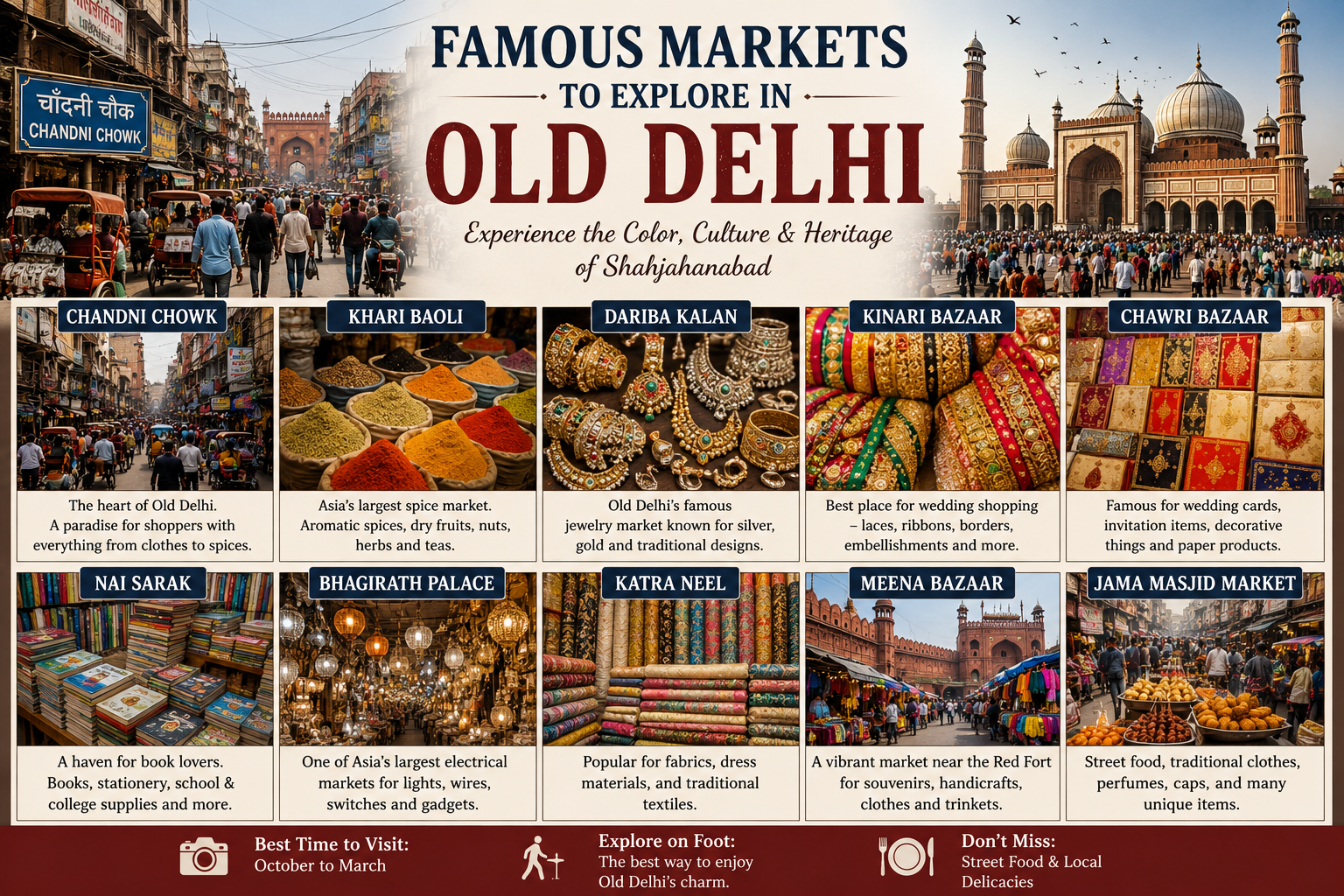
Old Delhi is one of the most fascinating places in India for travelers who want to experience traditional markets, historic streets, local craftsmanship, delicious food, and centuries-old trading traditions. The markets of Old Delhi are not simply shopping destinations—they are an important part of the city’s cultural heritage.
From the colorful lanes of Chandni Chowk to the jewelry shops of Dariba Kalan and the wedding markets of Kinari Bazaar, every market has its own character and specialty. Walking through these crowded streets can feel like stepping into a different era, where traditional businesses continue to operate alongside modern shops.
If you are planning to explore the famous markets in Old Delhi, this guide will help you discover the best places to visit, what to buy, and what makes each market special.
1. Chandni Chowk – The Heart of Old Delhi Shopping
Chandni Chowk is arguably the most famous market in Old Delhi and one of the oldest commercial areas in Delhi.
Established during the Mughal period under Emperor Shah Jahan, the market was an important part of Shahjahanabad. Historically, traders and merchants from different regions came here to sell textiles, spices, jewelry, food, and other valuable goods.
Today, Chandni Chowk is a huge shopping district made up of several specialized markets and lanes. You can find clothing, fabrics, electronics, jewelry, spices, sweets, dry fruits, books, wedding accessories, and traditional Indian products.
One of the most interesting aspects of Chandni Chowk is its atmosphere. Narrow lanes, historic buildings, colorful shops, cycle rickshaws, street vendors, and pedestrians create an energetic environment that is distinctly Old Delhi.
Best for: Traditional shopping, textiles, food, wedding shopping, and experiencing Old Delhi’s culture.
2. Dariba Kalan – Old Delhi’s Famous Jewelry Market
Dariba Kalan is one of the most historic lanes in Chandni Chowk and is particularly famous for jewelry and silverware.
The market has a long association with traditional craftsmanship. Visitors can browse silver jewelry, ornaments, decorative pieces, and other traditional items.
Walking through Dariba Kalan also offers a glimpse into the architectural character of historic Old Delhi. Old facades, narrow lanes, traditional shops, and closely packed buildings create a distinctive heritage atmosphere.
If you are looking for traditional jewelry rather than modern shopping malls, Dariba Kalan is an interesting place to explore.
Best for: Silver jewelry, traditional ornaments, gifts, and craftsmanship.
3. Kinari Bazaar – A Paradise for Wedding Shopping
Kinari Bazaar is one of the most colorful markets in Old Delhi and is particularly popular for wedding-related shopping.
The market specializes in decorative items such as lace, ribbons, borders, embroidery materials, wedding accessories, artificial flowers, embellishments, and colorful fabrics.
The narrow lanes are filled with shops displaying bright and intricate products. Even if you are not shopping for a wedding, the visual experience makes Kinari Bazaar worth exploring.
For travelers interested in Indian celebrations, fashion, and traditional craftsmanship, this market provides a fascinating look at the preparation behind weddings and festivals.
Best for: Wedding accessories, decorative materials, embroidery, ribbons, and traditional embellishments.
4. Bhagirath Palace – A Historic Commercial Hub
Bhagirath Palace is one of the major commercial areas near Chandni Chowk and is particularly known for electrical and lighting products.
The market occupies a historic area of Old Delhi and has developed into a major trading center.
While the market may feel very different from the traditional textile and jewelry lanes, it demonstrates how Old Delhi’s commercial districts have adapted to changing consumer needs.
The combination of old architecture and modern commerce makes Bhagirath Palace another interesting example of how historic markets continue to evolve.
Best for: Electrical goods, lighting products, commercial shopping, and wholesale markets.
5. Khari Baoli – Asia’s Famous Spice Market
Khari Baoli is one of the most famous markets in Old Delhi and is widely known for its enormous variety of spices and dry fruits.
The market has been an important trading area for generations. As you walk through the lanes, you can find sacks and displays filled with spices, herbs, nuts, dried fruits, tea, and other food products.
The aromas are one of the most memorable parts of visiting Khari Baoli. The market provides a sensory experience that is difficult to find in conventional shopping areas.
Photographers and food enthusiasts particularly enjoy exploring the colorful displays and busy wholesale trade.
Best for: Spices, dry fruits, herbs, tea, nuts, and food photography.
6. Fatehpuri Market – A Historic Food and Spice District
Near the western end of Chandni Chowk, the area around Fatehpuri Masjid contains numerous shops selling spices, grains, food ingredients, and traditional products.
The market’s location near a historic mosque and the end of Chandni Chowk makes it a useful stop during a walking tour.
Visitors can combine their shopping experience with a look at the historic architecture and streets of the area.
Best for: Spices, grains, food ingredients, and traditional markets.
7. Ballimaran Market – Discover Old Delhi’s Traditional Lanes
Ballimaran is a historic neighborhood best known for its association with poet Mirza Ghalib, but it is also filled with traditional shops and busy commercial lanes.
The market environment here is less focused on one particular product and more representative of everyday Old Delhi shopping.
As you walk through Ballimaran, you can see old residential buildings, small shops, workshops, and local businesses operating alongside each other.
Best for: Local shopping, traditional neighborhoods, footwear, accessories, and exploring everyday Old Delhi life.
8. Chawri Bazaar – The Paper and Wedding Goods Market
Chawri Bazaar is another historic market located in Old Delhi. It is particularly known for paper products, wedding cards, invitation materials, decorative items, and hardware.
The market’s narrow lanes are filled with wholesale and retail shops. It is an excellent place to see how specialized commercial districts operate in Old Delhi.
The market becomes especially interesting during wedding seasons when demand for invitation cards and decorative materials increases.
Best for: Wedding invitations, paper products, hardware, and wholesale shopping.
9. Nai Sarak – Books, Stationery, and Educational Shopping
Nai Sarak is a popular destination for books, stationery, educational materials, and school and college supplies.
Students and book lovers regularly visit the market to look for textbooks, reference books, notebooks, stationery, and other academic materials.
The area has a distinctly academic atmosphere compared with the jewelry and spice markets nearby.
For travelers who enjoy books and traditional shopping streets, Nai Sarak is worth adding to an Old Delhi itinerary.
Best for: Books, textbooks, stationery, notebooks, and educational materials.
10. Katra Neel – Traditional Textiles and Fabrics
Katra Neel is known for its textile and fabric shops. The market is a good destination for people looking for materials for traditional clothing, tailoring, and fashion projects.
You can find different types of fabrics and materials used for Indian garments.
The market also demonstrates how Old Delhi developed specialized commercial lanes where traders dealing in similar products established businesses close to one another.
Best for: Fabrics, textiles, dress materials, and tailoring supplies.
11. Katra Baryan – A Wholesale Trading Experience
Katra Baryan is another historic commercial lane within the Chandni Chowk area.
The market is associated with wholesale trading and traditional business activities. Exploring such markets gives visitors a better understanding of the commercial network that has supported Old Delhi for generations.
Unlike modern shopping centers, these markets are built around narrow lanes and highly specialized shops.
Best for: Wholesale shopping and experiencing traditional trading streets.
12. Moti Bazaar – Traditional Shopping in Old Delhi
Moti Bazaar is another smaller market area that can be explored while wandering through Chandni Chowk’s network of lanes.
These smaller markets are part of what makes Old Delhi unique. Instead of one large shopping complex, the area consists of numerous interconnected bazaars, each specializing in different products.
Exploring them without rushing allows you to discover shops and streets that may not appear in typical tourist itineraries.
Best for: Local shopping and exploring lesser-known market lanes.
13. Meena Bazaar – Shopping Near the Red Fort
Meena Bazaar is located near the Red Fort and is associated with traditional shopping in the historic Old Delhi area.
Its location makes it convenient for travelers who are already visiting the Red Fort. Depending on the shops and current market activity, visitors may find clothing, souvenirs, handicrafts, accessories, and other traditional items.
The combination of shopping and Mughal-era surroundings gives the market a distinctly historic atmosphere.
Best for: Souvenirs, traditional items, accessories, and combining shopping with sightseeing.
14. Sadar Bazaar – One of Delhi’s Major Wholesale Markets
Sadar Bazaar is a large and extremely busy wholesale market in Old Delhi.
The market covers a wide range of products, including household items, toys, cosmetics, stationery, gift products, packaging materials, and general merchandise.
It is primarily a commercial market rather than a conventional tourist attraction, but travelers interested in understanding Delhi’s trading culture may find it fascinating.
Because the market can become very crowded, visitors should plan their trip carefully.
Best for: Wholesale shopping, general merchandise, household goods, and observing Delhi’s commercial life.
15. Jama Masjid Market – Food, Clothing, and Local Culture
The area surrounding Jama Masjid is one of the most atmospheric parts of Old Delhi.
The streets contain food stalls, restaurants, clothing shops, traditional products, and small businesses. The neighborhood is especially lively in the evening.
Visitors can combine a visit to Jama Masjid with a walk through the surrounding lanes and enjoy some of Old Delhi’s famous food traditions.
Best for: Street food, traditional clothing, local shopping, photography, and cultural experiences.
What to Buy in Old Delhi Markets
Old Delhi’s markets offer an enormous range of products. Some of the most popular purchases include:
- Traditional Indian fabrics
- Silver jewelry
- Artificial jewelry
- Wedding accessories
- Spices and herbs
- Dry fruits and nuts
- Tea
- Traditional sweets
- Books and stationery
- Wedding invitation materials
- Decorative items
- Handicraft-style products
- Indian clothing
- Souvenirs
- Household products
The best market depends on what you want to purchase, so planning your route around your shopping interests can save time.
Best Markets in Old Delhi for Different Shopping Needs
| Shopping Need | Best Market |
|---|---|
| Spices and dry fruits | Khari Baoli |
| Silver jewelry | Dariba Kalan |
| Wedding accessories | Kinari Bazaar |
| Fabrics | Katra Neel |
| Books and stationery | Nai Sarak |
| Wedding cards | Chawri Bazaar |
| Electrical goods | Bhagirath Palace |
| Wholesale goods | Sadar Bazaar |
| Traditional food | Jama Masjid area |
| Souvenirs | Meena Bazaar |
| General local shopping | Chandni Chowk |
Best Time to Explore Old Delhi Markets
The cooler months from October to March are generally more comfortable for walking through Old Delhi’s markets.
Morning and early afternoon can be good for shopping because many businesses are active during these hours. However, different markets have different operating schedules, and individual shops may close on specific days.
If you are visiting primarily for photography and atmosphere, arriving earlier can help you experience the markets before they become extremely crowded.
How to Explore Old Delhi Markets
The best way to experience Old Delhi is on foot, although cycle rickshaws can be useful for covering longer distances between market areas.
A practical route could begin at Red Fort, continue through Meena Bazaar, and then move toward Jama Masjid and Chandni Chowk.
From Chandni Chowk, you can explore Dariba Kalan, Kinari Bazaar, Khari Baoli, Chawri Bazaar, and nearby lanes.
You do not need to visit every market in one day. Choosing three or four markets based on your interests will usually make the experience more enjoyable.
Tips for Shopping in Old Delhi
Carry Small Bags
Crowded streets can make large bags inconvenient. Carry only what you need.
Compare Prices
Many markets contain several shops selling similar products. Comparing prices before purchasing can help you make a better choice.
Bargain Where Appropriate
Bargaining may be common in some markets, particularly for certain products. However, it is not appropriate in every shop or situation.
Keep Your Belongings Secure
Old Delhi markets can become extremely crowded. Keep your phone, wallet, and other valuables secure.
Wear Comfortable Shoes
Exploring the markets involves considerable walking, and many lanes have uneven surfaces.
Respect Local Businesses
These markets are working commercial areas, not just tourist attractions. Avoid blocking shop entrances or photographing people without permission.
Old Delhi Markets and Its Living Heritage
One of the biggest reasons to explore Old Delhi’s markets is that they remain part of everyday life.
Unlike heritage sites that are preserved primarily for visitors, these bazaars continue to function as working commercial neighborhoods. Traders open their shops, craftsmen practice traditional skills, customers negotiate prices, and families continue to pass businesses from one generation to another.
This living character makes Old Delhi different from a conventional tourist destination.
A walk through Khari Baoli reveals the importance of spice trading. Dariba Kalan reflects traditional jewelry craftsmanship. Kinari Bazaar demonstrates the importance of decorative arts and wedding culture. Nai Sarak represents Delhi’s long relationship with books and education.
Together, these markets tell the story of a city shaped by trade, craftsmanship, migration, food, religion, and entrepreneurship.
Final Thoughts
The famous markets of Old Delhi offer much more than shopping. They provide an opportunity to experience the historic character of Shahjahanabad through its streets, businesses, food, architecture, and people.
From the spices of Khari Baoli and jewelry of Dariba Kalan to the colorful wedding goods of Kinari Bazaar and fabrics of Katra Neel, each market has a distinct identity.
The best way to experience them is to slow down, walk through the lanes, observe the details, taste the local food, and discover the stories behind these long-established trading neighborhoods.
If you are planning a Delhi trip, make sure to reserve at least half a day for Old Delhi’s markets. You may arrive looking for one particular item, but the real reward is experiencing the vibrant commercial and cultural world that makes Old Delhi one of India’s most fascinating historic districts.