
·
Last Updated: August 18, 2026
The Artisans Keeping Mughal Crafts Alive: Preserving India’s Royal Heritage
Introduction
The Mughal era is remembered for its magnificent monuments, grand architecture, and artistic excellence. From the detailed marble work of the Taj Mahal to the beautiful patterns found in historic palaces, Mughal creativity continues to inspire people around the world.
However, the beauty of Mughal art does not exist only in monuments. It also lives in the hands of skilled artisans who continue to practice traditional crafts passed down through generations.
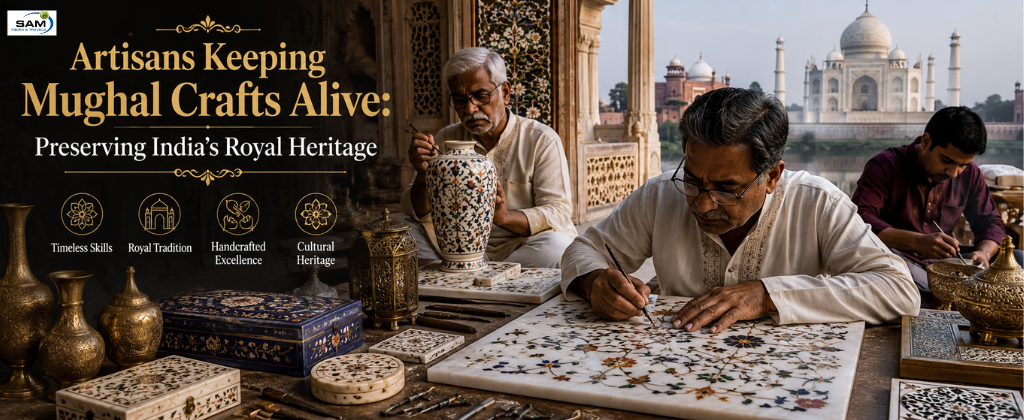
The Artisans Keeping Mughal Crafts Alive are preserving centuries-old techniques through dedication, patience, and creativity. These craftsmen and women continue to create delicate marble inlay work, traditional embroidery, handmade textiles, decorative art, and other forms of heritage craftsmanship.
In today’s modern world, where mass-produced products have become common, these artisans protect a valuable connection between the past and present. Their work represents not only artistic skill but also India’s rich cultural identity.
The Legacy of Mughal Crafts in India
The Mughal period, which began in the 16th century, brought remarkable changes to Indian art and culture. Mughal rulers encouraged artists, architects, and craftsmen from different regions to work together.
This cultural exchange created a unique style that combined Persian, Central Asian, and Indian artistic traditions.
Royal courts became centers of creativity. Skilled artisans received support to develop techniques in:
- Marble carving
- Stone inlay work
- Textile production
- Jewelry making
- Painting
- Metal craftsmanship
- Wood carving
- Decorative arts
Many of these skills have survived for hundreds of years because artisan families continued teaching younger generations.
Today, The Artisans Keeping Mughal Crafts Alive carry forward this extraordinary legacy.
Marble Inlay Art: The Craft Behind the Taj Mahal’s Beauty
One of the most famous Mughal crafts is marble inlay work, also known as Pietra Dura.
This technique became highly developed during the reign of Emperor Shah Jahan. The Taj Mahal is the greatest example of this art form, featuring delicate floral patterns created with colorful semi-precious stones.
The process requires incredible patience and precision.
Artisans carefully select stones, cut them into tiny pieces, and place them into carved marble designs. Every flower, leaf, and pattern is created by hand.
Even today, craftsmen in Agra continue this traditional art. Their workshops produce decorative items such as:
- Tabletops
- Jewelry boxes
- Plates
- Decorative panels
- Small replicas of monuments
The work requires years of training because even a small mistake can damage the entire design.
Through their dedication, marble artisans ensure that Mughal artistic traditions continue to shine.
The Skilled Hands Behind Marble Craftsmanship
Becoming a marble artisan is not a quick process. Many craftsmen begin learning from their families at a young age.
They start with simple tasks before developing advanced skills. Over time, they learn how to understand stone quality, create patterns, and achieve perfect finishing.
The relationship between artisan and material is extremely important. Experienced craftsmen can identify the right marble and choose stones that create the desired colors and effects.
Although technology has improved many industries, traditional marble inlay still depends heavily on human skill.
This personal touch is what makes each handmade piece unique.
Zardozi Embroidery: A Royal Textile Tradition
Another important Mughal craft is Zardozi embroidery.
During the Mughal period, this luxurious embroidery was used to decorate royal clothing, carpets, curtains, and ceremonial items.
The word “Zardozi” comes from Persian words meaning gold and embroidery. Traditionally, artisans used gold and silver threads to create detailed designs on rich fabrics.
Today, skilled craftsmen continue this tradition by creating:
- Wedding outfits
- Decorative fabrics
- Luxury accessories
- Traditional garments
The process requires concentration and careful handwork. Creating a complex design can take weeks or even months.
Modern fashion has introduced new uses for Zardozi, but the traditional techniques remain unchanged.
Mughal Miniature Painting: Stories Through Colors
Mughal miniature painting is another artistic tradition that reflects the creativity of the empire.
These paintings often showed royal life, historical events, hunting scenes, nature, and court activities.
Artists used natural colors made from minerals, plants, and other materials. They created extremely detailed images using fine brushes.
Although large royal workshops no longer exist, many artists continue practicing miniature painting today.
Their work keeps alive the storytelling style that once decorated Mughal manuscripts and palace walls.
The Importance of Traditional Artisans Today
The work of traditional artisans goes beyond creating beautiful objects.
They preserve knowledge that has survived for centuries. Every handcrafted item carries stories of history, culture, and human creativity.
However, artisans face several challenges today:
- Competition from machine-made products
- Changing consumer preferences
- Limited awareness about handmade crafts
- Difficulty reaching larger markets
Supporting these craftsmen helps protect India’s cultural heritage.
When travelers purchase authentic handmade products, they contribute directly to the survival of these traditional skills.
Agra: A Living Center of Mughal Craftsmanship
Agra is one of the most important cities for preserving Mughal crafts.
Known worldwide for the Taj Mahal, the city is also home to generations of artisans who continue traditional work.
Visitors exploring Agra can find workshops where craftsmen create marble inlay products, leather goods, textiles, and decorative items.
These workshops offer a chance to see the artistic process behind the final product.
Meeting artisans personally helps travelers understand the dedication and effort required to maintain these crafts.
Leather Craftsmanship: Agra’s Traditional Skill
When people think about Agra, they often imagine the Taj Mahal and Mughal monuments. However, the city is also famous for its traditional leather craftsmanship.
For generations, skilled leather artisans have created footwear, bags, belts, wallets, and other handmade products using traditional techniques.
Agra’s leather industry developed over centuries and became an important part of the city’s economy. Many artisan families have continued this profession by teaching their skills to younger generations.
Creating handmade leather products requires attention to detail. Artisans carefully select materials, cut patterns, stitch designs, and finish each piece by hand.
Although modern factories produce leather goods on a large scale, handmade products continue to attract people because of their unique designs and personal craftsmanship.
These artisans represent another important chapter in The Artisans Keeping Mughal Crafts Alive.
Carpet Weaving: A Tradition of Patience and Precision
Carpet weaving was another craft that received great encouragement during the Mughal period.
Mughal rulers invited skilled weavers from different regions to create luxurious carpets for royal palaces. These carpets featured detailed patterns inspired by nature, gardens, and traditional designs.
Even today, some artisan communities continue this slow and careful process.
Handmade carpets require:
- Skilled weaving techniques
- Knowledge of traditional patterns
- Careful selection of materials
- Months of dedicated work
Every carpet tells a story through its colors and designs.
The patience required to create these masterpieces shows why handmade crafts remain valuable even in the modern age.
Wood Carving and Decorative Crafts
Wood carving has also been an important part of India’s artistic heritage.
Mughal artists used woodwork to decorate furniture, doors, windows, and architectural elements. The designs often included floral patterns, geometric shapes, and detailed carvings.
Today, craftsmen continue creating wooden decorative items inspired by traditional Mughal designs.
Their work includes:
- Carved panels
- Decorative boxes
- Furniture
- Traditional home accessories
The skill requires years of practice because each carving is completed carefully by hand.
Through their dedication, wood artisans continue protecting an artistic tradition that connects modern homes with India’s historical past.
How Young Artisans Are Preserving Old Techniques
A major challenge for traditional crafts is encouraging younger generations to continue these professions.
Many young people are attracted to modern careers, which creates concerns about the future of heritage crafts.
However, several artisan families are working to keep these skills alive by training younger members.
Today, young craftsmen are combining traditional knowledge with modern ideas. They use digital platforms, online markets, and creative designs to introduce handmade products to new audiences.
This balance between tradition and innovation is helping Mughal crafts survive in the changing world.
The future of these crafts depends on the passion of young artisans who respect their heritage while adapting to new opportunities.
The Role of Tourism in Supporting Mughal Crafts
Tourism plays an important role in protecting traditional crafts.
Millions of visitors come to Agra every year to experience Mughal history. Many of these travelers are interested in purchasing authentic handmade products and learning about local craftsmanship.
When visitors buy directly from artisans, they provide valuable support to craft communities.
Heritage walks, artisan workshops, and cultural experiences also help people understand the effort behind handmade products.
Responsible tourism creates awareness and encourages the next generation to continue these artistic traditions.
In this way, travelers become part of the story of The Artisans Keeping Mughal Crafts Alive.
Challenges Faced by Traditional Artisans
Although Mughal crafts have survived for centuries, artisans face several difficulties today.
Competition from Mass Production
Machine-made products are often cheaper and faster to produce. This makes it difficult for handmade crafts to compete in price.
Lack of Recognition
Many skilled artisans remain unknown despite creating exceptional artwork.
Changing Lifestyle
Younger generations may choose different careers because traditional crafts require long training and patience.
Limited Market Access
Some artisans struggle to reach customers beyond their local areas.
Addressing these challenges is important to ensure that traditional craftsmanship continues for future generations.
Why Handmade Crafts Matter
Handmade crafts are more than decorative items. They represent human creativity, cultural memory, and historical knowledge.
A machine can reproduce a design, but it cannot replace the personal experience of an artisan.
Every handmade product carries:
- The artisan’s skill
- Hours of careful work
- Family traditions
- Cultural stories
- Historical connection
When people choose handmade crafts, they support creativity and help preserve important cultural practices.
Experiencing Mughal Crafts as a Traveler
Travelers visiting Agra can experience these traditions in several ways.
Instead of only visiting monuments, they can explore local markets and artisan workshops.
Some meaningful experiences include:
- Watching marble inlay artists work
- Visiting craft markets
- Learning about traditional techniques
- Buying authentic handmade souvenirs
- Talking with local craftsmen
These experiences create a deeper connection with the city’s heritage.
The beauty of Agra is not only found in its monuments but also in the skilled hands of the people who continue its artistic traditions.
Preserving a Living Heritage
The story of The Artisans Keeping Mughal Crafts Alive is a story of dedication and resilience.
For hundreds of years, artisans have protected traditional skills despite changing times. Their work connects modern generations with India’s royal past.
Every carved design, embroidered pattern, and handmade creation represents years of knowledge and passion.
Supporting these craftsmen means protecting more than art. It means preserving history, culture, and identity.
As travelers, communities, and future generations continue to value handmade traditions, Mughal crafts will remain alive for many years to come.
Final Thoughts
The Mughal Empire left behind magnificent monuments, but its artistic legacy lives beyond stone walls.
It survives in the workshops of artisans who continue creating beautiful handmade crafts with the same dedication practiced by their ancestors.
From marble inlay and Zardozi embroidery to leatherwork and traditional weaving, these crafts represent India’s creative spirit.
The Artisans Keeping Mughal Crafts Alive are not simply making products; they are preserving stories, traditions, and a priceless connection to the past.
By appreciating their work and supporting authentic craftsmanship, we help ensure that these remarkable skills continue to inspire future generations.