
·
Last Updated: August 18, 2026
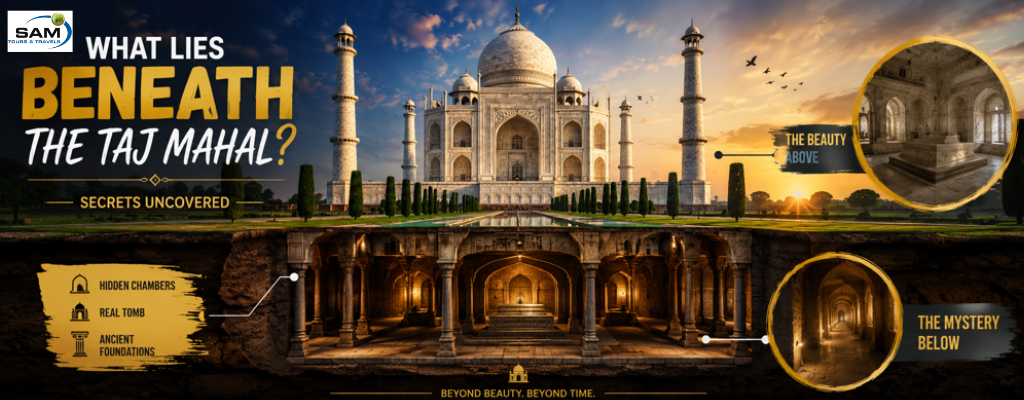
The Taj Mahal is often described as the ultimate symbol of love—a breathtaking white marble masterpiece built by Mughal emperor Shah Jahan in memory of his beloved wife Mumtaz Mahal. While millions admire its beauty above ground, a fascinating question continues to capture curiosity: what lies beneath the Taj Mahal?
Beyond its iconic dome and symmetrical gardens, the monument hides layers of history, architecture, and mystery that many visitors never see. In this article, we explore the lesser-known facts, hidden chambers, underground structures, and myths surrounding what lies beneath this wonder of the world.
The Hidden Chambers of the Taj Mahal
One of the most talked-about secrets of the Taj Mahal is the presence of sealed rooms beneath its main structure. Historians and archaeologists confirm that there are multiple chambers located below the marble platform.
These underground rooms are part of the original Mughal architectural design. They were not built to hide secrets in a mysterious sense, but rather served functional and structural purposes. The Taj Mahal stands on the banks of the Yamuna River, and its foundation required a stable base. Engineers used a network of chambers and wells to support the immense weight of the monument.
Interestingly, many of these rooms remain closed to the public today. This restricted access has fueled speculation and curiosity, leading to countless theories about what might be hidden inside.
The Real Tomb vs. The Symbolic Tomb
A surprising fact that many visitors don’t realize is that the tombs seen inside the Taj Mahal are not the actual burial sites.
Inside the main chamber, you will find beautifully decorated cenotaphs of Shah Jahan and Mumtaz Mahal. However, the real graves lie in a lower chamber directly beneath this hall. This practice follows Islamic traditions, where actual burials are kept simple and placed in a more private, humble setting.
The lower chamber is far less ornate than the upper level, reflecting the spiritual simplicity associated with burial customs. This hidden level is one of the key elements that adds depth—both literally and symbolically—to the Taj Mahal.
Engineering Marvel Beneath the Surface
The Taj Mahal is not just an artistic masterpiece—it is also an engineering wonder. Beneath its beauty lies a sophisticated system designed to ensure its stability for centuries.
Foundation Design
The monument is built on a foundation of wooden beams supported by wells filled with stone and rubble. These wells act like shock absorbers, distributing weight evenly across the ground. The presence of the Yamuna River helps maintain moisture levels, which historically kept the wooden foundation strong.
Underground Passages
Some researchers believe there may be corridors or passageways beneath the platform, though their exact purpose remains debated. These could have been used for maintenance, ventilation, or construction purposes during the building phase.
Myths and Conspiracy Theories
The mystery surrounding the underground sections of the Taj Mahal has led to several popular myths. Let’s separate fact from fiction.
The “Hidden Treasure” Theory
One common belief is that the sealed rooms contain hidden treasures or royal artifacts. However, there is no historical evidence to support this claim. Mughal architecture was grand, but it was not designed to conceal treasure vaults beneath tombs.
The “Black Taj Mahal” Legend
Another famous story suggests that Shah Jahan planned to build a black marble version of the Taj Mahal across the river as his own tomb. While intriguing, most historians consider this a romantic myth rather than a confirmed fact.
Claims of Secret Temples
Some theories claim that the structure beneath the Taj Mahal predates Mughal construction and was originally a temple. These claims are widely disputed by historians and lack credible archaeological backing.
Why Are the Lower Chambers Closed?
A question many people ask is: why not simply open all the rooms and remove the mystery? The answer is more practical than mysterious.
Preservation Concerns
The Taj Mahal is a UNESCO World Heritage Site and one of the most delicate historical structures in the world. Opening underground chambers could:
- Disrupt the internal environment
- Increase humidity and damage marble surfaces
- Lead to structural risks over time
Safety and Structural Stability
Allowing public access to underground areas could weaken the monument’s foundation or create safety hazards. For this reason, authorities limit access to only essential maintenance personnel.
Symbolism Hidden Beneath the Taj Mahal
The hidden layers of the Taj Mahal are not just physical—they are also symbolic.
Reflection of Paradise
The entire complex is designed to represent Jannah (paradise) in Islamic tradition. The gardens, water channels, and symmetry all contribute to this theme. The hidden lower tomb chamber symbolizes humility and the journey from earthly beauty to eternal rest.
Balance Between Opulence and Simplicity
Above ground, the Taj Mahal dazzles with intricate marble work, calligraphy, and precious stone inlay. Below ground, the simplicity of the actual graves creates a contrast that reflects spiritual balance—a key concept in Mughal design philosophy.
Archaeological Studies and Modern Discoveries
Over the years, several studies have attempted to understand the structure beneath the Taj Mahal more clearly.
Ground-Penetrating Radar (GPR)
Modern technology like GPR has been used to analyze the subsurface without disturbing the monument. These studies confirm the presence of multiple chambers and structural elements but do not support sensational claims of hidden treasures or secret civilizations.
Conservation Efforts
Ongoing conservation work focuses on protecting both visible and hidden parts of the Taj Mahal. This includes monitoring the foundation, controlling pollution, and preserving the marble’s natural shine.
Lesser-Known Facts About What Lies Beneath
Here are some quick facts that many people don’t know:
- The Taj Mahal’s foundation includes over 20 wells for stability
- The lower tomb chamber is aligned according to Islamic burial traditions
- Many underground rooms are symmetrical, just like the rest of the structure
- The sealed chambers are made of red sandstone, not white marble
- Moisture from the Yamuna River plays a role in maintaining the foundation
Why the Mystery Continues to Fascinate
Despite historical explanations, the idea of hidden secrets beneath the Taj Mahal continues to captivate people around the world. This fascination comes from a mix of:
- Limited public access
- The monument’s immense cultural significance
- Human curiosity about the unknown
Mystery adds a layer of intrigue that enhances the Taj Mahal’s already powerful presence.
Final Thoughts
So, what truly lies beneath the Taj Mahal? The answer is a blend of history, engineering, and symbolism rather than hidden treasures or conspiracies. Beneath its iconic marble surface lies a carefully designed system of chambers, foundations, and burial spaces that have helped the monument stand strong for centuries.
The real beauty of the Taj Mahal is not just what we see—but also what we don’t see. Its hidden layers remind us that great creations often hold deeper meanings beneath their surface.
As one of the world’s most admired landmarks, the Taj Mahal continues to inspire wonder, not only for its visible elegance but also for the quiet mysteries resting beneath it.
For More Information : Read More